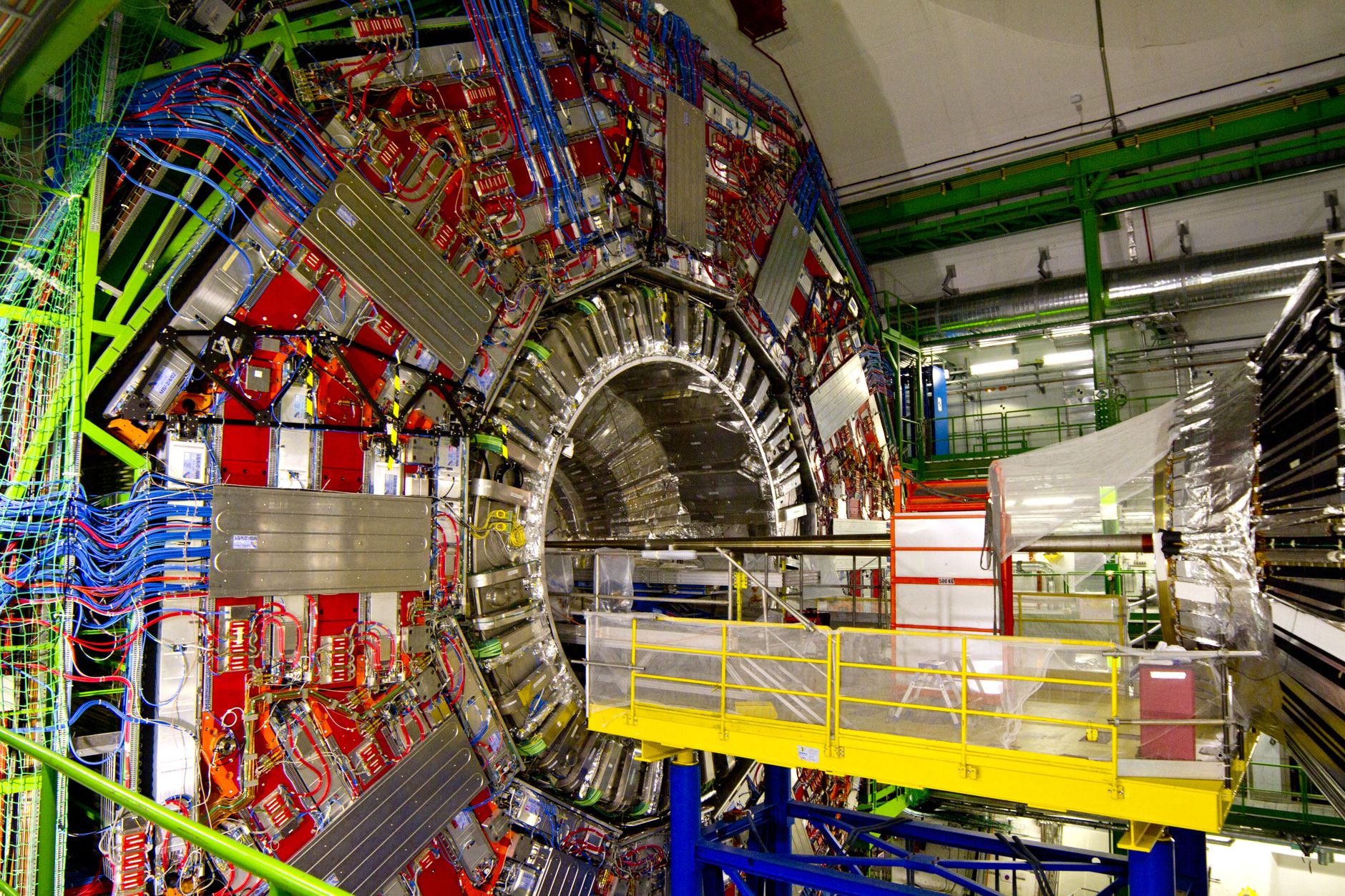
Scientists at the European Organization for Nuclear Research (CERN) have shown that quark‑gluon plasma (QGP)—the hot, dense state that filled the universe a fraction of a second after the Big Bang—can be generated in collisions involving much lighter atomic nuclei than previously thought possible.
Background on quark‑gluon plasma
In the first microseconds following the Big Bang, matter existed not as atoms but as a seething soup of quarks and gluons. Quarks are the fundamental constituents of protons and neutrons, while gluons act as the force carriers that bind quarks together. When the universe was about a millionth of a second old, this mixture formed an extremely hot plasma. As the cosmos expanded and cooled, quarks became confined inside protons and neutrons, eventually giving rise to the atoms that compose all visible matter.
For decades, physicists have recreated QGP in the laboratory by colliding heavy ions—most often lead nuclei—at near‑light speeds in particle accelerators. These large‑scale collisions have provided valuable insight into the fluid‑like behavior of the plasma, but they also rely on the heaviest stable elements available.
The small‑scale experiment
A recent study published in Physical Review Letters reports that an international team, including CERN researchers, succeeded in producing QGP using oxygen‑16 and neon‑20 nuclei. Both elements weigh less than one‑tenth of a lead atom, challenging the prior assumption that only relatively heavy ions could generate the primordial state.
According to the press release, the experiment demonstrated that even with these lighter nuclei, the collisions yielded signals consistent with the collective, fluid‑like expansion characteristic of quark‑gluon plasma. The researchers observed an instantaneous expansion of the hot matter, followed by rapid cooling that returned the system to ordinary particles.
“We have pushed the boundary for how small the atomic nuclei can be while still re‑creating this primordial matter—what you could call a ‘little big bang.’ We now know more about the fundamental conditions required for matter to transition into this extreme state,” said You Zhou, a researcher at the Niels Bohr Institute in the Netherlands and co‑author of the study.
Implications for cosmology and future research
The ability to generate QGP with lighter ions expands the experimental toolkit for probing the earliest moments of the universe. Since no natural source of quark‑gluon plasma exists today, these “micro big bangs” provide a controlled way to study how the early plasma behaved and how it eventually evolved into the matter that makes up stars, planets, and living organisms.
Zhou added, “Hopefully, this will help us better understand how the plasma behaved during the first moments of the universe—and how it later evolved into the forms of matter that everything around us is made of.” The findings suggest that the essential properties of QGP do not depend strictly on the size of the colliding nuclei, opening the door to a broader range of experimental configurations.
Future investigations may explore other light nuclei or vary collision energies to map the precise thresholds at which the plasma forms. Such work could refine theoretical models of the strong nuclear force and improve our grasp of the conditions that shaped the cosmos in its infancy.

Helene Elliott is the Lead Science & Space Reporter at News Raise. She reports on aerospace missions, astrophysics discoveries, quantum research, and environmental technology.