An international collaboration of 250 scientists from 39 institutions says the LUX‑ZEPLIN (LZ) dark‑matter detector captured a single particle interaction in June 2023 that could represent a glimpse of the elusive substance that makes up roughly 85% of the universe’s mass. After months of scrutiny, the team estimates there is only a 0.5% probability that the event was caused by a known source of interference, making it the most compelling hint of dark matter the experiment has recorded to date.
The LZ detector and the June 2023 event
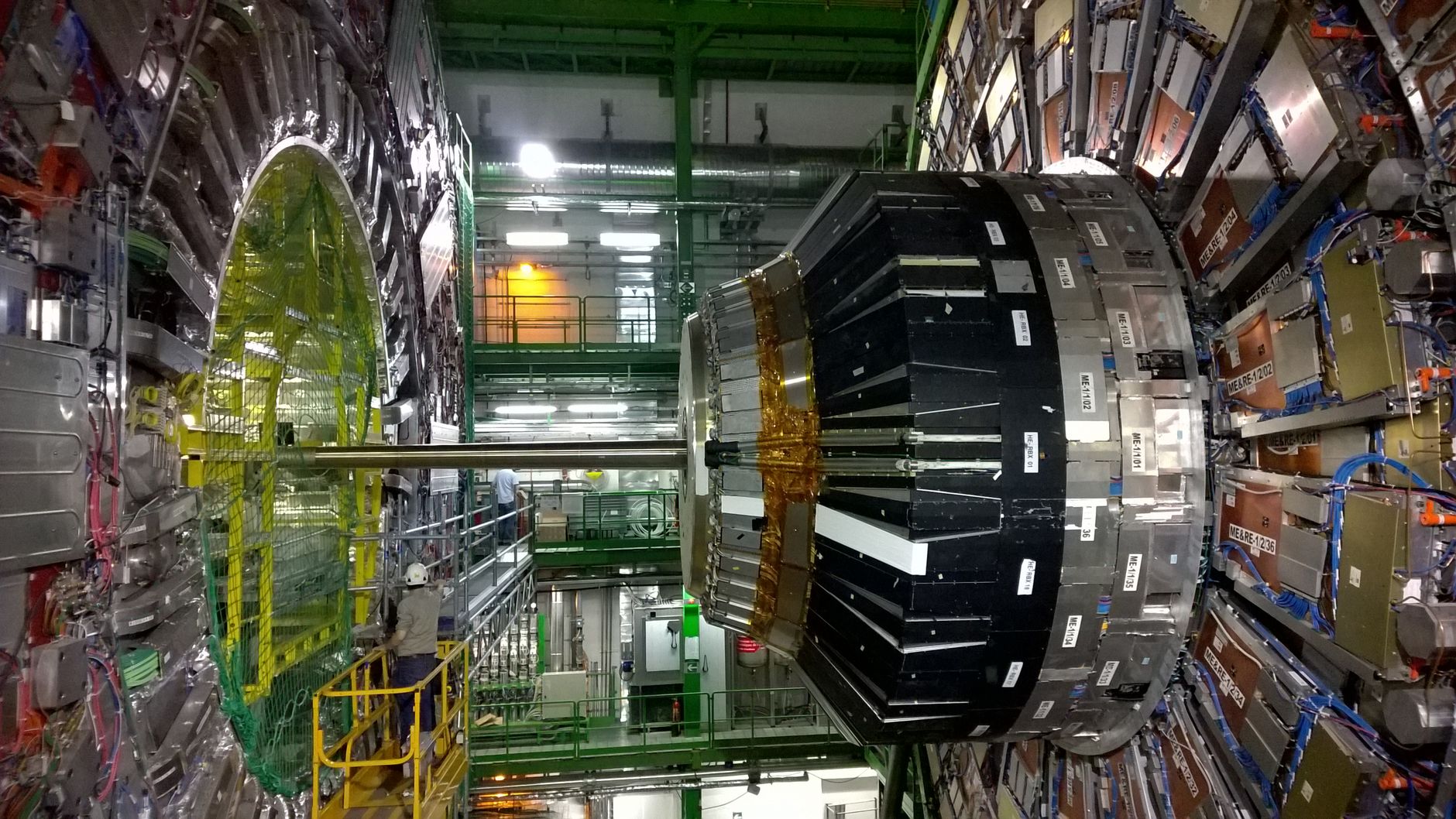
The LZ instrument, located nearly a mile (about 1.5 km) underground in the former gold mine at the Sanford Underground Research Facility in South Dakota, contains seven metric tons of ultra‑pure liquid xenon. Xenon’s heavy nuclei make it an ideal target for weakly interacting massive particles (WIMPs), a leading dark‑matter candidate. When a WIMP, if it exists, collides with a xenon nucleus, the recoil produces a flash of light that the detector can measure.
During an analysis of 220 days of data collected between March 2023 and April 2024, the collaboration identified a solitary high‑energy interaction that generated the expected light signal. “One event, by itself, is not enough,” said Alvine Kamaha, an assistant professor of physics at UCLA and member of the LZ team. She emphasized the need for additional events and higher statistical confidence before claiming a discovery.
Statistical significance and ongoing analysis
The current analysis places the signal at 2.6 sigma, roughly a one‑in‑200 chance of being a statistical fluke. Particle‑physics standards require a 5‑sigma threshold—about a one‑in‑3.5 million chance—to declare a discovery. Researchers are now extending the search to a larger 700‑day dataset, hoping to locate more candidate interactions that could raise the significance.
To guard against unconscious bias, the team is inserting synthetic events—artificial signals that mimic genuine dark‑matter interactions—into the data stream. These “fake” events are removed only after the analysis is complete, ensuring that the scientists cannot be swayed by expectations.
Rick Gaitskell, Hazard Professor of Physics at Brown University and spokesperson for LZ, noted that even with extensive shielding, background radiation can never be eliminated entirely. “You’re always going to be in a situation where it’s possible that events occurring in your detector are due to more conventional mechanisms,” he said.
Broader implications and next steps
If the June 2023 interaction proves to be a dark‑matter collision, it would constitute a “major breakthrough,” according to Kamaha. The high energy of the event, higher than most WIMP models predict, could suggest that dark matter is more exotic than previously thought. Independent experiments such as Italy’s XENONnT and China’s PandaX‑4T are positioned to test the result once LZ publishes further findings.
External experts echo the cautious optimism. Tim M.P. Tait of UC Irvine, who is not involved with LZ, warned that only continued data collection will reveal whether the signal is a statistical outlier or a genuine discovery. MIT professor Tracy Slatyer highlighted that a high‑energy event without accompanying lower‑energy signals is “very interesting” and could provide new insight into how dark matter interacts with ordinary matter.
Regardless of the outcome, the episode underscores the difficulty of detecting particles that interact only weakly with normal matter. As Kimberly Palladino of Oxford University explained, history contains many instances of unexplained single events that never led to a definitive conclusion. Yet a confirmed detection would open a new arena of particle physics and enable astrophysical simulations that could clarify the role of dark matter in galaxy formation and the large‑scale structure of the cosmos.
The LZ collaboration plans to submit a detailed study to Physical Review Letters and will present updated results at upcoming conferences. Until then, the scientific community watches closely, aware that a single flash of light deep underground could either be a fleeting anomaly or the first solid clue to one of the universe’s greatest mysteries.

Helene Elliott is the Lead Science & Space Reporter at News Raise. She reports on aerospace missions, astrophysics discoveries, quantum research, and environmental technology.