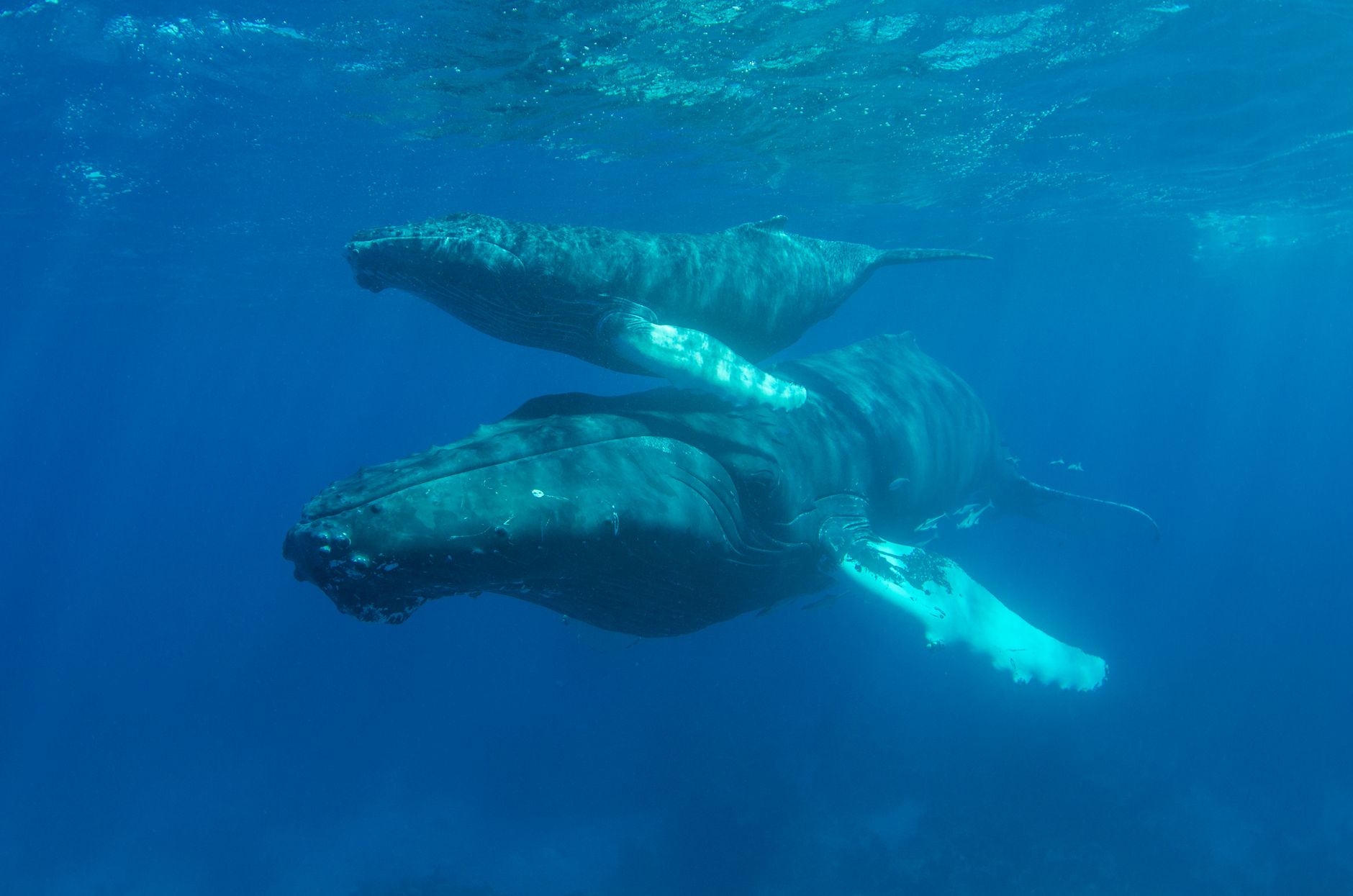
A female humpback whale was recorded remaining close to a stillborn calf on the seafloor off Australia’s Gold Coast, providing what researchers describe as the first detailed documentation of grief‑related behavior in the species. The footage, taken last year, shows the mother maintaining eye contact with the motionless calf, gently touching it with her head and fin while a companion whale swims nearby.
Observations and Reactions
Andrew Mulville of the Sea World Foundation, who was present when the scene unfolded, initially thought the two whales were simply resting on the surface. “At first sight, I thought it was just two whales resting on the surface, but their behaviour was unusual,” he told AFP. Mulville added that the encounter was far from what he expected to see that day.
Researchers estimate the mother stayed with the dead calf for “several hours and possibly even days,” noting that she never attempted to lift the calf toward the surface. This restraint led scientists to infer that the mother recognized the calf’s death shortly after giving birth.
Olaf Meynecke, a member of Griffith University’s Whales and Climate Research Program, described the footage as “really sad” and “pretty heartbreaking to watch this female making continuous contact with the deceased calf.” He emphasized that the observed interaction points to a strong bond between mother and calf and may reflect emotional stages typical of socially complex mammals.
Context and Significance
The study, published Wednesday in Discover Animals, asserts that this is the first thorough, documented instance of such behavior for humpback whales. While grieving rituals have been recorded in other marine mammals—most notably an orca that remained with its newborn for more than two weeks in 2018—instances of documented whale mourning at sea are exceedingly rare.“We’re seeing this from elephants and apes and cases like that that are also extremely heartbreaking,” Meynecke said, highlighting that land‑based mammals are observed grieving more frequently than their oceanic counterparts.
The release of the footage follows a separate milestone: a photographer captured a humpback whale giving birth via drone, an event believed to be the first of its kind recorded from the air. That visual evidence, unveiled about two months earlier, adds to a growing body of data on humpback reproductive behavior.
In related research announced in May, scientists documented two humpback whales traveling between breeding grounds. One individual was first sighted off Bahia, Brazil, and then, 22 years later, was recorded at Hervey Bay, Australia—an estimated 9,383 miles between the two locations—underscoring the species’ extensive migratory patterns.
Collectively, these findings deepen scientific understanding of humpback whales’ emotional capacities and social bonds, suggesting that grief, once thought to be primarily a terrestrial phenomenon, also manifests in the marine realm.

Steve Lopez is a Senior Editorial Columnist and Health & Public Policy reporter for News Raise. Steve focuses on healthcare advancements, medical technologies, and public health policies.