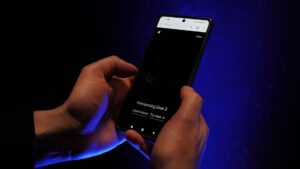
Apple is still refining a security capability that would automatically lock an iPhone the moment it senses the device has been snatched from the owner’s hand. New references uncovered in the iOS 27.2 beta 2 build, reported by 9to5Mac, confirm that the internal project—codenamed “AutoLock”—remains under active development.
Signals that trigger AutoLock
The beta code outlines a set of sensor‑derived signals that the system can evaluate to determine whether a theft may be occurring. These include a sharp acceleration pattern consistent with a sudden grab, a loss of connection to a paired Apple Watch, and a prolonged loss of network connectivity. The feature also watches for the device remaining unlocked beyond a predefined interval, as well as a scenario where the paired Apple Watch becomes unreachable for a certain period.
Safeguards to prevent false positives
Apple appears to have built multiple layers of protection to avoid locking the phone in everyday situations. Successful biometric authentication—such as Face ID or Touch ID—can veto an automatic lock request. The code also references “certain foreground app activities” that could otherwise be misinterpreted as theft signals, allowing those activities to suppress a lock. Additionally, a back‑off mechanism can temporarily pause further automatic locks after repeated lock events, reducing the chance of a cascade of unintended lockouts.
AutoLock employs a voting‑style algorithm: individual theft signals can cast a vote to lock the device, while safeguards like biometric confirmation, familiar location data, or specific app usage can cast a veto. A location‑based safeguard similar to the existing Stolen Device Protection feature checks whether the iPhone is in a known, trusted environment before proceeding.
Development status and testing approach
Although the underlying AutoLock service is enabled in the background of iOS 27.2 beta 2, the component that actually enforces the lock remains disabled. This suggests Apple is collecting telemetry on how the detection logic behaves without triggering real‑world lock events that could inconvenience testers. The approach allows engineers to refine the signal thresholds and safeguard logic while avoiding disruptive user experiences.
Because the feature is not yet exposed as a user‑facing option, iPhone owners running the beta will not see any automatic locking behavior. The presence of the code, however, provides a clear view into Apple’s progress and indicates that the company intends to continue iterating on the concept before a public release.
Outlook and potential rollout
Apple has not announced a timeline for bringing AutoLock to market, and the company may still be evaluating whether the feature meets its reliability and privacy standards. If released, the capability could add a new layer of protection for iPhone users, complementing existing measures such as Find My and Stolen Device Protection. Until Apple makes an official announcement, the iOS 27.2 beta code remains the most concrete evidence of the feature’s direction.
For now, the AutoLock service serves as an internal testbed, and the broader iOS community will have to wait for further beta updates or a formal launch to see the feature in action.

Norman Pearlstine is the Executive Editor and Co-Founder at News Raise. With over two decades of experience across financial journalism, corporate governance, and market analysis, Norman leads the editorial direction and ensures strict adherence to journalistic accuracy and ethics.