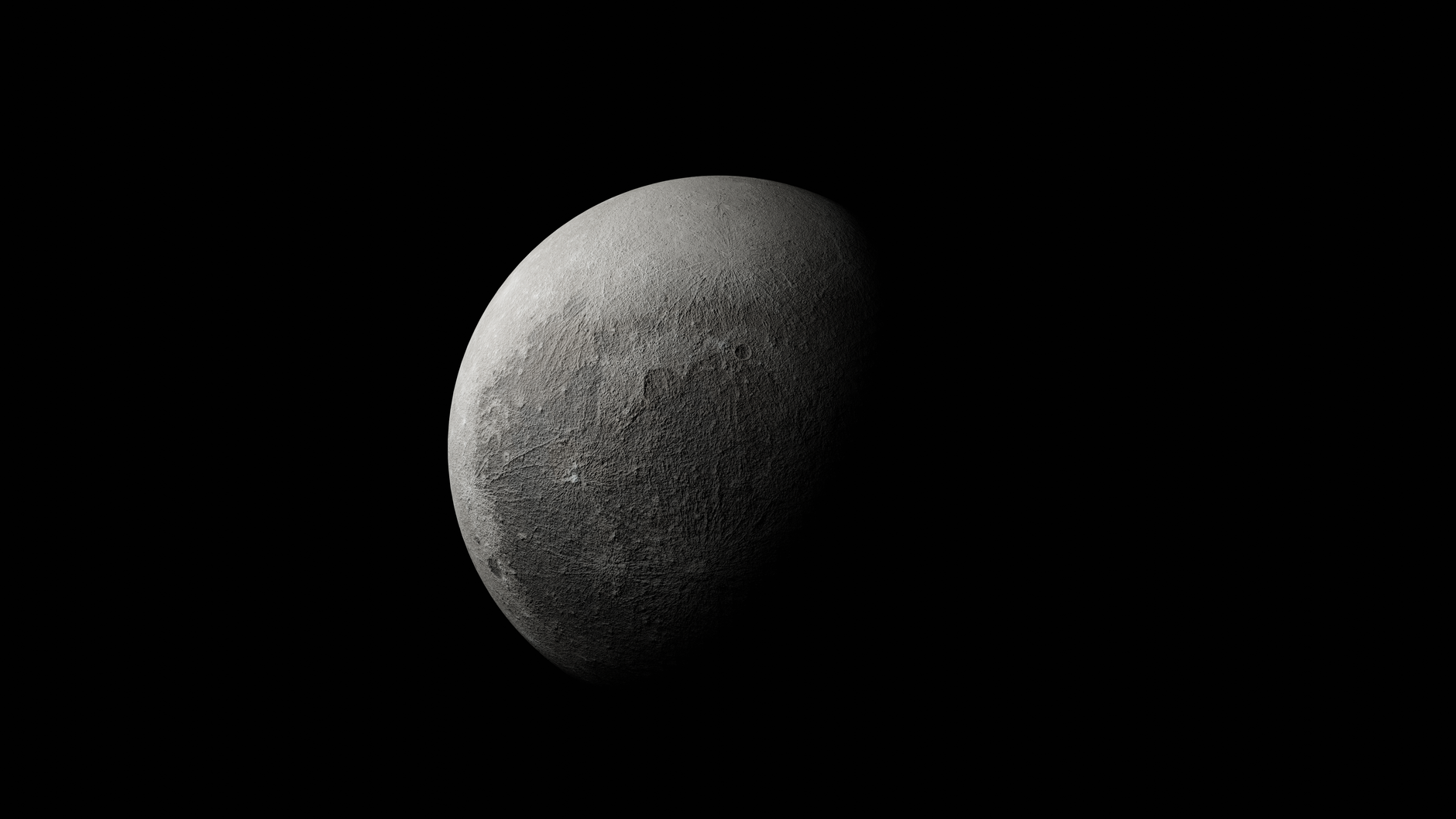
Recent investigations point to the possibility that microscopic organisms could endure in the subsurface ocean of Enceladus, Saturn’s sixth‑largest moon, and that the moon’s characteristic plumes may already separate and concentrate potential biosignatures, making them more accessible to analysis.
Enceladus, roughly the size of the state of Arizona, is one of Saturn’s 145 known satellites. Observations from NASA’s Cassini spacecraft revealed that the moon ejects high‑speed jets of water vapor and ice particles from fractures near its south pole, suggesting a global ocean beneath an icy crust. The presence of salts, organic molecules and evidence of hydrothermal activity at the ocean floor have made Enceladus a prime target in the search for extraterrestrial life.
“That is great news in the search for life,” said Frank Postberg, professor at Freie Universität Berlin and lead author of one of the new studies. He added that future probes could examine individual ice grains from the plume and, if a grain contained microbial material, identify biosignatures with technology already available.
Natural Sample Preparation in the Plumes
Postberg’s team combined Cassini measurements, theoretical modeling and laboratory work to reassess how plume particles behave after leaving the moon. They found that droplets expelled at speeds of up to 621 mph (1,000 km/h) do not freeze instantaneously, as previously assumed. Instead, the freezing process is gradual, allowing salts, organics and any possible biological markers to segregate within the droplet.
During this slow solidification, the components separate and the particles frequently collide with icy fissures on the moon’s surface. These collisions generate tiny shards in which the individual constituents are isolated and concentrated. “Enceladus actually does a lot of the work for us in preparing samples for analysis that usually take a lot of effort in chemical labs on Earth,” Postberg explained. The natural partitioning could enable a spacecraft to target single ice grains and detect chemical signatures without extensive onboard processing.
Laboratory Simulation of Enceladus’ Ocean
In a separate experiment, researchers recreated the chemistry of Enceladus’ ocean in the laboratory. Based on Cassini data, they reproduced an alkaline, low‑oxygen environment rich in carbonates and hydrothermal activity. Into this synthetic seawater they introduced the archaeon Methanothermococcus okinawensis, a microbe that thrives near Earth’s hydrothermal vents and relies on hydrogen and carbon dioxide rather than oxygen.
The organism not only survived but actively grew, consuming hydrogen from the surrounding medium. Although carbon dioxide was scarce in the experimental tank, the microbes adapted quickly and maintained metabolic activity. “This was really a surprise to us,” noted Nozair Khawaja, a planetary scientist at Freie Universität Berlin who contributed to the study.
These laboratory results demonstrate that at least one known metabolic pathway can function under conditions analogous to those inferred for Enceladus, supporting the idea that life—if it ever arose—could persist in the moon’s hidden ocean.
Together, the two studies provide a dual message: Enceladus may host environments capable of sustaining simple life, and its plumes could deliver naturally sorted samples that are easier for future probes to analyze. Missions currently under study, such as the European Space Agency’s L4 concept, could therefore obtain meaningful data on the moon’s habitability sooner than expected. While the existence of life on Enceladus remains unproven, the new findings sharpen the scientific case for dedicated exploration of this intriguing icy world.

Norman Pearlstine is the Executive Editor and Co-Founder at News Raise. With over two decades of experience across financial journalism, corporate governance, and market analysis, Norman leads the editorial direction and ensures strict adherence to journalistic accuracy and ethics.