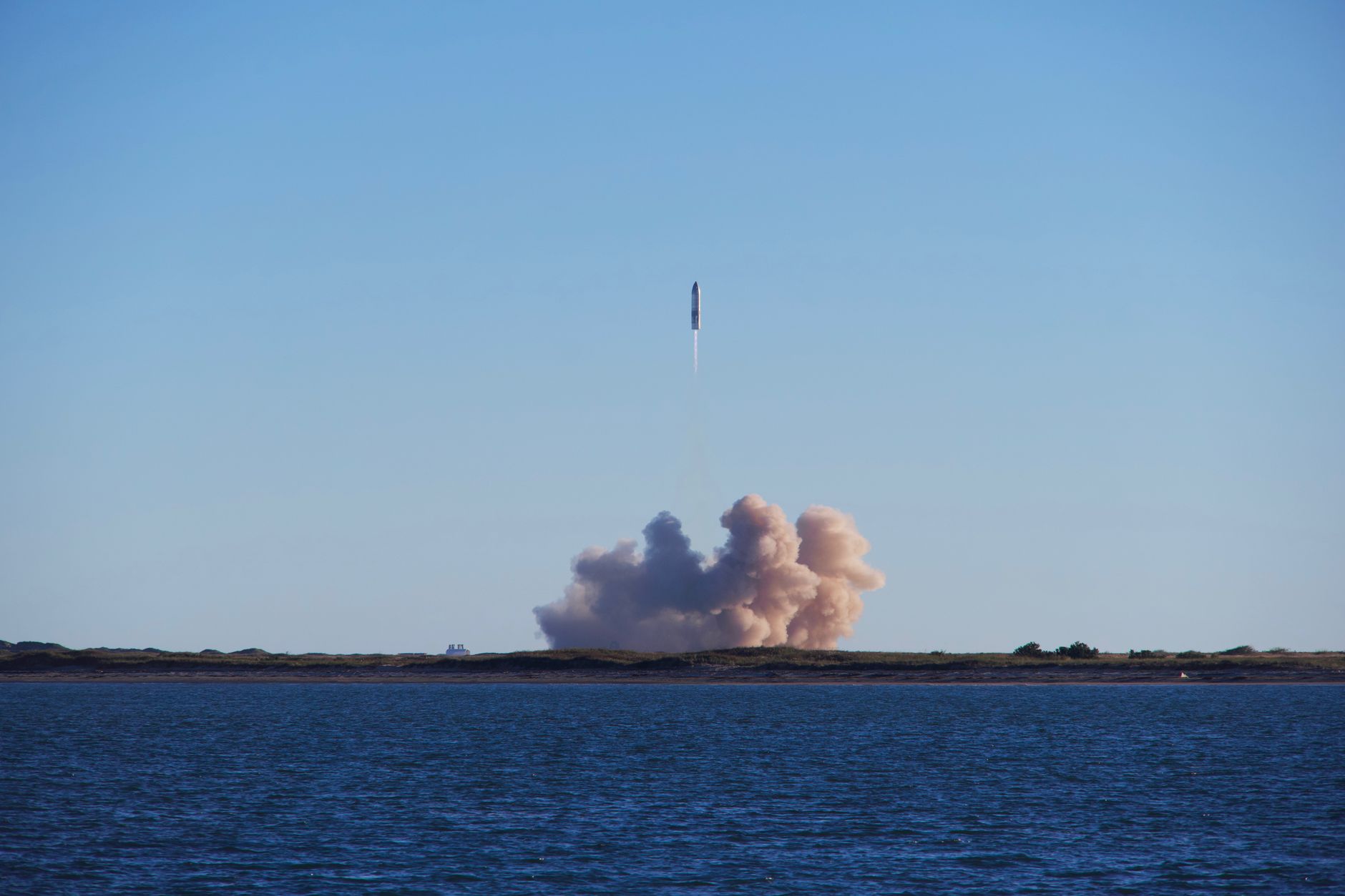
SpaceX lifted off its Super Heavy‑Starship from the Starbase launch complex in Texas at 8:49 a.m. EDT on Monday, beginning a three‑hour test that took the vehicle to a 180‑mile‑high orbit and back. The launch featured the booster’s 33 methane‑fueled Raptor engines, which together generated roughly 16 million pounds of thrust—about twice the power of NASA’s Space Launch System.
Launch and ascent
The first stage, known as Super Heavy, accelerated the 400‑foot‑tall stack along a southeasterly trajectory. Although one of the booster’s engines shut down early, the design tolerates the loss of one or two engines and continued to climb. After 2 minutes 20 seconds, the booster’s engines began shutting down while the six Raptor engines on the Starship upper stage ignited in a “hot‑staging” maneuver just seconds before the booster separated.
Following separation, Super Heavy performed a boost‑back burn to reverse its course and head back toward the Texas Gulf Coast. A second engine apparently shut down early during this burn, yet the booster completed a vertical splashdown a few miles offshore, a marked improvement over the previous test that ended with a hard impact.
Satellite deployment and early splashdown
Starship’s ascent continued with two engine firings that placed the vehicle into orbit. One of the upper‑stage’s six Raptor engines shut down prematurely during the climb to a sub‑orbital trajectory, but telemetry indicated the spacecraft remained healthy. The flight control team authorized a second engine to fire, completing the orbit‑insertion burn.
Eight and a half minutes after reaching orbit, a dispenser in the nose of Starship released 26 third‑generation Starlink internet satellites, each offering ten times the capacity of the prior generation. This marked the first operational payload launch from the new rocket.
With the satellites deployed, mission managers elected to end the flight early. The original plan called for six orbits and a splashdown off the coast of Chile around 6:40 p.m., but the ship re‑entered the atmosphere and performed a controlled, tail‑first splashdown in the Pacific north of Hawaii at 11:57 a.m. EDT, just under three hours after liftoff. As with earlier ocean recoveries, the vehicle tipped over and exploded as residual propellants ignited.
Implications for NASA’s Artemis program
NASA Administrator Jared Isaacman praised the flight on X, calling it a “gorgeous launch” and noting its importance for future Artemis missions. Achieving a reliable orbit and return is a prerequisite for the variant of Starship that NASA intends to use for a crewed lunar landing targeted for 2028.
For Artemis, a Starship lander will require multiple Super Heavy‑Starship tanker flights to refuel it in Earth orbit before it departs for the Moon, where it will dock with a Lockheed Martin‑built Orion capsule. SpaceX plans to launch up to 15 such tankers, followed by a 165‑foot‑tall lunar lander that will carry two astronauts to the Moon’s south pole and back.
SpaceX currently operates two launch pads at Starbase in Texas and is constructing three additional pads in Florida, including historic Launch Complex 39A at Kennedy Space Center. The company hopes to conduct its first Florida launch later this year or early next year, accelerating the test cadence needed to certify the system for human spaceflight.
While many aerospace veterans question whether SpaceX can meet NASA’s 2028 deadline, the successful orbital flight and early recovery demonstrate progress toward the reliability required for a human‑rated launch system. NASA is also funding a competing lander from Blue Origin as a backup, underscoring the high stakes of the upcoming Artemis missions.

Norman Pearlstine is the Executive Editor and Co-Founder at News Raise. With over two decades of experience across financial journalism, corporate governance, and market analysis, Norman leads the editorial direction and ensures strict adherence to journalistic accuracy and ethics.