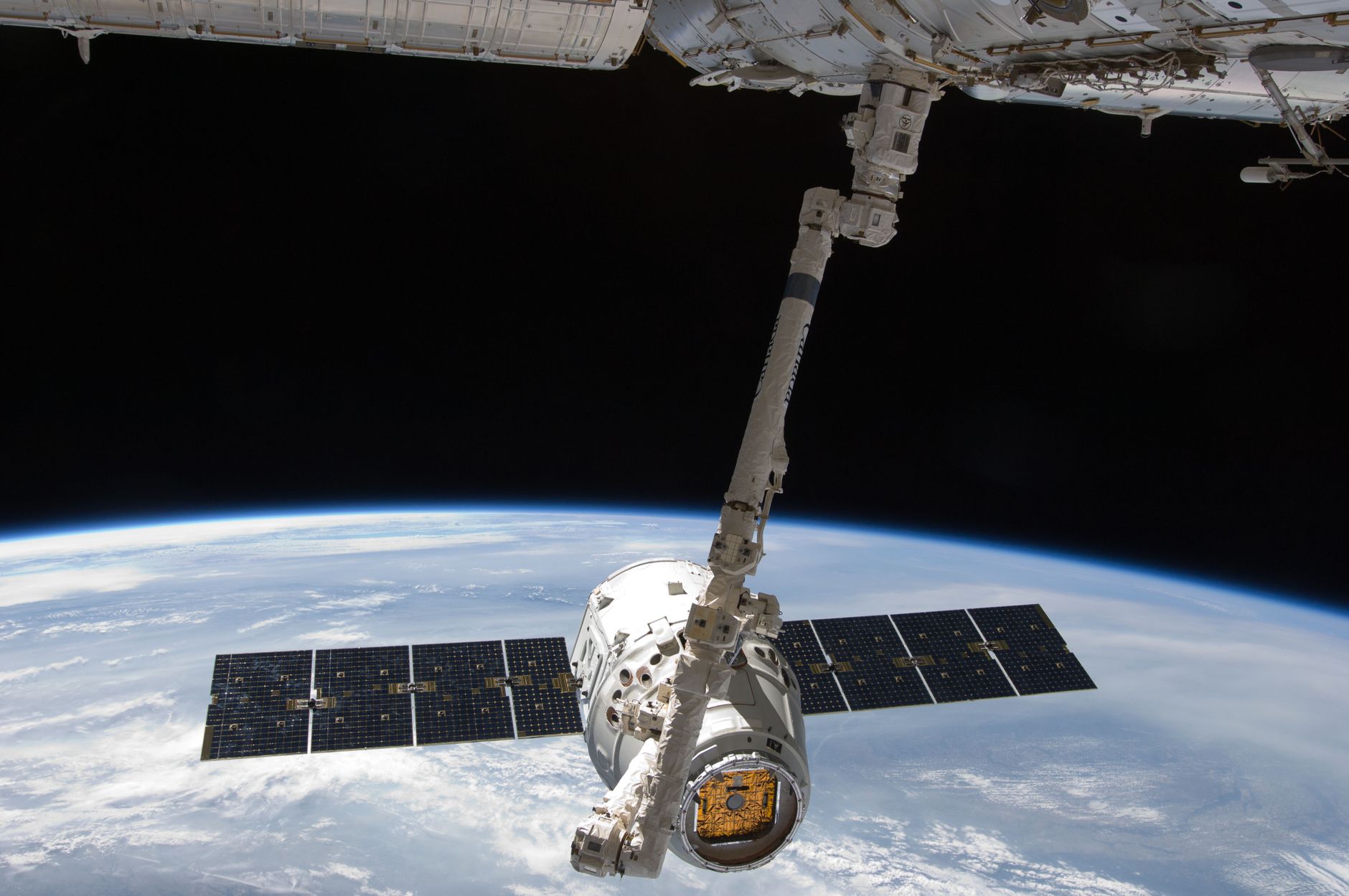
SpaceX’s Crew Dragon capsule named Grace touched down at the International Space Station’s Harmony module at 7:05 p.m. ET on Oct. 1, just 7 hours 55 minutes after liftoff from Space Launch Complex 40 at Cape Canaveral. NASA confirmed the event as the quickest launch‑to‑docking interval ever recorded for a U.S. spacecraft bound for the ISS.
Record‑breaking timeline
The new benchmark eclipses the previous U.S. record set by SpaceX’s own uncrewed CRS‑31 cargo mission, which arrived at the station in a little over 12 hours in November 2024. The fastest crewed flight before Grace was Crew‑11, which required 14 hours 43 minutes in August 2025, according to Space.com.
A post shared by Elon Musk on Monday completed the top‑five ranking of U.S. ISS approaches. Following Crew‑13’s 7 hours 55 minutes, the list includes CRS‑31 at just over 12 hours, Crew‑11 at 14 hours 43 minutes, Axiom’s Ax‑2 mission at 15 hours 35 minutes, and NASA’s Crew‑4 at 15 hours 44 minutes. All five missions were flown on Dragon spacecraft.
How the speed was achieved
Crew‑13 carried NASA astronauts Jessica Watkins and Luke Delaney, Canadian Space Agency astronaut Joshua Kutryk, and Roscosmos cosmonaut Sergey Teteryatnikov. NASA had originally projected a docking time around 8 p.m. ET, but the vehicle arrived nearly an hour ahead of schedule.
SpaceX officials attributed the rapid transit primarily to orbital timing rather than hardware changes. Julianna Scheiman of SpaceX explained that the ISS was positioned in an “opportune spot in space,” allowing Dragon to begin closing the distance almost immediately after reaching orbit. She added that the flight was “close to the fastest it could be.” Most Crew Dragon missions typically require close to a full day, using a series of Draco thruster burns to raise and phase the orbit before rendezvous.
Implications and upcoming missions
Following the record docking, Dragon is slated to depart the station on Oct. 7. NASA targets an 8:05 a.m. ET undocking for Crew‑12, with a splashdown off the California coast projected for 11:34 a.m. the following day. The vacated forward port will be prepared for CRS‑35, a cargo Dragon flight delivering the final set of iROSA solar arrays.
Dragon remains the only operational U.S. vehicle delivering crews to the ISS, as Boeing’s Starliner stays grounded. In a recent contract modification worth $946 million, NASA added Crew‑15, Crew‑16 and Crew‑17 missions to SpaceX’s schedule, underscoring the company’s central role in U.S. human spaceflight.
The new record highlights the growing efficiency of commercial crew operations and demonstrates how precise orbital mechanics can shave hours off a journey that traditionally took nearly a day. As SpaceX continues to dominate U.S. access to the station, the agency’s reliance on Dragon is likely to deepen until Starliner returns to service.

Helene Elliott is the Lead Science & Space Reporter at News Raise. She reports on aerospace missions, astrophysics discoveries, quantum research, and environmental technology.