NASA announced the initial science results from the Artemis II lunar flyby, the first crewed mission to travel around the Moon since Apollo 1972. The four‑person crew – commander Reid Wiseman, mission specialist Jeremy Hansen of the Canadian Space Agency, pilot Victor Glover and mission specialist Christina Koch – completed the April flight, returning a trove of data that includes 996 new photographs, roughly 814 gigabytes of observations and more than eight and a half hours of audio recordings.
Impact flashes captured by the crew’s eyes
During the Orion capsule’s pass, the astronauts reported seeing brief bursts of light on the lunar surface. Wiseman confirmed three flashes to Mission Control at Johnson Space Center, emphasizing that the flashes were not reflections from thrusters or purge tanks but genuine impact events. Mission Control’s Science Evaluation Room staff reacted with excitement, noting the significance of the observation.
In total, five impact flashes were logged. Because the events occur too quickly for the onboard cameras, the crew recorded the sightings on a tablet, annotating the timing and location. Science theme lead Jennifer Heldmen explained that the visual notes, rather than photographic evidence, will guide further analysis.
A muted rainbow of lunar hues
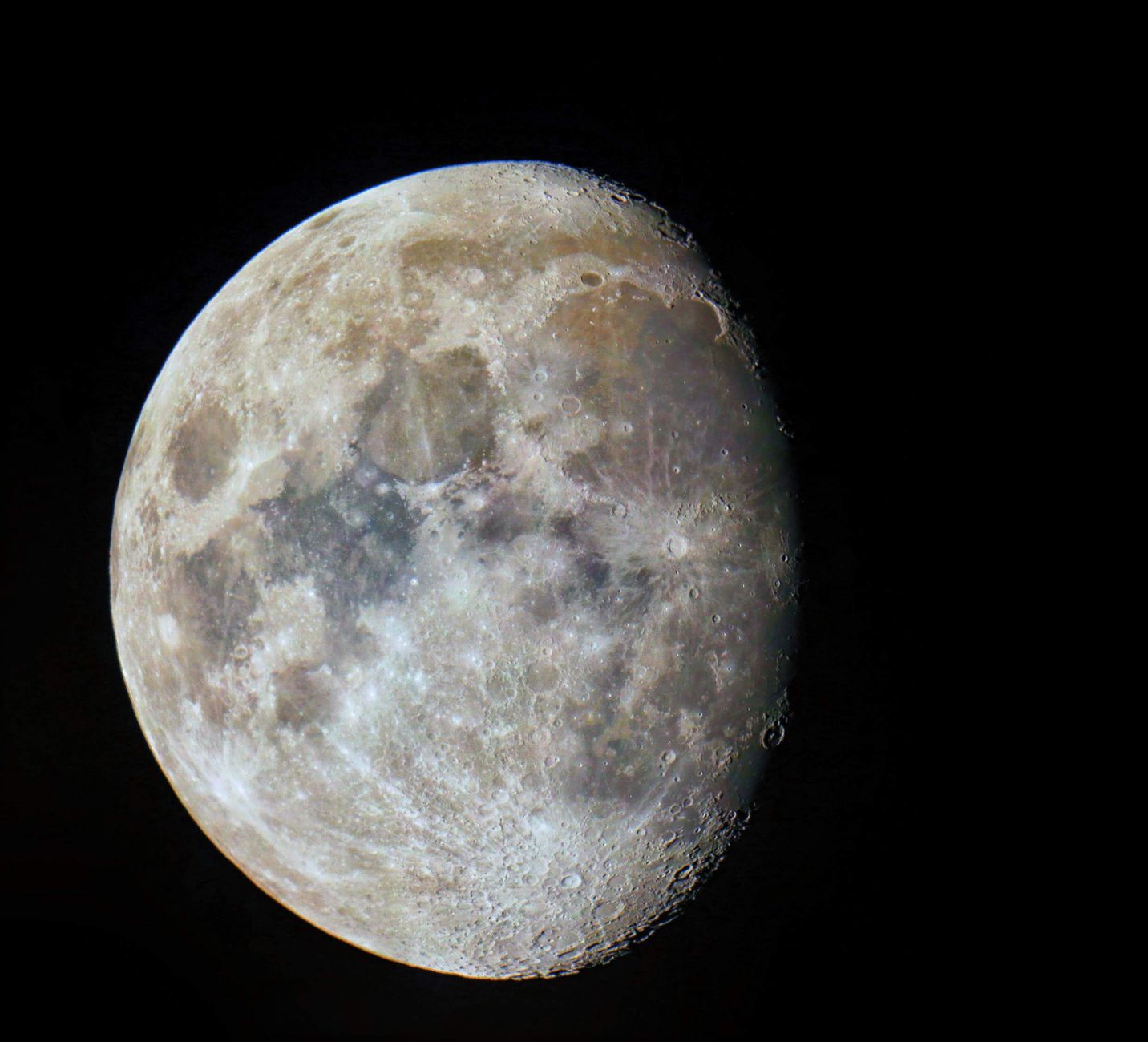
Beyond the flashes, the astronauts described an unexpected palette of colors across the Moon’s surface. While the Moon often appears monochrome from Earth, the crew observed shades of gray, black, brown, tan, white, green and even blue. Ariel Deutsch of the Artemis II Lunar Science Team linked the green and yellowish tones near the Aristarchus Plateau to varied volcanic histories, suggesting the presence of distinct rock types.
Wiseman characterized the colors as “brownish‑green glass,” while Koch referred to a yellowish area as a “jaundiced cheek of the Moon.” Hand‑written notes accompanying the photographs document these observations, providing scientists with new clues about lunar mineralogy.
First human view of an illuminated far side
The Orion trajectory took the crew around the entire Moon, including a segment of the far side that has never been seen up close by humans. Alex Stoken of the Crew Lunar Observations team highlighted that this was the first time in history that people observed that portion of the Moon illuminated.
As the spacecraft crossed the terminator—the line separating day and night—the astronauts noted dramatic shadows and texture contrasts. Glover described the terminator as “the most striking thing I’ve seen so far,” while Koch exclaimed that the backlit far side allowed her to see mountain silhouettes for the first time.
These initial findings represent only a fraction of the data set, which remains available for further exploration by the scientific community. Researchers are now tasked with turning the raw images, audio and annotations into deeper insights about lunar geology and impact processes.
David Hollibaugh Baker, a member of the Artemis II Lunar Science Team, emphasized that the community’s next step is to apply the new data to broader scientific questions, promising “magical things” as analysis progresses.

Steve Lopez is a Senior Editorial Columnist and Health & Public Policy reporter for News Raise. Steve focuses on healthcare advancements, medical technologies, and public health policies.