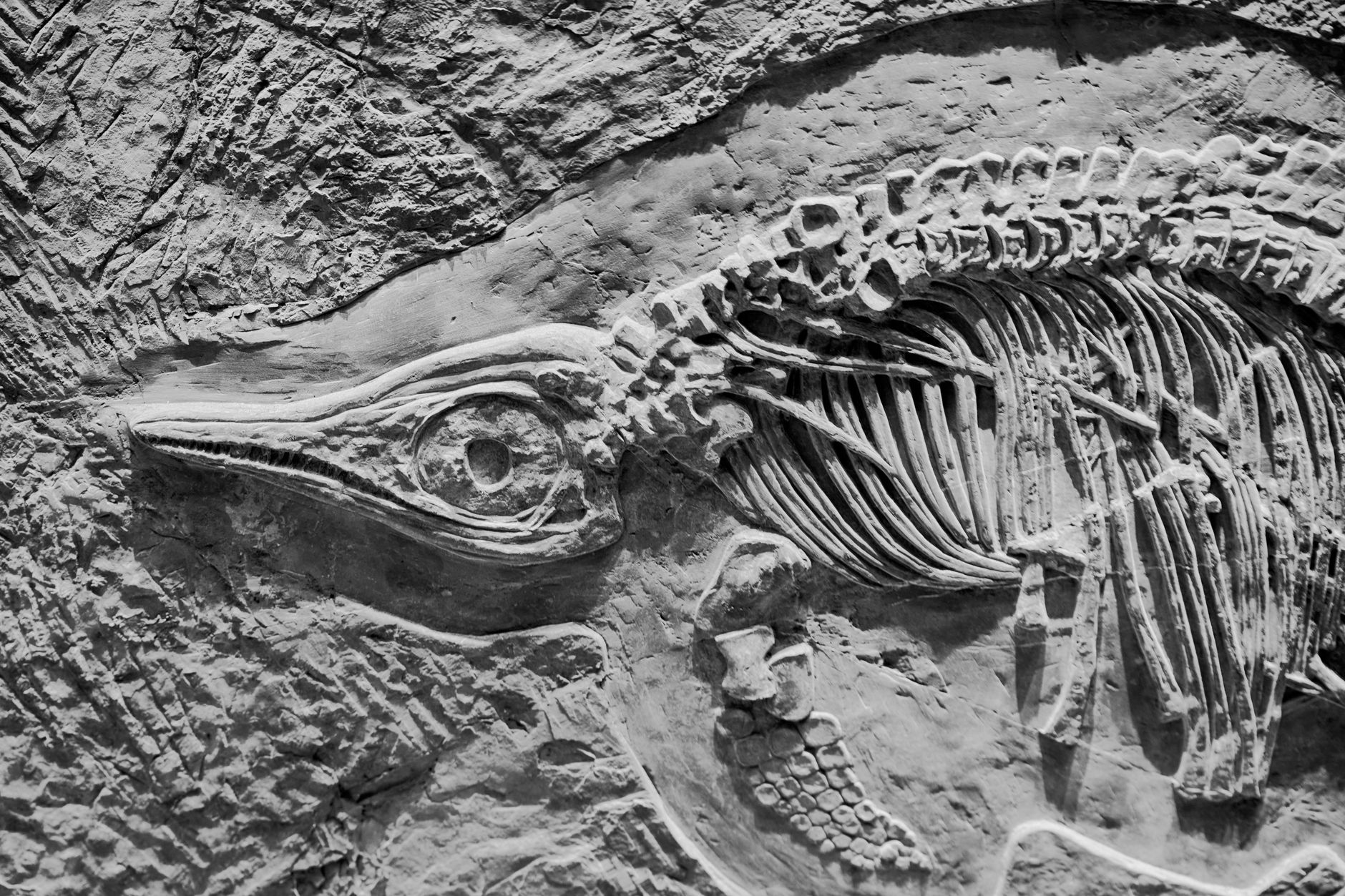
Researchers from the University of Chicago have described a new Jurassic species, Megacauda sungei, based on a 165‑million‑year‑old fossil recovered from Inner Mongolia, China. The animal, a member of the extinct docodont group, possessed a wide, flattened tail and a hyoid apparatus comparable to that of present‑day mammals, indicating that key feeding adaptations were present long before true mammals appeared.
Discovery and anatomical highlights
The specimen measures roughly 40 to 50 centimetres in length and weighed about one to two kilograms. Its hind limbs bear elongated outer digits reminiscent of a platypus, while the tail contains broad, H‑shaped vertebrae that would have acted like a paddle in water. Strong canine teeth and sharp cheek teeth suggest a carnivorous diet, although the tooth arrangement differs from that of modern carnivores.
Most striking is the preservation of delicate throat bones. The hyoid bones form a U‑shaped structure attached to the skull by smaller elements, a configuration that in modern mammals supports the muscles used for chewing and swallowing. The researchers noted that this arrangement allows mammals to break food into smaller pieces before swallowing, a capability absent in reptiles such as alligators. The team compared the throat anatomy to that of the opossum, a living marsupial, underscoring its functional similarity.
Implications for early mammal evolution
Senior author Zhe‑Xi Luo, a professor of organismal biology and anatomy, emphasized the evolutionary significance: “This is an incredibly important evolutionary innovation. After mammals chew their food, be it plants or meat, they all swallow it in the same efficient and effortless way.” He added that the presence of a modern‑type hyoid would have enabled early mammals to diversify their diets, paving the way for carnivores, herbivores, insectivores and omnivores.
Co‑author Peishu Li highlighted the similarity to modern opossums, suggesting that the muscular control of the throat was already sophisticated. Tiny vertebrate fragments found in the stomach cavity point to a diet of small animals, possibly salamanders that co‑occur in the same sedimentary layer.
The find builds on earlier work that identified another semi‑aquatic docodont, Castorocauda, in 2006. The new fossil is older and more complete, offering a clearer picture of how these early mammals navigated both land and water. A comparative analysis with the much smaller Microdocodon gracilis, described in 2019, shows that complex hyoid structures were emerging across different docodont lineages during the Jurassic.
Methods and comparative context
During the COVID‑19 pandemic, co‑author Chang‑Fu Zhou of Shandong University of Science and Technology coordinated the transport of the large slab to multiple laboratories. The team employed high‑resolution CT scanning and X‑ray fluorescence photography to visualize internal structures. Because the original slab was too big for the scanner, it was divided into smaller pieces before imaging. Scientific artist and CT specialist April I. Neander reconstructed the three‑dimensional anatomy from the scans, noting that the fossil’s completeness surpasses that of Castorocauda despite being older.
Published in the journal Nature on Wednesday, the study adds compelling evidence that sophisticated swallowing mechanisms were already in place among mammal ancestors well before the rise of true mammals, setting the stage for the later explosion of dental and dietary diversity.

Helene Elliott is the Lead Science & Space Reporter at News Raise. She reports on aerospace missions, astrophysics discoveries, quantum research, and environmental technology.