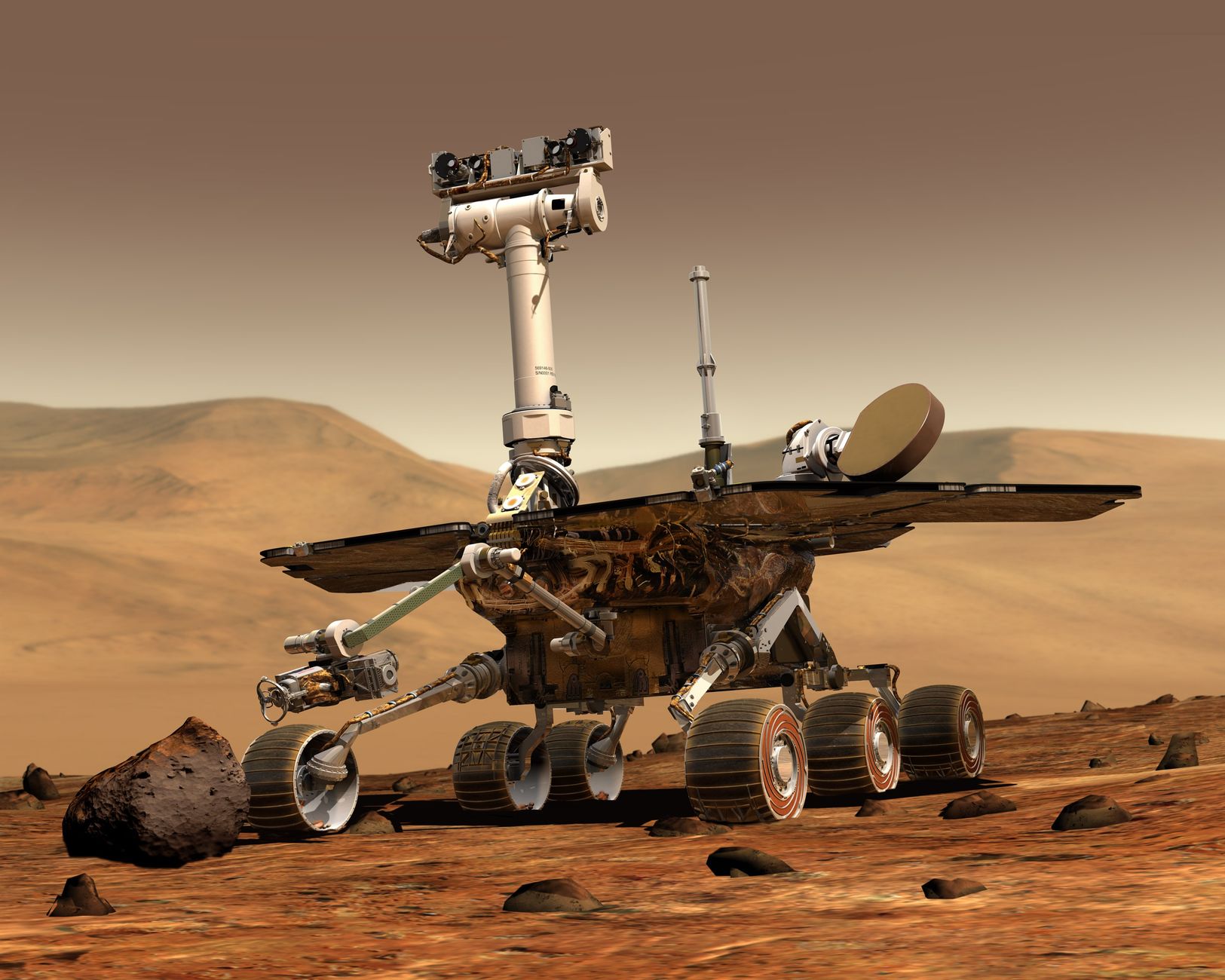
A small, leopard‑spotted rock dubbed Sapphire Canyon was collected by NASA’s Perseverance rover in July 2024 from the river‑carved Neretva Vallis on the floor of Jezero Crater. The rock, roughly the size of a chalk stick, was drilled from an arrowhead‑shaped outcrop named Cheyava Falls and now sits sealed inside the rover’s chassis, awaiting a trip back to Earth.
Potential biosignature on Mars
Scientists on the Perseverance team say the spotted appearance of Sapphire Canyon resembles “reaction fronts” or reduction spots that form in Earth soils when microbes break down buried organic matter. Adrian Broz, a postdoctoral researcher in Purdue University’s Planetary Surface Processes Lab, described the find as the first potential biosignature on Mars. He noted that similar bleached halos appear in sediments where ancient microbes once digested organic material.
The surrounding mudstones also display hundreds of thousands of these spots, suggesting that the ancient river valley may have hosted microscopic life. However, Broz cautioned that only analysis of the material on Earth can determine whether the spots are biogenic or the result of non‑biological chemical processes.
NASA’s stalled sample‑return effort
The Mars Sample Return (MSR) program, a joint NASA‑ESA venture designed to bring back Perseverance’s cache, has faced intense scrutiny for its cost and complexity. After billions of dollars were invested, NASA paused the effort in 2024 and subsequently cancelled the original architecture in early 2025. In a July statement to CNN, the agency said it is exploring “simpler and more affordable approaches,” including possible commercial or international contributions, but no concrete path forward has been announced.
Budget projections for the original plan had ballooned to as much as $11 billion, with the earliest possible return date slipping from 2031 to 2040. Independent review boards highlighted the unwieldy multi‑mission sequence, and fiscal‑year budget cuts for 2024 and 2025 further eroded political support. By the fiscal year 2026 request, NASA announced the termination of the MSR program, and the 2027 request omitted any mention of it. NASA’s total spending on the cancelled effort is estimated at about $2.5 billion.
International competition and future prospects
While NASA reevaluates its approach, China is advancing its own sample‑return ambitions. The Tianwen‑3 mission, slated to launch in 2028, aims to collect Martian material and return it to Earth by 2031. If successful, China could become the first nation to retrieve rocks from the Red Planet, offering a different set of samples that may complement or contrast with those collected by Perseverance.
Researchers such as Purdue professor Briony Horgan stress that remote observations can only provide hints. “We’re never going to know for sure until we get those samples back,” she said, emphasizing the importance of Earth‑based laboratories for definitive analysis.
The scientific community also reflects on past experience with the Allan Hills 84001 meteorite, which was once thought to contain fossilized life but later proved its features could be explained by abiotic processes. Ashwin Vasavada of NASA’s Jet Propulsion Laboratory and planetary scientist Melissa Rice both underscored the need for comprehensive laboratory techniques that exceed the capabilities of rover‑borne instruments.
Since the first budget request for a Mars sample‑return effort in FY 1978, following the Viking missions, retrieving Martian material has been described as a “scientific holy grail.” Yet the cancellation of the current program leaves the Sapphire Canyon rock stranded on Mars, its potential to answer whether life ever arose beyond Earth hanging in balance until a viable return strategy emerges.

Steve Lopez is a Senior Editorial Columnist and Health & Public Policy reporter for News Raise. Steve focuses on healthcare advancements, medical technologies, and public health policies.