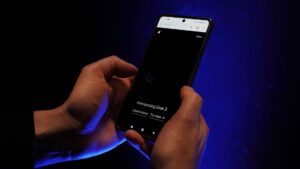
Apple used its recent “Welcome home” event to introduce refreshed versions of the Apple TV 4K and the HomePod mini 2. Both devices focus on deeper integration of Siri’s artificial‑intelligence capabilities and expanded audio options for the living‑room and desktop environments.
Siri AI and hands‑free control on Apple TV 4K
The new Apple TV 4K positions Siri as a primary content‑discovery tool. Built‑in far‑field microphones enable truly hands‑free interaction, allowing users to speak from the couch without needing a remote. Siri can pull context from other Apple services, such as Messages, so a command like “play the show Sam texted me about” works directly. In demonstrations, the assistant answered factual queries about shows—confirming, for example, whether “Ted Lasso” is a real person or if AFC Richmond exists as a football club.
Responses appear as text in a corner of the screen, keeping the audio from the program uninterrupted. Apple deliberately avoided spoken replies that could clash with TV sound, offering a cleaner viewing experience. The updated Siri also supports visual cues without overlaying the video, which reviewers noted as a tidy implementation.
A secondary but notable upgrade is the Apple TV remote. Externally unchanged, the remote now emits a locating tone when users press a button to find it, similar to the sound used with AirPods. This feature aims to reduce the frequent “missing remote” moments in households with children.
HomePod mini 2 brings new hardware and visual features
The second‑generation HomePod mini arrives with Apple’s S10 chip, replacing the S5 found in the 2020 model. While the S10 will eventually power the forthcoming Siri AI on the speaker, Apple clarified that the AI functionality will roll out after launch.
Two consumer‑facing enhancements are highlighted. First, Sound Glow projects animated lighting on the speaker’s back‑lit touch panel, synchronizing with audio such as rain or waves to reflect album artwork or soundscapes. Second, the speaker now supports expanded surround‑sound configurations. Paired with the new Apple TV 4K, up to four HomePod devices can be used for home‑theater audio, doubling the previous limit of two. In a demo, a setup of two second‑generation HomePods at the front and two HomePod mini 2 units at the rear delivered richer bass and a more immersive sound field. A quartet composed solely of HomePod mini 2 speakers also produced “dimensional sound” that filled the demo sofa area.
Apple acknowledges that a four‑speaker arrangement may suit only a minority of users, given the cost and space considerations. For a more modest setup, the reviewer tested a pair of HomePod mini 2 speakers as desktop audio for an iMac. Connected via AirPlay, the pair functioned as external stereo speakers, delivering clearer directional sound for casual games such as Angry Birds. At roughly $300 for a two‑speaker pair, this configuration appears more attainable than a full four‑speaker home‑theater deployment.
Implications for Apple’s ecosystem
Both product updates reinforce Apple’s strategy of weaving its AI assistant deeper into everyday hardware while enhancing audio quality across contexts. The hands‑free Siri on Apple TV 4K promises smoother content discovery without interrupting playback, and the remote‑locating tone adds a practical convenience for families. Meanwhile, the HomePod mini 2’s upgraded chip and visual Sound Glow feature signal Apple’s intent to keep the compact speaker competitive, especially as it gains broader surround‑sound capabilities when paired with the Apple TV.
Consumers interested in a more integrated, voice‑first entertainment experience will likely weigh the cost of multiple HomePod units against the appeal of a unified Siri‑enabled environment. As Apple rolls out the delayed Siri AI for the HomePod mini 2, the speaker could become a more central hub for voice control throughout the home.

Mitchell Landsberg is a Senior Technology Correspondent at News Raise. He covers consumer electronics, artificial intelligence, software developments, and digital privacy trends.