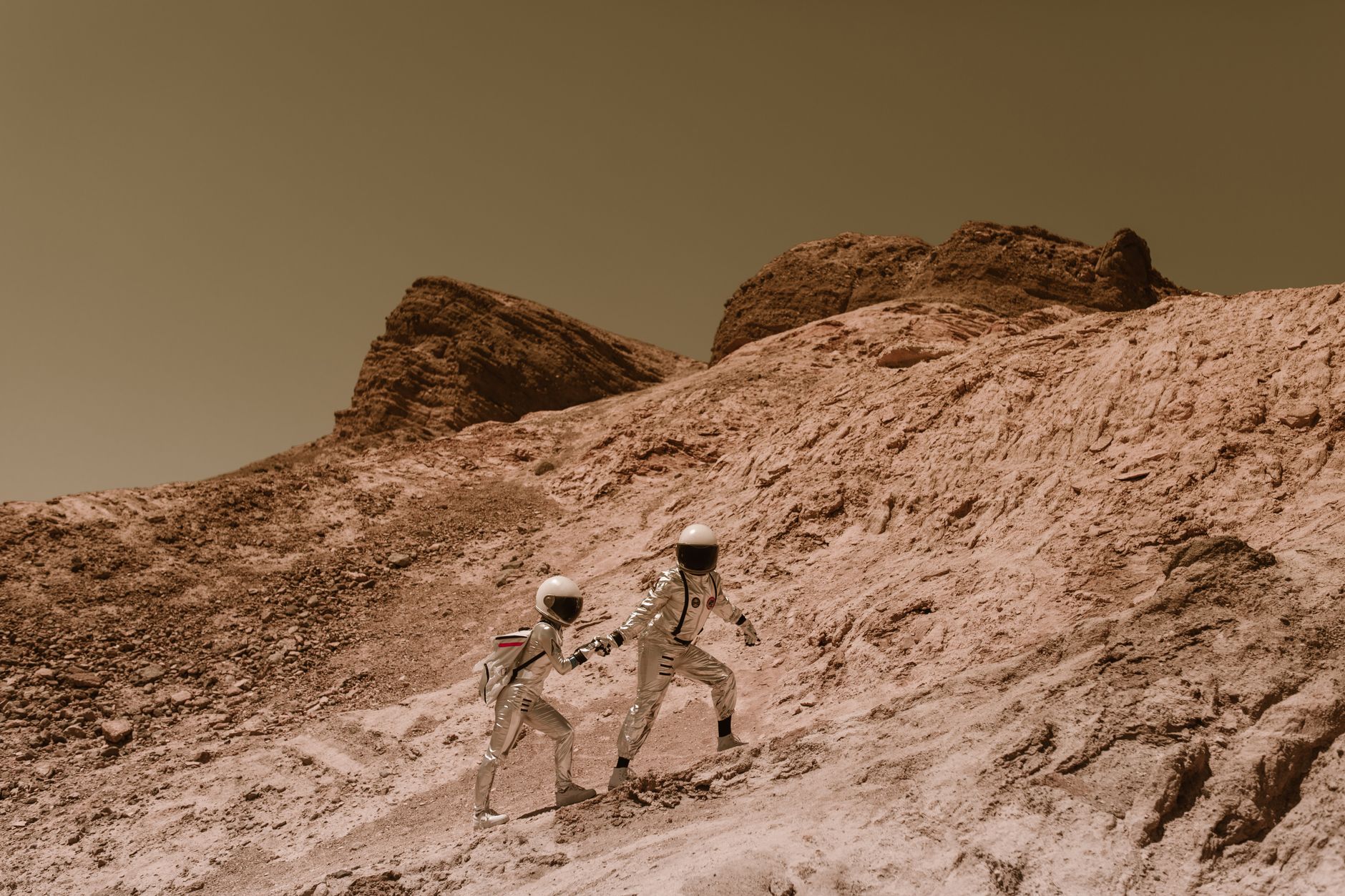
Japan Aerospace Exploration Agency (JAXA) lifted off the Martian Moons eXploration (MMX) mission earlier this week with the objective of delivering a small rover to the surface of Phobos, one of Mars’ two moons, and eventually returning material to Earth. If the mission proceeds as planned, the Idefix rover will touch down on Phobos in 2029, and a sample‑return capsule is scheduled to bring back fragments by 2031.
Background on Phobos and Deimos
Humanity has been sending robotic probes to Mars since the 1970s, gathering extensive data about the planet itself while knowledge of its two moons, Phobos and Deimos, remains limited. In the 1960s, a minority of scientists even speculated that Phobos might be an artificial object, but Viking‑era photographs and measurements confirmed its natural origin. Modern observations suggest Phobos is not a solid rock body; instead, large voids may exist beneath a layer of fine regolith, and deposits of ice are considered a plausible component.
Both moons are tiny compared with Earth’s Moon. Phobos measures roughly 22.2 km (13.8 mi) in diameter, while Deimos is about 12.6 km (7.8 mi). Their low mass precludes the possibility of a spacecraft maintaining a stable orbit around either body, forcing mission designers to adopt unconventional navigation strategies.
MMX Mission Profile
MMX will perform a series of maneuvers that bring it within range of both Phobos and Deimos at different stages, but it will not linger in orbit around either. The final approach to Phobos will resemble a very low‑speed “crash” rather than a conventional landing. JAXA likens the technique to NASA’s OSIRIS‑REx mission, which gently bumped into asteroid Bennu while collecting samples. The impact velocity will be kept low enough to avoid rebounding, and mission planners anticipate the spacecraft may execute a couple of hops before finally settling on the surface.
The Idefix rover’s primary scientific task is to assess whether wheeled locomotion is feasible on Phobos’ regolith‑covered terrain. Determining the mechanical properties of the surface will inform both the sample‑collection process and future concepts for robotic or crewed operations on the moon.
Implications for Future Exploration
Understanding Phobos’ composition could clarify whether the moon consists of material ejected from Mars, a hypothesis that, if confirmed, would heighten scientific interest in the Martian satellites. Moreover, the energy required to land on Phobos or Deimos is a fraction of that needed for a crewed Mars landing, making the moons attractive candidates for early human outposts. Their low orbital altitude would enable near‑real‑time control of surface robots on Mars, bypassing the communication delays that currently limit Earth‑based teleoperation.
While a human presence on Phobos would lack the symbolic impact of stepping on the Martian surface, it could serve as a strategic stepping stone, offering a platform for detailed Mars observation and a testbed for technologies needed for deeper exploration. The success of MMX—particularly the retrieval of surface samples—will be a decisive factor in evaluating the feasibility of such future missions.
As the first mission dedicated to returning material from a Martian moon, MMX represents a significant milestone in planetary science and may reshape plans for humanity’s next steps beyond Earth.

Norman Pearlstine is the Executive Editor and Co-Founder at News Raise. With over two decades of experience across financial journalism, corporate governance, and market analysis, Norman leads the editorial direction and ensures strict adherence to journalistic accuracy and ethics.