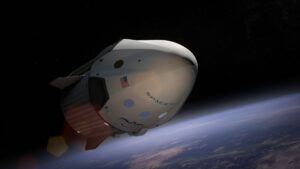
NASA confirmed on Oct. 23 that the Swift space telescope will cease operations and is expected to burn up in Earth’s atmosphere within the next few weeks. The decision follows the inability of a privately built spacecraft, LINK, to capture and boost the aging observatory, ending a rescue effort that began earlier this year.
Swift’s two‑decade legacy
Launched in November 2004, the Swift observatory was originally intended to operate for just two years, focusing on the detection of gamma‑ray bursts (GRBs) – the most energetic explosions known in the universe. Defying its design life, Swift continued to collect data for more than twenty years, becoming a cornerstone of high‑energy astrophysics. Over its tenure the telescope recorded more than 2,000 GRBs, studied over 1,400 supernovae, and performed surveys of asteroids, comets and black holes in X‑ray wavelengths. The mission contributed to roughly 7,000 peer‑reviewed papers, a figure that scientists expect will keep growing as the archive remains publicly accessible.
In 2018 the observatory was renamed the Neil Gehrels Swift Observatory in honor of its first principal investigator, who passed away the previous year. The telescope gathered its final scientific measurements on Oct. 20, three days before NASA formally announced the mission’s conclusion.
The ambitious Katalyst rescue plan
Facing inevitable orbital decay caused by atmospheric drag, NASA awarded a $30 million contract in September 2025 to Arizona‑based Katalyst Space Technologies to devise a rescue. Katalyst built a refrigerator‑sized vehicle called LINK, designed to rendezvous with Swift, latch onto it with three robotic arms, and raise its orbit to extend its scientific life.
LINK launched on July 3, just over nine months after the contract was signed, reflecting a compressed schedule dictated by Swift’s rapid descent. The mission was described by NASA’s Astrophysics Division director, Shawn Domagal‑Goldman, as “high‑risk, high‑reward” from the outset, noting that no private spacecraft had previously captured and re‑boosted a satellite not built for servicing.
Approximately three weeks after liftoff, LINK encountered propulsion and reaction‑wheel problems that caused the vehicle to spin faster than planned. The malfunction prevented the spacecraft from executing the capture maneuver, although it managed to approach within 12 to 15 kilometers of Swift and photograph the target. On Sept. 25, as LINK re‑entered Earth’s atmosphere, Domagal‑Goldman reiterated that the effort would still be valuable for advancing U.S. spacecraft servicing capabilities, even though the rescue ultimately failed.
Mission conclusion and future legacy
With the rescue attempt unsuccessful, NASA’s statement emphasized the end of Swift’s operational life while celebrating its scientific impact. Domagal‑Goldman said the observatory had played a pivotal role in “advancing our understanding of the changing universe” and highlighted the importance of rapid‑response observations that Swift pioneered.
Although the telescope will soon descend into the atmosphere, its extensive data set will continue to support research for years to come. The agency’s announcement also underscored the broader significance of the rescue attempt, noting that the challenges faced by LINK will inform future efforts to extend the lifespan of low‑Earth‑orbit assets.
Swift’s retirement marks the conclusion of a mission that reshaped high‑energy astrophysics, leaving behind a rich repository of multi‑wavelength observations that will fuel new discoveries long after the spacecraft’s final orbit ends.

Steve Lopez is a Senior Editorial Columnist and Health & Public Policy reporter for News Raise. Steve focuses on healthcare advancements, medical technologies, and public health policies.