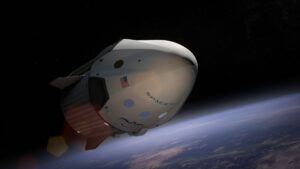
NASA officials on Friday laid out a detailed timetable for the Artemis III mission, a low‑Earth‑orbit test that will precede the agency’s first crewed lunar landing slated for 2028. The agency described the upcoming series of launches as potentially the most intricate campaign in its history, given that two competing commercial landers – Blue Origin’s Blue Moon Mark 2 and SpaceX’s Starship – must be readied, launched and docked with the Orion crew vehicle within a tight window.
Schedule and stakes
Administrator Jared Isaacman emphasized that the agency will not rely on additional time or funding to make the effort safer, stating, “We will not delude ourselves into believing that more time, more money, and flying less will somehow make our work safer or more achievable.” He added that when schedules slip, NASA personnel will intervene directly to solve problems rather than produce paperwork.
Artemis III is planned as a roughly 14‑day test in 2027 that will involve three massive rocket launches, multiple dockings and undockings of Orion with experimental landers, and a series of technology demonstrations. The mission is intended to vet the lander that will later be used for Artemis IV, the first crewed lunar landing since Apollo 17 in 1972.
Two very different landers
SpaceX, which secured a lunar‑landing contract in 2021, will fly a stripped‑down version of its Starship system. Starship consists of a Super Heavy booster and an upper stage that also serves as the lunar lander, standing 171 feet tall and equipped with six Raptor engines. The vehicle has completed an orbital test flight but has yet to demonstrate crewed docking or the reliability of its engines for repeated use. NASA associate administrator Amit Kshatriya noted that current engine issues mainly affect reuse, but affirmed that Starship must achieve a stable orbit with the dwell time required for the docking test.
Blue Origin’s approach relies on the Blue Moon Mark 2 lander, a 52‑foot‑tall vehicle that would launch inside the cargo bay of the New Glenn rocket. Its design resembles a scaled‑up Apollo lander. The company’s earlier plan to launch a smaller Blue Moon Mark 1 this year was postponed after a New Glenn test‑stand explosion in May destroyed the Florida launch site. Blue Moon Mark 2 still requires integration of life‑support systems and a series of low‑Earth‑orbit operations, including docking with at least three boost stages before heading toward the Moon.
Testing, refueling and remaining hurdles
SpaceX’s roadmap calls for completing the Starship prototype for Artemis III, finishing landing‑leg and airlock demonstrations, and expanding its test‑flight campaign to two Florida launch pads. A critical milestone will be an in‑orbit propellant transfer between two Starship vehicles, a maneuver never performed before. The first such demonstration is slated for early 2027, and successful fuel transfer will be essential for the multiple‑launch refueling architecture SpaceX envisions for a lunar mission. While earlier estimates suggested 10‑40 refueling flights, Elon Musk recently indicated six to eight launches may suffice; NASA confirmed the lower figure but said the exact number will be clear only after transfer testing.
Blue Origin must first get New Glenn flying again—potentially by year‑end—and conduct a Blue Moon Mark 1 test flight early next year. After Artemis III, both the Starship and Blue Moon Mark 2 are expected to make uncrewed lunar landings to validate their descent capabilities.
The agency has also announced broader simplifications across the Artemis program, including faster production of the Space Launch System, design changes to Orion, and a lighter‑weight spacesuit from Axiom intended for early lunar missions. Nonetheless, the lunar lander development remains the primary driver of the schedule, according to Artemis Program manager Jeremy Parsons.
NASA’s accelerated timeline reflects competition with China, which aims to land its first taikonauts on the Moon by 2030. While the agency acknowledges the risks of moving quickly, Kshatriya stressed that safety oversight will remain unchanged, and that speed can be achieved without compromising critical engineering reviews.

Norman Pearlstine is the Executive Editor and Co-Founder at News Raise. With over two decades of experience across financial journalism, corporate governance, and market analysis, Norman leads the editorial direction and ensures strict adherence to journalistic accuracy and ethics.