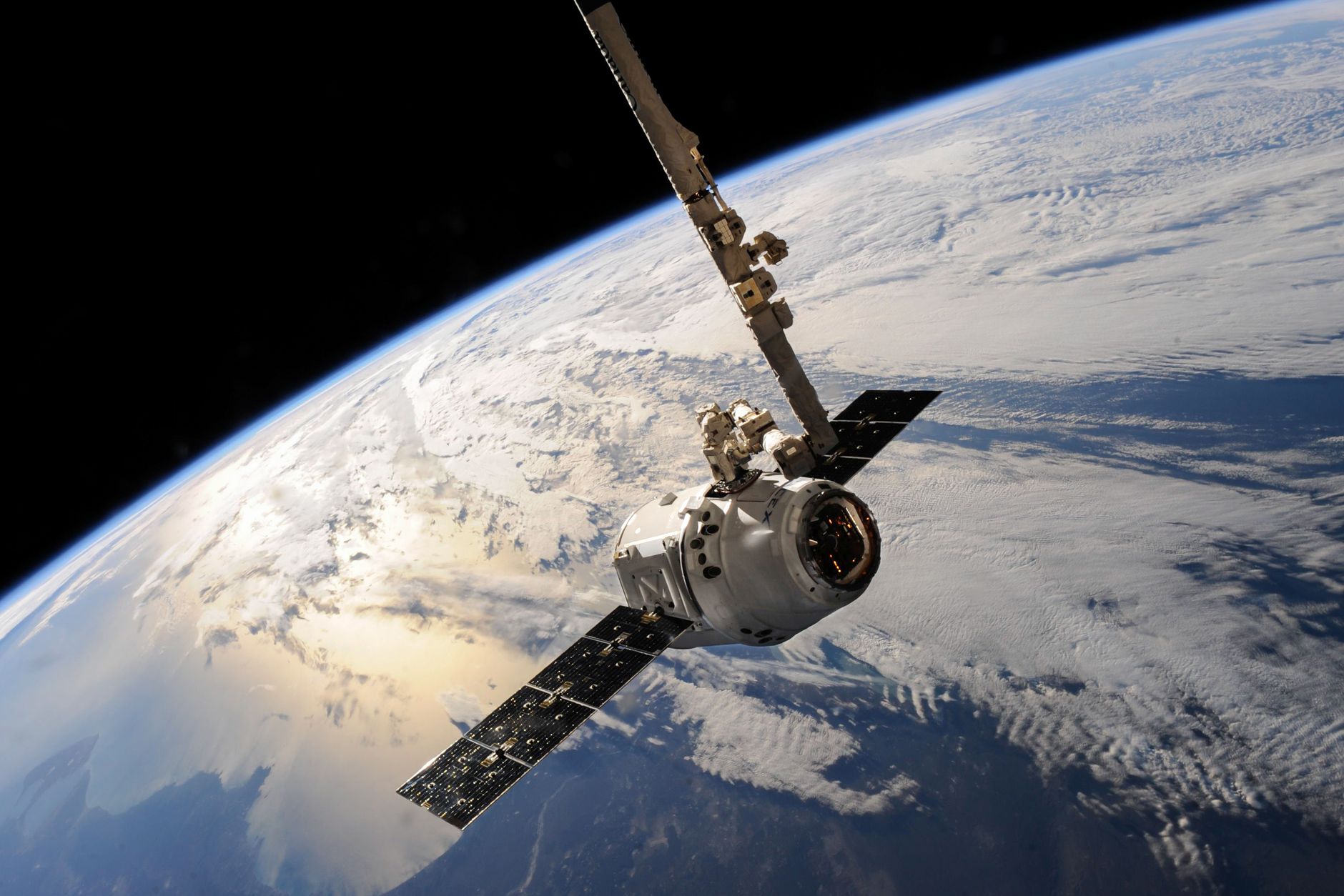
More than 230 million pieces of space debris measuring between one millimeter and one centimeter now orbit the planet, joined by roughly 1.5 million objects between one and ten centimeters, according to the European Space Agency’s latest statistics released on Nov. 2, 2026. The agency also counts about 68,450 objects larger than ten centimeters, many of which are active spacecraft, and roughly 19,610 satellites still in orbit, of which about 15,800 remain functional. The sheer volume creates a growing “traffic jam” that threatens both existing satellites and future missions.
Scale of the debris problem
NASA visualizations of tracked objects as of Jan. 1, 2019 show that about 95 % of the plotted items are orbital debris rather than operational satellites. The graphics enlarge the dots for visibility, but they omit the overwhelming majority of smaller fragments that cannot be individually tracked. Even objects too tiny to see with the naked eye travel at orbital speeds exceeding 17,000 mph, meaning a collision with a functioning satellite can cause serious damage.
Researchers warn that collisions between two large objects can generate thousands of additional fragments, a cascade known as the Kessler syndrome. A September 2026 ESA analysis warned that the debris population could continue to grow through collisions even if no new satellites were launched, potentially rendering some orbital regions unsafe or unusable.
Risks to space operations and astronomy
Satellites underpin everyday services such as GPS navigation, weather forecasting and global communications. The growing debris field therefore has implications far beyond space exploration. At Duke University, assistant research professor of physics Arun Kannawadi reports that passing satellites reflect sunlight, leaving bright streaks on telescope images. While digital tools can mask these streaks, each masked segment removes valuable data, potentially obscuring rare astronomical discoveries.
SpaceX, which operates the world’s largest satellite constellation through its Starlink program, acknowledges the escalating collision risk. An Oct. 6 update noted more than 11,000 Starlink satellites in low Earth orbit and outlined plans that could eventually involve up to 100,000 Starlink satellites and as many as one million satellites dedicated to orbital AI computing. The company has called for greater data sharing among operators, developed automated collision‑avoidance systems and created a tracking network called Stargaze. Nevertheless, the sheer increase in objects complicates avoidance maneuvers and does not address the millions of existing fragments.
Efforts to clean up orbit
In October, the U.K. Space Agency awarded a £61 million contract to ClearSpace to develop a robotic spacecraft capable of capturing two defunct satellites and guiding them to re‑entry by 2032. The mission, slated for launch in 2029, will use robotic claws to seize satellites that were never designed for retrieval. While removing only two objects will not dramatically lower the overall debris count, the project aims to demonstrate technology that could be scaled for larger‑scale removal and servicing missions.
Researchers at North Carolina State University, led by assistant professor of mechanical and aerospace engineering Mark Moretto, are exploring a different mitigation strategy: a deposit system similar to bottle‑return programs. Under the proposed scheme, satellite operators would pay a deposit at launch and receive a refund after successfully de‑orbiting the spacecraft. Moretto’s recent study suggests that participation by just 20 % of satellites could produce meaningful improvements in long‑term orbital sustainability.
Even successful de‑orbiting raises environmental questions. Most low‑Earth‑orbit satellites are allowed to decay naturally, burning up in the atmosphere. The process releases metals such as aluminum, which can form particles like aluminum oxide. Scientists are still investigating whether increased deposition of such materials could affect upper‑atmospheric chemistry, including ozone‑layer processes. Moretto notes that while Earth constantly encounters meteoroid material, the composition of human‑made spacecraft differs, making the potential impacts an open research area.
The convergence of mounting debris, expanding satellite constellations and emerging cleanup concepts underscores the complexity of achieving sustainable space operations. Without coordinated international policies, financial incentives and demonstrated removal technologies, the orbital environment may become increasingly hazardous for both commercial and scientific endeavors.

Helene Elliott is the Lead Science & Space Reporter at News Raise. She reports on aerospace missions, astrophysics discoveries, quantum research, and environmental technology.