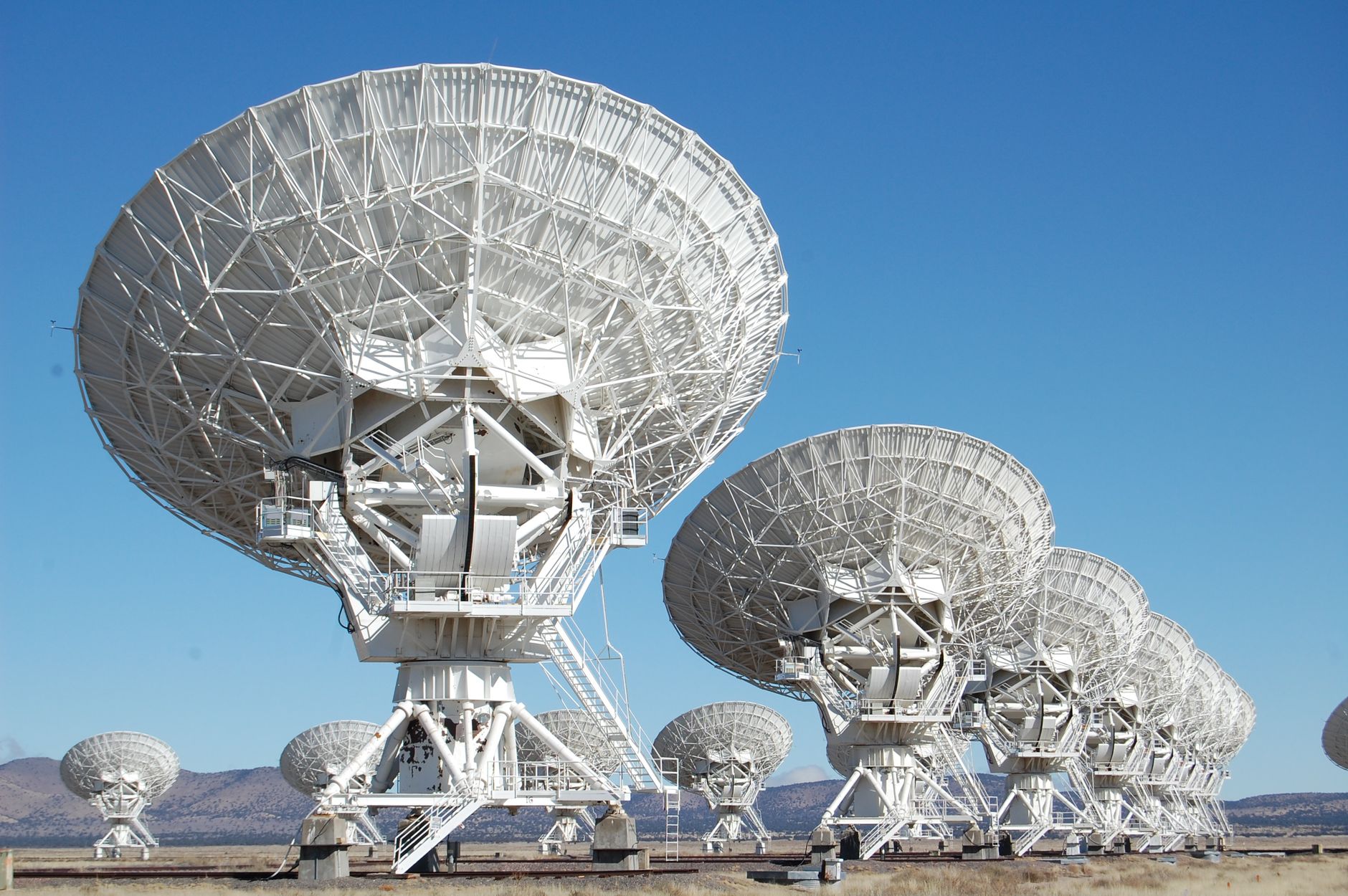
While sifting through archival data from the MeerKAT radio telescope, astronomers uncovered a previously unknown source that flashes bright radio bursts every 62.2 minutes. The object, designated LPT J1555‑5631, produces two distinct pulses during each cycle—one longer, one shorter—and the two pulses exhibit opposite circular polarization. The discovery, published in The Astrophysical Journal, adds a key data point to the growing class of long‑period transients (LPTs), a group of radio emitters that pulse on timescales of tens of minutes to hours before disappearing.
Discovery and Observation
Scott Hyman of Sweet Briar College first noticed a similar pattern in 2002 when a source near the Galactic center emitted five flares spaced 77 minutes apart before going silent. After years of searching without success, Hyman turned to a different project—searching for millisecond pulsars. In 2022, an object in the same data set showed pulsar‑like properties but with pulses separated by many minutes. A simultaneous 10‑hour observation by the ASKAP telescope confirmed a precise 62‑minute period, leading the team to classify the source as an LPT.
What Sets LPTs Apart
Long‑period transients are a newly recognized class of radio source. The first member, GLEAM‑X J1627‑5235, was observed in 2018 and reported in 2022. Since then, roughly a dozen LPTs have been identified across surveys of the Milky Way, including the retroactive inclusion of Hyman’s 2002 detection, GCRT J1745‑3009. Unlike conventional pulsars, which rotate rapidly and emit beams on millisecond‑to‑second timescales, LPTs can have intervals of hours between flashes. This slow cadence challenges existing models of neutron‑star emission.
Three broad categories have been proposed to explain LPT behavior: ordinary pulsars, magnetars, and white dwarfs. Pulsars emit radio beams as they spin, while magnetars generate bursts through magnetic field reconfiguration. White dwarfs, larger stellar remnants that can rotate slowly, may produce radio bursts via interactions with a binary companion. The diversity of pulse shapes, polarization signatures, and periods among LPTs suggests that more than one physical mechanism may be at work.
Magnetic Clues from Polarization
The twin pulses of LPT J1555‑5631 are not only timed but also polarized in opposite directions. This indicates that the radio waves originate near both magnetic poles of the object, and that the rotation axis and magnetic axis are nearly perpendicular. However, the pulses are separated by 165.4° rather than the 180° expected from a simple dipolar magnetic field. Hyman interprets this deviation as evidence of a more complex magnetospheric geometry.
Such magnetic intricacy may explain why LPTs flare with clockwork regularity and then fall silent. Most known LPTs, including J1555‑5631, have not been detected again after their initial outburst, though a few—such as GCRT J1745‑3009—have shown repeat activity. Researchers suspect changes in the magnetosphere could drive these on‑off cycles, but a larger sample is needed to identify reliable patterns.
Looking Ahead
Hyman emphasizes that expanding the LPT catalog will be crucial for distinguishing between competing models. “After many more LPTs are discovered, we hopefully will uncover more trends that allow us to make targeted searches,” he said. Continued blind searches of archival data and serendipitous finds remain essential tools for probing these mysterious emitters.

Norman Pearlstine is the Executive Editor and Co-Founder at News Raise. With over two decades of experience across financial journalism, corporate governance, and market analysis, Norman leads the editorial direction and ensures strict adherence to journalistic accuracy and ethics.