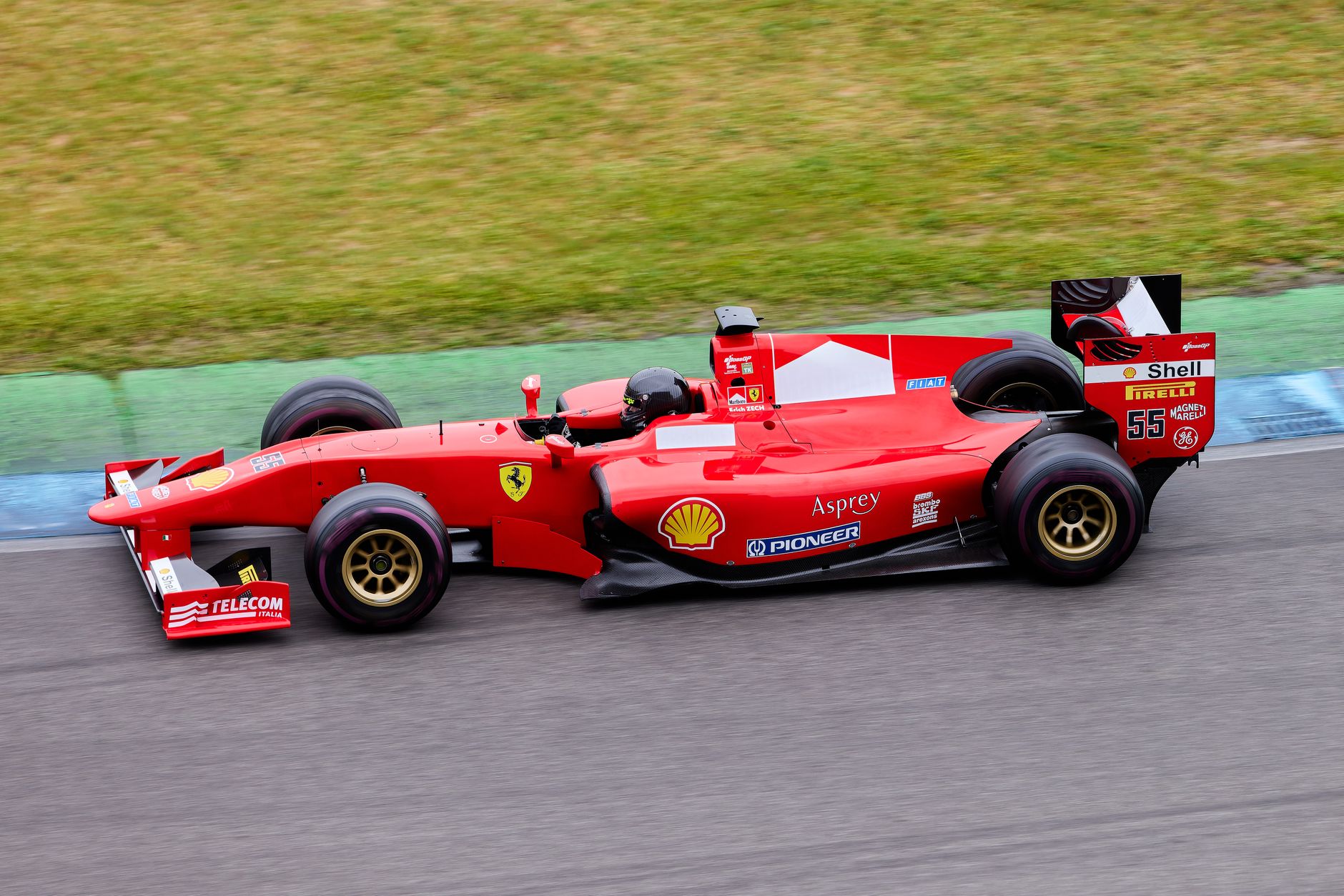
Ferrari presented two new models, the 296 Challenge Stradale and the 296 Challenge EVO, during the 2026 Ferrari Finali Mondiali at the Circuit de Barcelona‑Catalunya in Montmeló. The unveiling underscored the manufacturer’s strategy of transferring technology between its competition programmes and road‑going cars, while also setting the stage for the 2027 Ferrari Challenge season.
Powertrain and performance figures
Both cars share the 2,992 cc 120° twin‑turbo V6 engine first seen in the 296 Speciale, but they differ in output and transmission. The road‑legal 296 Challenge Stradale produces 670 hp at 8,000 rpm and is mated to an eight‑speed dual‑clutch F1 gearbox. The track‑only 296 Challenge EVO raises power to 700 hp at 7,500 rpm, delivers a specific output of 234 hp per litre and uses a seven‑speed F1 transmission. Neither model incorporates a hybrid system, a choice that reduces overall weight and simplifies the drivetrain.
Weight figures reinforce the performance focus: the Stradale has a dry weight of 1,330 kg, which is 140 kg lighter than the standard 296 GTB, resulting in a weight‑to‑power ratio of 1.98 kg/hp. The EVO matches this weight, confirming that both cars were engineered with lightweight construction as a priority.
Aerodynamics and design language
Ferrari stripped unnecessary visual elements from the Stradale to achieve a more essential, racing‑inspired appearance. The design emphasizes function, with each surface serving a technical purpose. Aerodynamically, the Stradale generates 617 kg of downforce at 250 km/h—72 % more than the 296 GTB—through a fixed rear wing, splitter, flick, aero damper, vortex generators and a fully enclosed underbody.
The EVO builds on that foundation, increasing maximum downforce by 12 % (about 100 kg at 250 km/h) and adding a Low Drag configuration that cuts minimum drag by 4 %. Additional refinements include a wider wing‑adjustment range, a redesigned rear diffuser, new carbon‑fibre mirrors and a high‑performance driveshaft with dedicated cooling. An optional rear‑ride‑height increase of up to 10 mm can add roughly 30 kg of downforce at the same speed.
Dynamic systems and racing context
On the road, the Stradale features ABS Evo that operates in every Manettino setting, along with bespoke control systems and a dedicated suspension setup. It runs on Pirelli P Zero R and P Zero Trofeo RS tyres. The EVO upgrades its traction‑control and electronic‑differential strategies, introduces a new brake‑pedal curve for better modulation, and improves braking stability through high‑speed corners.
Testing shows the EVO is faster on circuit laps, delivering a 0.8‑second advantage at Mugello compared with the previous 296 Challenge model. The car also demonstrates reduced tyre degradation and greater consistency over race distances. A redesigned instrument cluster makes lap data, tyre pressure and control‑intervention levels easier to read, a benefit as the 2027 Ferrari Challenge will feature three 40‑minute endurance rounds, starting with the second season event at Mugello.
Beyond the chassis, Ferrari refined the engine’s internal components. Boost pressure and cam‑phaser management boost low‑end response, while a new flexplate and lighter driveline parts improve torque transfer. The eight‑speed gearbox employs dual shift logic: at high loads and revs shift times are around 170 ms, prioritising speed and torque continuity; at lower revs shift times extend to roughly 250 ms to enhance smoothness, a strategy derived from the SF90 XX Stradale.
Exhaust upgrades—twin tailpipes with larger diameter—reduce back pressure and preserve the distinctive high‑pitched V6 note of the 296 GTB. Turbochargers and heat‑shield designs, taken from the 296 Challenge, lower thermal mass and allow the removal of superfluous protective components, further lightening the engine bay.
Overall, the 296 Challenge Stradale and EVO illustrate Ferrari’s commitment to a seamless technology loop between its race cars and road vehicles, delivering a pure, driver‑centred experience while pushing the limits of performance ahead of the 2027 competition calendar.

Steve Lopez is a Senior Editorial Columnist and Health & Public Policy reporter for News Raise. Steve focuses on healthcare advancements, medical technologies, and public health policies.