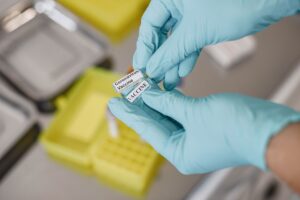
For the first time, a federal advisory panel is set to recommend that women ages 30 to 65 be screened for cervical cancer primarily with an HPV test rather than the traditional Pap smear. The recommendation, which emerged from a closed‑door vote at the end of a two‑day meeting of the U.S. Preventive Services Task Force (USPSTF), also introduces a self‑administered HPV test as an option for eligible patients.
Details of the proposed change
Under the USPSTF’s current guidance, women in the 30‑to‑65 age group could choose among three strategies: a Pap test every three years, an HPV test every five years, or a combination of both tests every five years. The new draft would eliminate the Pap‑only option for that age range, directing clinicians to use HPV testing at five‑year intervals. Women ages 21 to 29 would continue to receive Pap testing every three years, as before.
The panel’s recommendation carries practical weight because the Affordable Care Act requires most private insurers to cover services endorsed by the USPSTF without cost‑sharing. Consequently, a shift toward HPV testing could affect millions of women’s out‑of‑pocket expenses.
Expert commentary and supporting evidence
Dr. Sangini Sheth, an associate professor of obstetrics, gynecology and reproductive sciences at Yale School of Medicine, highlighted the potential for the self‑collection option to broaden access. She noted that a vaginal swab does not require a speculum exam, making it suitable for settings such as mobile health clinics, freestanding laboratories, or specialty offices where pelvic exams are not routine.
Robert Smith, a cancer epidemiologist and senior vice president of early cancer detection science for the American Cancer Society, said the self‑collected specimen “has equivalent accuracy with a physician‑collected specimen.” He added that many women delay Pap testing because the exam can feel invasive, especially when performed by a male provider, and that a more comfortable, at‑home test could increase overall screening rates.
Evidence supporting the shift comes from a 2018 study published in the Journal of the American Medical Association, which followed more than 19,000 women and found that HPV testing identified precancerous changes earlier and more accurately than Pap testing. The USPSTF panel noted that Pap smears alone miss a sizable share of abnormalities, detecting only about 50 % to 70 % of cases, whereas HPV testing captures a larger proportion of high‑risk infections.
Smith contrasted the two methods, calling HPV testing “superior to cost‑testing” and emphasizing that the test looks for high‑risk HPV strains before cellular changes become apparent, allowing longer intervals between screenings.
Policy context and next steps
The recommendation is not yet final; USPSTF guidance typically becomes official once published. The timing of publication remains uncertain, as does whether Health Secretary Robert F. Kennedy Jr. will need to sign off. A 2023 Supreme Court decision affirmed the health secretary’s authority to review and potentially modify USPSTF recommendations, after a case involving a Christian‑owned business and an HIV‑prevention drug.
In September, Kennedy reshaped the panel, appointing eight new members, some of whom hold stock in companies whose products could be affected by USPSTF decisions. The meeting that produced the HPV‑focused vote was the committee’s first in more than a year.
The American Cancer Society, which began prioritizing HPV testing in its own guidelines in 2020, aligns with the USPSTF’s direction but differs on a few points. The society recommends starting HPV screening at age 25 and, for self‑collected samples, testing every three years rather than every five, pending longer‑term data.
Finally, the USPSTF clarified that screening should cease at age 65 only for women who have had multiple consecutive negative results over the past ten years. Those without such a record should continue regular testing. The American College of Obstetricians and Gynecologists said it is monitoring the process and will evaluate the final recommendations when released.

Helene Elliott is the Lead Science & Space Reporter at News Raise. She reports on aerospace missions, astrophysics discoveries, quantum research, and environmental technology.