Asus has introduced the ProArt P16, a high‑end notebook that integrates Nvidia’s newly announced RTX Spark processor, positioning the machine as a unified platform for artificial‑intelligence workloads, creative productivity and gaming. The most powerful configuration ships with 128 GB of system memory and a Blackwell‑based GPU, and carries a price tag of roughly $7,000, placing it among the costliest consumer laptops available.
Hardware Overview
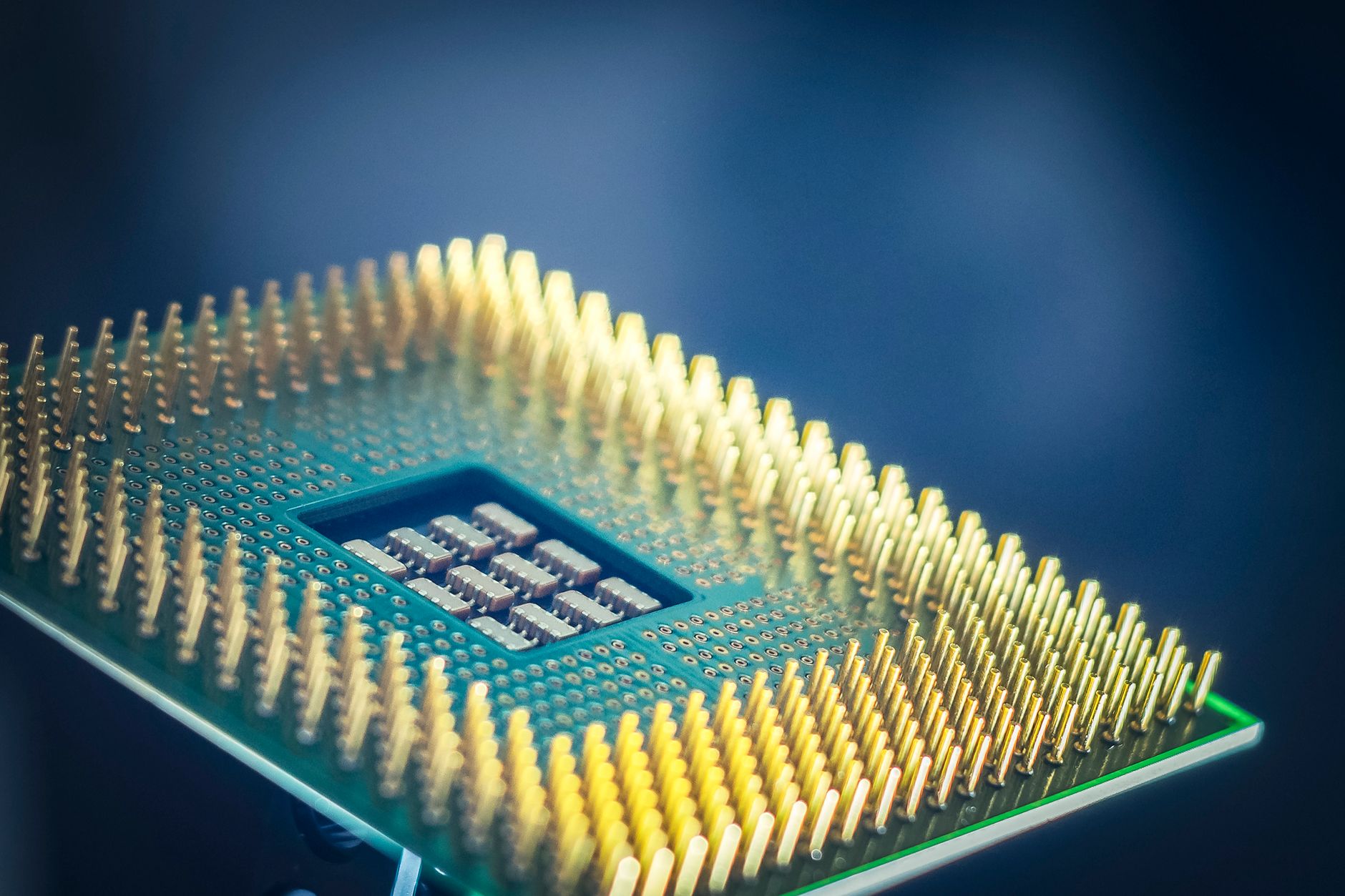
The heart of the ProArt P16 is Nvidia’s Spark N1X chip, built on the Grace CPU architecture. It features a 20‑core design split evenly between ten high‑performance Arm Cortex‑X925 cores and ten power‑efficient Arm Cortex‑A725 cores. The performance cluster can boost to between 4.0 GHz and 4.1 GHz, while the efficiency cores top out at 2.8 GHz. Cache memory totals 49 MB, comprising 24 MB of shared L3 cache and 25 MB of L2 cache, providing ample bandwidth for demanding AI and graphics tasks.
Graphics and dedicated AI acceleration are handled by Nvidia’s GB20B Blackwell GPU. In this configuration the GPU houses 6,144 cores distributed across 48 streaming multiprocessors and includes a 24 MB L2 cache. The fifth‑generation Tensor Cores support the full suite of Nvidia technologies such as DLSS, Reflex, ACE, G‑Sync, CUDA and NVFP4. Nvidia rates the graphics side at up to 31 TFLOPS of FP32 performance, while the AI side can deliver about 1,000 TOPS of FP4 compute.
AI and Gaming Potential
Nvidia markets the RTX Spark as a single solution capable of handling AI inference, creative workloads and gaming. While the ProArt P16 does not contain a conventional discrete GPU, the Blackwell GPU’s 6,144 cores and advanced Tensor technology enable it to run local AI models directly on the laptop without relying on cloud services. In practice, the device can act as a primary gaming machine, though the article notes that achieving stable AI‑driven workflows still involves considerable trial and error.
The combination of a high‑core‑count CPU, massive memory capacity and a powerful AI‑centric GPU suggests the ProArt P16 could support multiple concurrent AI agents, a scenario the reviewer describes as a “small army of agents” running on a single notebook. However, the reviewer also cautions that the price point and the experimental nature of local AI workloads may limit broader adoption.
Market Position and Pricing
At a top‑end price of about $7,000, the ProArt P16 sits in a niche segment aimed at creators, developers and enthusiasts who need on‑device AI performance without sacrificing graphics capability. The reviewer points out that while the laptop is more approachable on Windows compared with some Linux‑centric AI rigs, the high cost and the need for extensive configuration work mean it is not a mass‑market solution. Nonetheless, for users seeking a portable workstation that can handle AI inference, 3D rendering and modern gaming, the ProArt P16 offers a compelling, if expensive, proposition.
Overall, the Asus ProArt P16 demonstrates how Nvidia’s RTX Spark architecture can be packaged into a consumer‑oriented laptop, delivering a blend of AI compute, graphics power and ample memory. Whether the device will set a new standard for local AI on laptops remains to be seen, but it certainly provides a glimpse of what future high‑performance notebooks might look like.

Steve Lopez is a Senior Editorial Columnist and Health & Public Policy reporter for News Raise. Steve focuses on healthcare advancements, medical technologies, and public health policies.