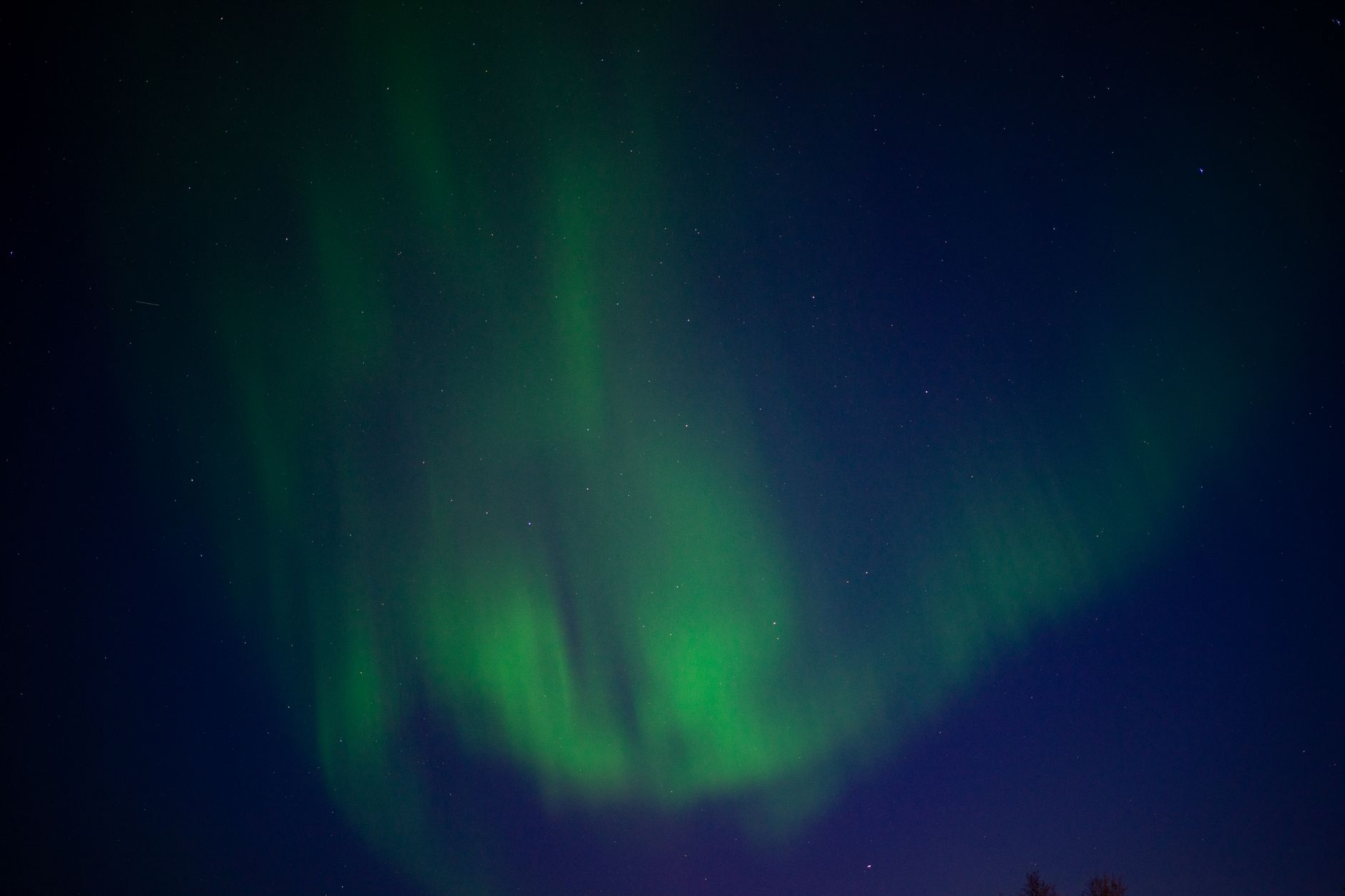
The National Oceanic and Atmospheric Administration (NOAA) has issued a forecast indicating that a moderate geomagnetic storm on Friday night could make the aurora borealis visible across as many as ten states in the lower 48. The agency assigned a Kp index of five for the evening, a level it describes as potentially “quite pleasing” for observers situated in the right locations.
Forecast Details and Affected Areas
According to NOAA’s map, the auroral display may be seen in northern Washington, the extreme northern tip of Idaho, most of Montana, the portion of Wyoming that borders Montana, North Dakota, northern South Dakota, northern Minnesota, the northern tip of Wisconsin, Michigan’s Upper Peninsula, and the northern part of Michigan’s lower peninsula. Alaska, while not part of the lower‑48 count, is expected to enjoy a substantially higher probability of visibility.
The forecast also notes that the geomagnetic storm is classified as moderate, a condition that can amplify the brightness and extent of the northern lights. By contrast, the following night, Saturday, is projected to have a lower Kp index of three, suggesting a reduced chance of seeing the phenomenon.
Best Practices for Viewing
Enthusiasts are advised to look for the lights between 10 p.m. and 2 a.m., when the Earth’s magnetic field is most receptive to solar particles. Selecting a high‑elevation spot away from city lights can improve the odds of a clear view. Although a full moon is expected on Friday, which can add background illumination, observers in dark‑sky locations may still catch a discernible display.
Tips for Photographing the Aurora
For those hoping to capture the event on camera, the guidance varies by equipment. Smartphone users should disable flash and enable any built‑in night mode. Photographers using DSLR or mirrorless cameras are encouraged to set a low aperture, employ a wide‑angle lens, and mount the camera on a sturdy tripod to accommodate the long exposure times required.
Solar Cycle Context
The current auroral activity follows a historic peak earlier this year. In 2024, the Sun reached the apex of its 11‑year solar cycle, driving aurora sightings to levels not seen in five centuries. Since that high, activity has been on a gradual decline and is expected to taper further by 2027, making the present window a relatively rare opportunity for those in the United States to witness the northern lights without traveling far north.
For real‑time updates and detailed maps, NOAA directs the public to its Aurora Dashboard, which tracks ongoing geomagnetic conditions and provides region‑specific forecasts.

Steve Lopez is the Editorial Page Editor for News Raise. He covers Health. He has won more than a dozen national journalism awards for his reporting and column writing at seven newspapers and four news magazines.