The Neil Gehrels Swift Observatory, a NASA‑operated gamma‑ray burst detector launched in November 2004, is set to plunge back to Earth without a controlled deorbit. A private effort to boost the satellite to a higher orbit failed, meaning the aging spacecraft will re‑enter the atmosphere sometime after October, though exact timing and landing site remain unknown.
Rescue mission and its cancellation
In September 2025 NASA issued an urgent call for assistance after heightened solar activity accelerated Swift’s orbital decay. The agency awarded a $30 million contract to Arizona‑based Katalyst Space Technologies, tasking the firm with delivering a robotic tug to lift the telescope to a safer altitude.
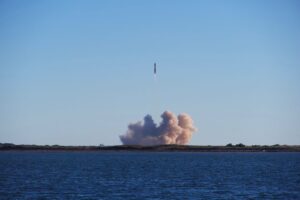
Katalyst responded quickly, designing and building a spacecraft named LINK in just nine months. LINK launched on 3 July 2025 with the goal of rendezvousing with Swift and performing the required re‑boost. However, shortly after launch the vehicle experienced attitude‑control problems that prevented it from completing the mission.
Ghonhee Lee, CEO of Katalyst Space Technologies, told CNN News Central on 24 August that the outcome was disappointing but highlighted the “unprecedented scale” of the effort. Lee noted that a longer development window—“just three more months”—could have made a decisive difference, underscoring the high‑risk, high‑reward nature of the project.
Uncontrolled re‑entry and debris risk
NASA’s public affairs specialist for astrophysics, Alise Fisher, confirmed that Swift will undergo an uncontrolled re‑entry. Fisher explained to Space.com that the spacecraft is unlikely to re‑enter before October and that NASA will follow established inter‑agency notification procedures as the event approaches.
According to Fisher, most of the observatory’s mass is expected to vaporize during descent, but some components could survive the fiery passage. The overall risk to people on the ground is described as “unlikely.”
Expert views on survivability
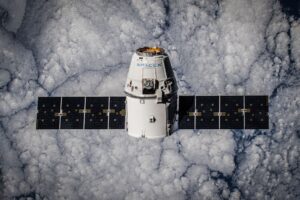
Swift’s dry mass is listed at 613 kilograms (1,351 pounds) and includes a Burst Alert Telescope, an Ultraviolet/Optical Telescope and an X‑Ray Telescope. Darren McKnight, a senior technical fellow at LeoLabs, which tracks objects in Earth orbit, said the telescope’s mass and construction suggest it will break apart sufficiently to avoid a ground‑casualty hazard. Nevertheless, he warned that certain internal parts—such as optical lenses and titanium tanks—might endure the re‑entry and reach the surface.
Ewan Wright, a Ph.D. student at the University of British Columbia and junior fellow at its Outer Space Institute, added that Swift’s orbital inclination of 21 degrees means any surviving debris could land anywhere between 21 degrees north and 21 degrees south latitude. He expects most remnants to fall into the ocean, but acknowledged a small chance of impact on populated areas, noting that the frequency of uncontrolled re‑entries is rising each year.
While the precise re‑entry corridor will be refined as the spacecraft’s decay progresses, NASA continues to monitor Swift’s trajectory and will issue public notices when more concrete predictions become available.
The Swift mission, which spent two decades observing the most energetic explosions in the universe, has now concluded its scientific phase. Its final descent will serve as a reminder of the growing challenge posed by aging satellites and the importance of end‑of‑life planning for orbital assets.

Helene Elliott is the senior reporter for News Raise. She covers Science news. She also has a keen interest in photojournalism. Helene holds a nomination for the prestigious Red Smith Award. She is married to author Dennis D’Agostino, a former publicist with the New York Mets.