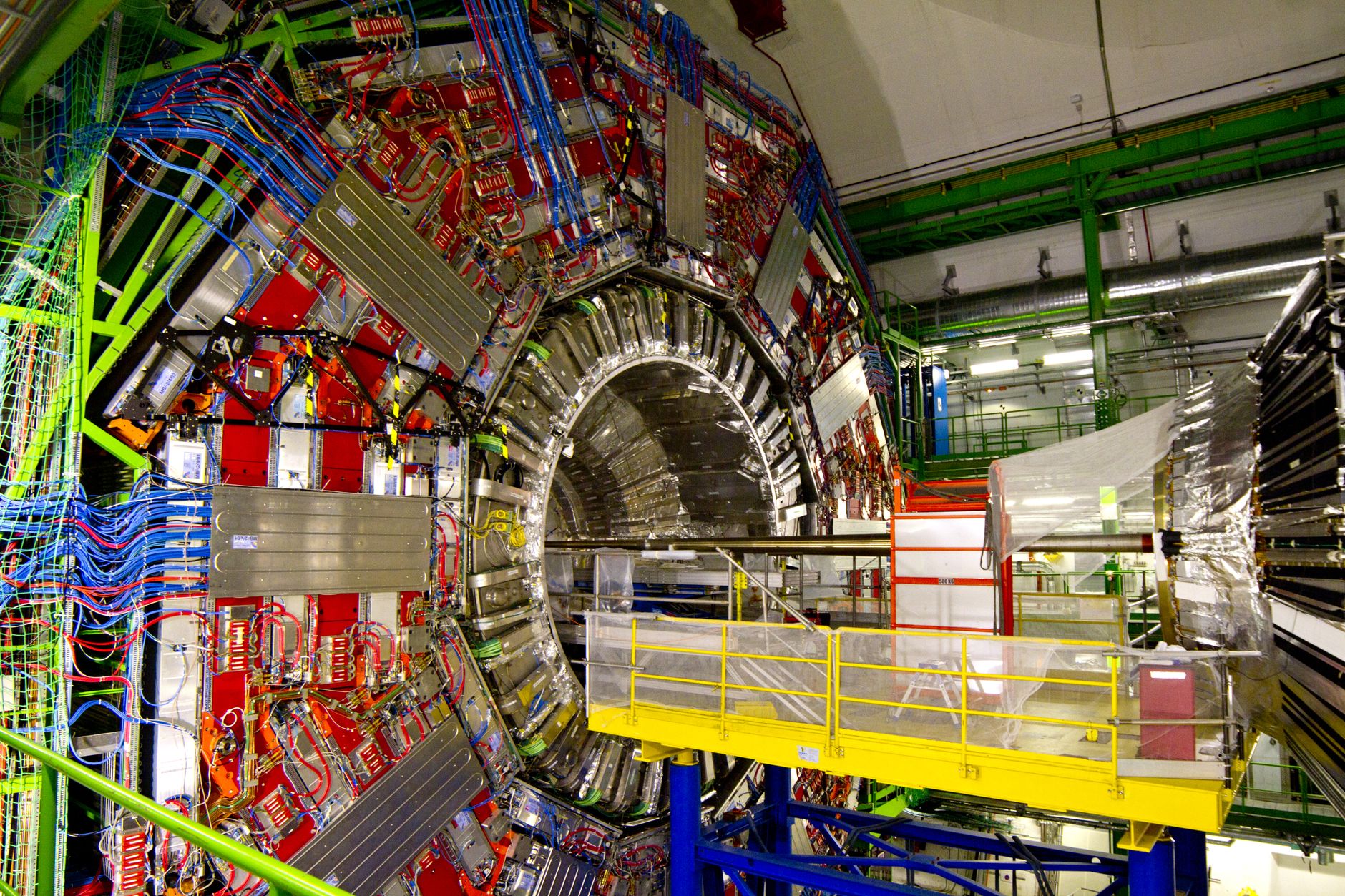
Scientists working with the world’s most powerful particle accelerator have completed a detailed search for miniature black holes that would exist for only a fraction of a second. Using data collected by the Compact Muon Solenoid (CMS) detector at collision energies of up to 12 tera‑electron volts (TeV), the team found no trace of such objects, but the null result sharpens the constraints on theories that predict their formation.
Why quantum black holes matter
Traditional black holes are massive remnants of collapsed stars, but some models suggest that, under extreme energy densities, a black hole could be created at scales far smaller than an atom. Detecting one would provide a direct window into quantum gravity, the long‑sought framework that would reconcile Einstein’s general relativity with quantum mechanics. “If we had observed evidence, we could have begun to study quantum gravity directly,” said Tamas Vami, a researcher on the CMS experiment.
Such tiny black holes are also linked to proposals involving extra spatial dimensions, a feature of string theory and other extensions of the Standard Model. In these scenarios, gravity could spread into hidden dimensions, making it appear weaker in our familiar three‑dimensional space.
How the LHC searches
The LHC generates trillions of proton‑proton collisions at near‑light speeds, creating conditions where the energy required to form a quantum black hole might be reached. Because any black hole produced would evaporate almost instantly, researchers look for its decay products rather than the black hole itself. The decay would produce a spherical spray of high‑energy particles, a distinctive signature that can be reconstructed from detector data.
“You form a black hole, and it immediately disintegrates, leaving a very spherical decay pattern with particles flying in all directions,” explained Danyi Zhang, a researcher at the Incandela Lab. “We sum the energies of these particles, and if the total exceeds a certain threshold, we identify the region as a potential signal.”
Applying this method, Zhang and colleagues scanned the CMS dataset for events matching the expected pattern. The analysis did not reveal any candidate quantum black holes nor evidence for the extra dimensions that many theories require.
Implications of null results
Although the search yielded no discoveries, the outcome is scientifically valuable. The absence of a signal allows the team to set exclusion limits, formally stating that black holes with certain properties do not exist within the examined energy range. “It’s not a dead‑end; it’s a real, publishable statement about what the universe is not doing,” Zhang noted.
These limits narrow the parameter space for future investigations, guiding where to look next. The approach mirrors the strategy that led to the Higgs boson discovery in 2012—systematically ruling out possibilities until only the viable region remains.
Physicists remain optimistic that continued data collection at higher energies will eventually reveal phenomena beyond the Standard Model. As Vami emphasized, the challenge lies in probing regimes that are both extremely tiny and enormously massive, a combination rarely encountered in nature.
The findings have been documented in the journal Progress in High Energy Physics, and the collaboration plans to extend the search as the LHC moves toward higher luminosities and energies.

Steve Lopez is a Senior Editorial Columnist and Health & Public Policy reporter for News Raise. Steve focuses on healthcare advancements, medical technologies, and public health policies.