Researchers have announced the first confirmed detection of radio waves originating from a planet outside our solar system. The signal comes from Beta Pictoris b, a massive gas giant located roughly 63 light‑years from Earth, and is interpreted as evidence of a powerful magnetic field rather than any extraterrestrial communication.
Discovery and Observations
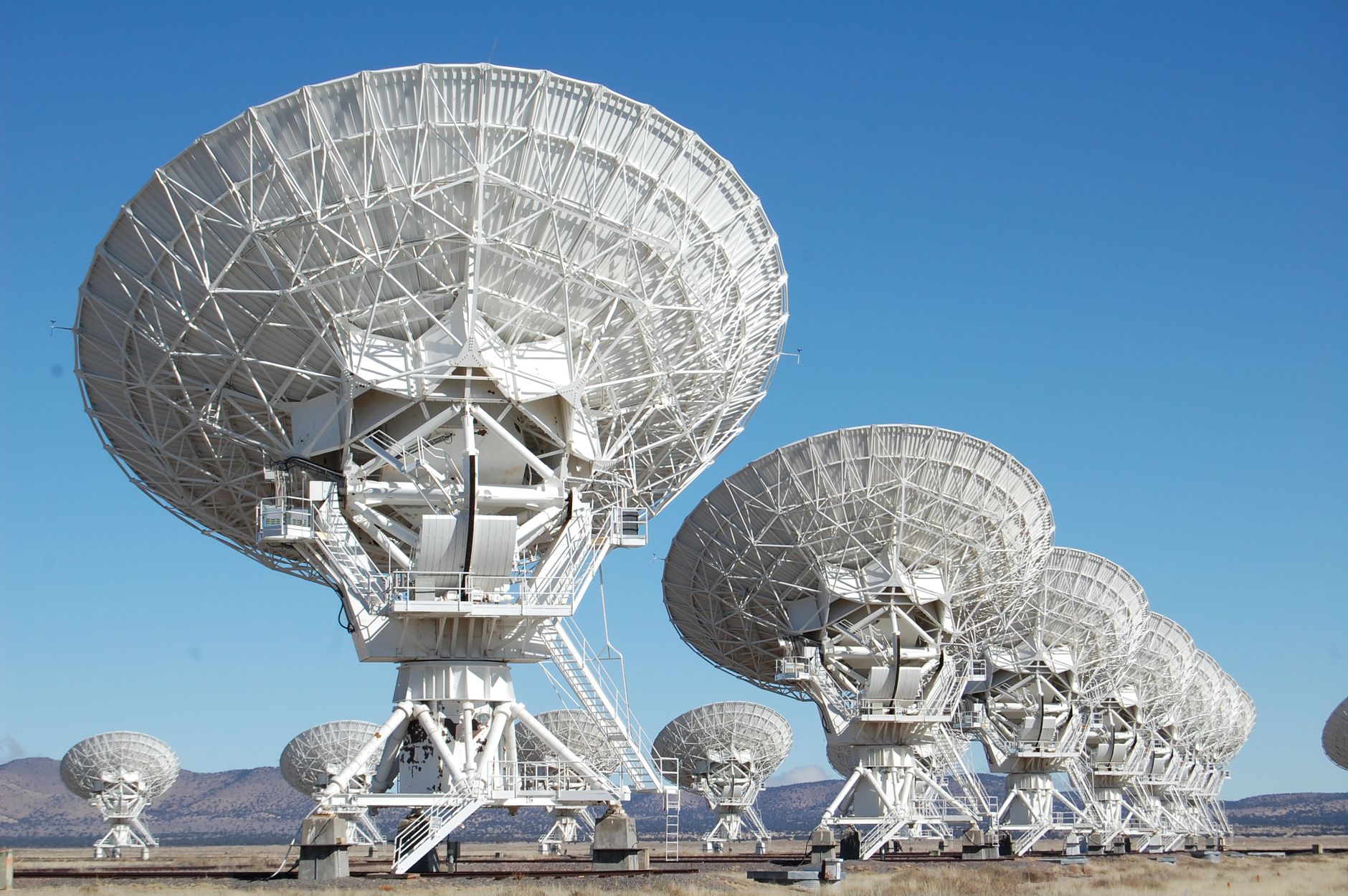
The emission was identified in a survey conducted with MeerKAT, an array of 64 radio dishes in South Africa. Repeating bursts were traced to the position of Beta Pictoris b, a planet roughly twelve times the mass of Jupiter that orbits a young star 1.75 times the Sun’s mass. The system, only about 23 million years old, also hosts two additional planets discovered in 2019 and 2026. Lead author Kevin Ortiz Ceballos, a doctoral researcher at the Harvard‑Smithsonian Center for Astrophysics, reported that the detection was unexpected, noting that the data review revealed a signal that appeared consistently across multiple frequencies.
According to Edo Berger, a Harvard professor involved in the study, the radio bursts resemble auroral emissions—similar to Earth’s northern lights—produced when charged particles interact with a magnetic field. The observed frequencies imply a magnetic field strength at least two hundred times greater than that of Jupiter, whose own magnetosphere extends up to three million kilometres toward the Sun.
Magnetic Field Implications
Not all planets generate magnetic fields, but those that do enjoy a protective shield that deflects solar wind and helps retain their atmospheres. Earth’s field, for example, guards the planet against atmospheric loss. The unusually strong field inferred for Beta Pictoris b suggests that exoplanets can host magnetospheres far more intense than previously assumed, potentially affecting their atmospheric composition and internal structure.
Berger emphasized that radio observations provide a novel window onto distant worlds, allowing scientists to infer properties that are otherwise inaccessible. The detection adds Beta Pictoris b to a short list of bodies—such as Jupiter, Saturn, the Sun, and certain brown dwarfs—that have shown auroral radio emissions.
Scientific Reception
External experts have praised the work while urging caution. Joseph Callingham of the University of Amsterdam highlighted that the study uniquely isolates the emission to the planet rather than its host star, a distinction that has eluded earlier attempts. Jonathan Nichols, a planetary aurora specialist at the University of Leicester, noted that confirming auroral radio emissions would enable testing of solar‑system theories under more extreme conditions.
The findings are currently posted on the pre‑print server arXiv and await formal peer review, a process expected to conclude in the coming months. The research team plans to secure additional telescope time to investigate why Beta Pictoris b’s magnetic field is so exceptionally strong, a question that may shape future models of planetary magnetism.

Helene Elliott is the Lead Science & Space Reporter at News Raise. She reports on aerospace missions, astrophysics discoveries, quantum research, and environmental technology.