Oxford Area High School will not be in session Friday after a measles infection was confirmed among its community, the district said in a Thursday letter to families. The decision follows a surge in cases across Pennsylvania, where the disease has now exceeded 1,000 confirmed infections.
The district’s communication emphasized the priority of student, staff and community health, acknowledging that the news may cause concern and uncertainty. It also outlined the steps that families must follow, especially those without documented measles immunization.
Under the letter’s guidance, any student or employee who lacks proof of vaccination, or who has not received the vaccine, is required to remain away from school premises and related activities for a period of 21 days after a possible exposure. The Chester County Health Department has been tasked with reaching out to individuals who may have been in contact with the infected person.
Outbreak context in Chester County and Pennsylvania
Chester County health officials, led by director Jeanne Franklin, have been collaborating with school nurses and district superintendents throughout the start of the academic year to monitor and mitigate the risk of measles transmission. Their proactive engagement reflects heightened vigilance as the county records 86 measles cases, contributing to the state’s largest outbreak in decades.
Statewide, Pennsylvania health data indicate that more than 1,000 measles cases have been reported, marking a significant resurgence of the highly contagious viral illness. Public health authorities attribute the rise to pockets of unvaccinated individuals and gaps in herd immunity.
Measles symptoms and vaccination guidance
The Centers for Disease Control and Prevention (CDC) describes measles as an airborne virus that can also spread through direct contact with infectious secretions. Early manifestations typically include a cough, runny nose, fever that can reach 104°F (40°C), and red, watery eyes. Within two to three days after symptom onset, patients may develop Koplik spots—tiny white lesions on the inner cheek.
A rash generally appears three to five days after the initial symptoms, beginning at the hairline and progressing downward across the face, neck, torso, arms, legs and feet. Fever often spikes again when the rash emerges. Because of its rapid spread, health officials stress the importance of vaccination.
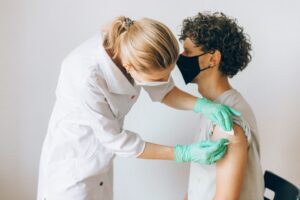
The CDC recommends a two‑dose series of the measles‑mumps‑rubella (MMR) vaccine. The first dose is administered between 12 and 15 months of age, and the second dose between four and six years. One dose provides about 93 % protection, while two doses raise effectiveness to roughly 97 %.
Parents of Oxford Area students are urged to verify immunization records promptly and to follow the 21‑day exclusion rule if their child lacks documented MMR vaccination. The school district plans to reopen once the immediate risk has been assessed and appropriate containment measures are in place.
The closure underscores the broader challenge faced by Pennsylvania schools as they navigate a measles resurgence that tests public‑health infrastructure and community compliance with vaccination guidelines.

Helene Elliott is the Lead Science & Space Reporter at News Raise. She reports on aerospace missions, astrophysics discoveries, quantum research, and environmental technology.