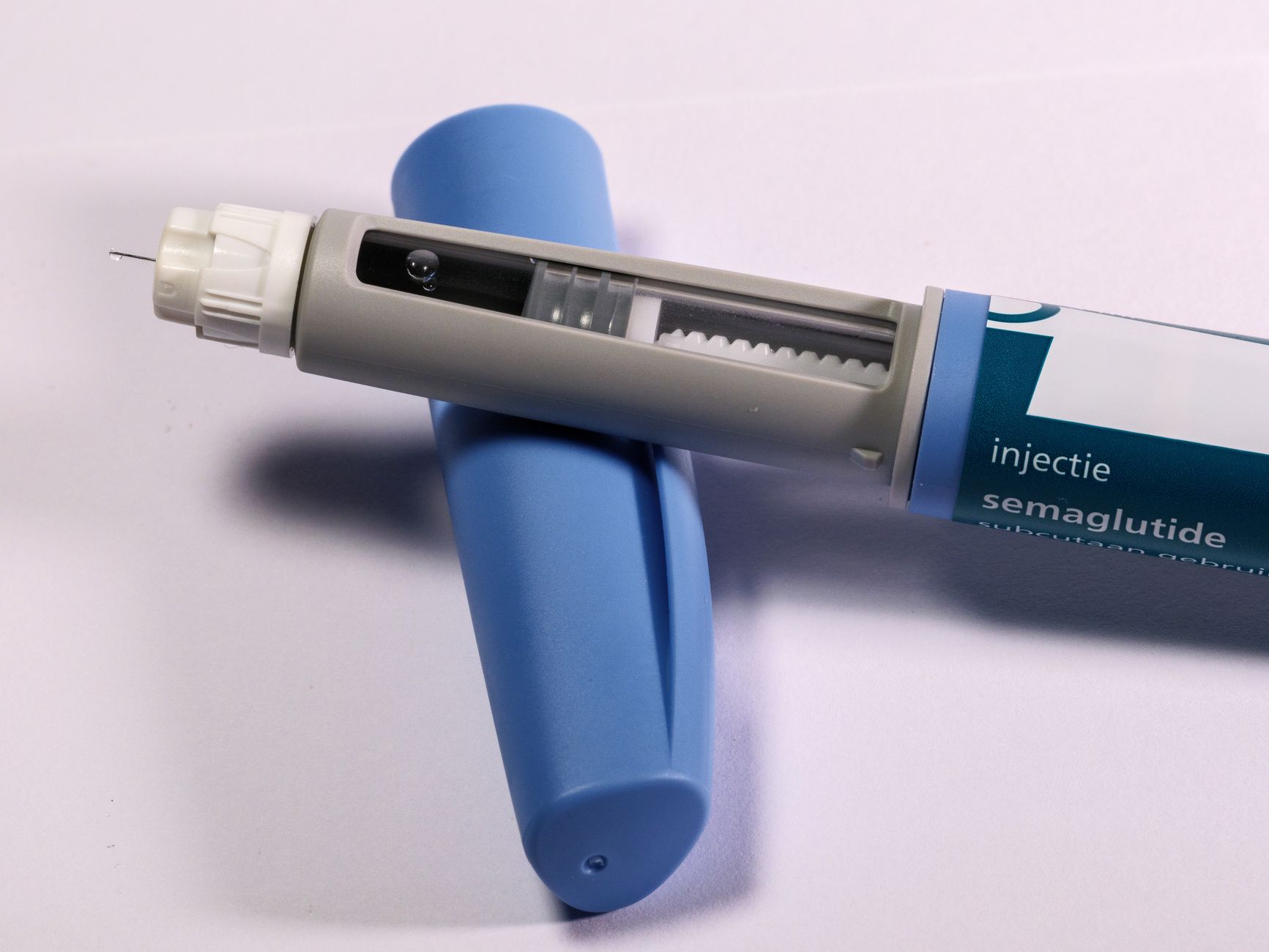
GLP‑1 medications, best known for treating type 2 diabetes and supporting weight loss, are now being examined for a possible anti‑aging effect. Early data from human trials and mouse experiments suggest the drugs may slow the body’s biological clocks, although scientists stress that the evidence is still preliminary.
Human studies point to modest reductions in biological age
At a recent Aging Research and Drug Discovery conference, Dr. Kevin Duffin, vice president of aging research at Eli Lilly, reported results from the company’s Surmount V trial. The study enrolled more than 700 overweight adults without diabetes and randomly assigned them to tirzepatide (marketed as Zepbound) or semaglutide (Wegovy/Ozempic) for 72 weeks. For the aging analysis, researchers focused on 71 participants over age 50 who received tirzepatide.
By tracking epigenetic markers—genes that turn on and off over time—the team measured participants’ biological age against their chronological age. Over the 72‑week period, the expected chronological aging was 1.38 years, but the tirzepatide group showed a slower advance of biological clocks, with average reductions ranging from 0.7 to 1.1 years across different epigenetic measures. In some cases, clocks appeared to run backward, indicating that certain tissues behaved as if they were younger than at baseline.
Dr. Duffin cautioned that the trial lacked a placebo arm without weight‑loss medication and that the follow‑up was relatively brief. He noted that the anti‑aging signal seemed to strengthen over time, and future studies will track participants for four to five years to see whether the effect persists.
Semaglutide and organ‑specific age metrics
Separate pre‑print research from Novo Nordisk examined semaglutide’s impact on protein biomarkers linked to organ health. The investigators reported that the drug lowered the heart’s biological age by two to four years compared with placebo and reduced the apparent age of the lung, kidney, brain and pancreas by one to four years. According to Dr. Alejandro Aguayo‑Orozco, senior global director of cardiometabolic research at Novo Nordisk, these benefits were not fully explained by weight loss, blood‑sugar control or reduced inflammation, raising the possibility of a broader systemic effect.
Animal work supports lifespan extension
In a mouse study led by researchers at the University of California, Berkeley, 20‑month‑old mice—roughly equivalent to 60‑year‑old humans—received weekly injections of semaglutide or a placebo for the remainder of their lives. Both groups started at similar body weight, but the semaglutide‑treated mice ate less, lost weight and lived longer. Their median lifespan reached 834 days (about 80 human years) versus 742 days (about 75 human years) for the placebo group.
To separate the effects of calorie restriction from the drug itself, a parallel cohort was fed 25 percent fewer calories, mirroring the reduction seen in the semaglutide group. While calorie‑restricted mice also lived longer, semaglutide‑treated mice performed better on cognitive tests, navigated mazes more efficiently, and maintained superior blood‑sugar regulation. Dr. Danica Chen of UC Berkeley, who studies calorie restriction and aging, interpreted the findings as evidence that semaglutide offers benefits beyond simple caloric reduction.
Expert caution and unanswered questions
Despite the enthusiasm, several experts warned against premature use of GLP‑1 drugs for longevity. Dr. James Kirkland, director of the Center for Advanced Gerotherapeutics at Cedars‑Sinai, highlighted that many “biohackers” are taking these agents without diabetes or obesity, and the long‑term impact on lean, younger individuals remains unknown. He also noted that the epigenetic and proteomic metrics used to gauge biological age are still evolving and can fluctuate day to day within a single person.
Both Dr. Kirkland and Dr. Duffin agreed that it is unclear whether the observed slowing of biological clocks stems primarily from weight loss, improved glycemic control, or a direct pharmacologic action of GLP‑1 agonists. Ongoing trials with longer follow‑up and appropriate control groups will be essential to disentangle these factors.
In summary, early human and animal research suggests GLP‑1 drugs may modestly reduce biological age and extend lifespan, but the findings are limited by small sample sizes, short observation periods, and the lack of clear mechanistic separation from weight loss. Researchers plan larger, longer‑term studies to determine whether these medications could become a viable tool for healthy aging.

Helene Elliott is the Lead Science & Space Reporter at News Raise. She reports on aerospace missions, astrophysics discoveries, quantum research, and environmental technology.