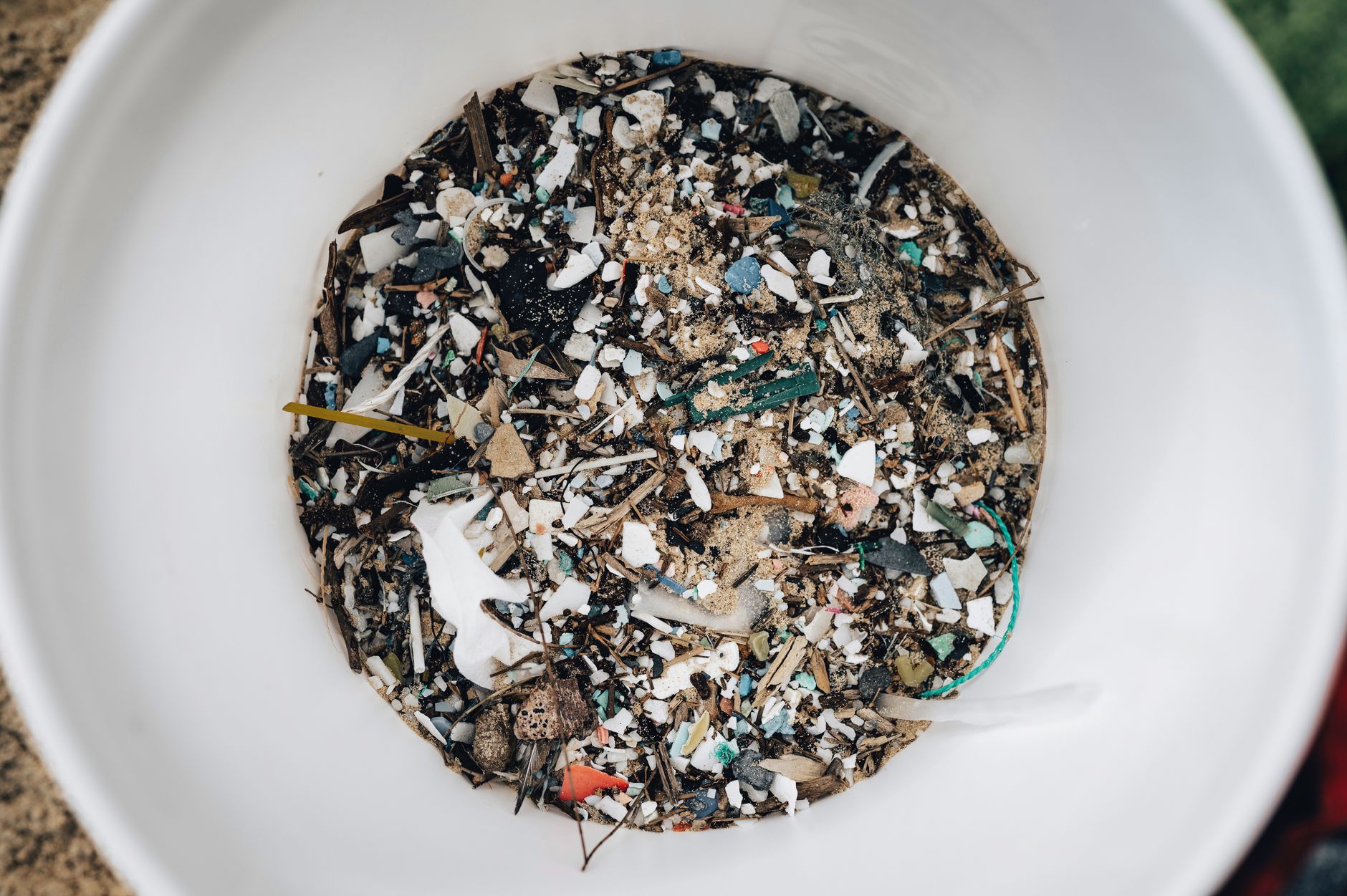
Plastics are prized for their chemical inertness, a property that allows bags, food containers and cups to hold a wide variety of substances without reacting. Yet the same materials can fragment into microscopic particles that appear in drinking water, human blood, arteries and even brain tissue. The health consequences of this pervasive exposure remain uncertain.
Background on Microplastics
Wei Min, a chemist at Columbia University, notes that the question of whether microplastics can directly cause disease is still under investigation. In a recent study published in Nature, Min’s team set out to test the long‑standing assumption that microplastics are chemically inert once they enter the human body or the environment.
Microplastics have been linked in animal studies to oxidative stress, a condition driven by reactive oxygen species (ROS). ROS are highly reactive, oxygen‑containing molecules that can damage proteins, lipids and DNA, potentially leading to mutations, protein misfolding and other cellular injuries. The new research explores whether the surface of microplastics, when suspended in water, can itself generate ROS.
Laboratory Findings
Min’s laboratory has a history of investigating microdroplet chemistry—how water broken into tiny droplets behaves at its interface with air. Prior work showed that such droplets can produce ROS, prompting the researchers to ask whether a similar process occurs at the boundary between water and plastic particles.
To test this, the team mixed polystyrene powder, a common type of plastic, into water that contained methyl orange, a yellow dye known to break down when exposed to ROS. Over a period of ten days, the solution’s color faded dramatically, losing nearly 90 percent of its original hue. In contrast, when the same dye was placed in ethanol or other solvents, it remained stable, indicating that the degradation required the presence of water.
Min interpreted the results as evidence that a chemical reaction involving the polystyrene and water was generating ROS, which then attacked the dye molecules. The researchers concluded that the observed chemistry depended on water, and they proceeded to conduct additional experiments to confirm the phenomenon, although the details of those follow‑up tests were not disclosed in the brief report.
Implications for Human Health
The findings challenge the view that microplastics are chemically passive once they enter aqueous environments such as drinking water or bodily fluids. If microplastics can indeed produce ROS in water, they may contribute to oxidative stress in humans, a pathway already implicated in a range of diseases.
“ROS will essentially bump into proteins, lipids, DNA, and cause damage,” Min explained. “You could break a DNA strand into segments. You could mutate DNA; you could misfold proteins.” While the study does not establish a direct causal link between microplastic exposure and specific illnesses, it adds a mechanistic layer to the growing body of evidence that microplastics may be more biologically active than previously thought.
Scientists caution that further research is needed to determine how the laboratory observations translate to real‑world exposure scenarios. Factors such as particle size, concentration, the presence of other chemicals and the duration of contact with human tissues could all influence the extent of ROS generation and resulting damage.
Nonetheless, the work underscores the importance of re‑examining the chemical behavior of microplastics in water and highlights a potential pathway through which these ubiquitous particles could affect human health.

Steve Lopez is a Senior Editorial Columnist and Health & Public Policy reporter for News Raise. Steve focuses on healthcare advancements, medical technologies, and public health policies.