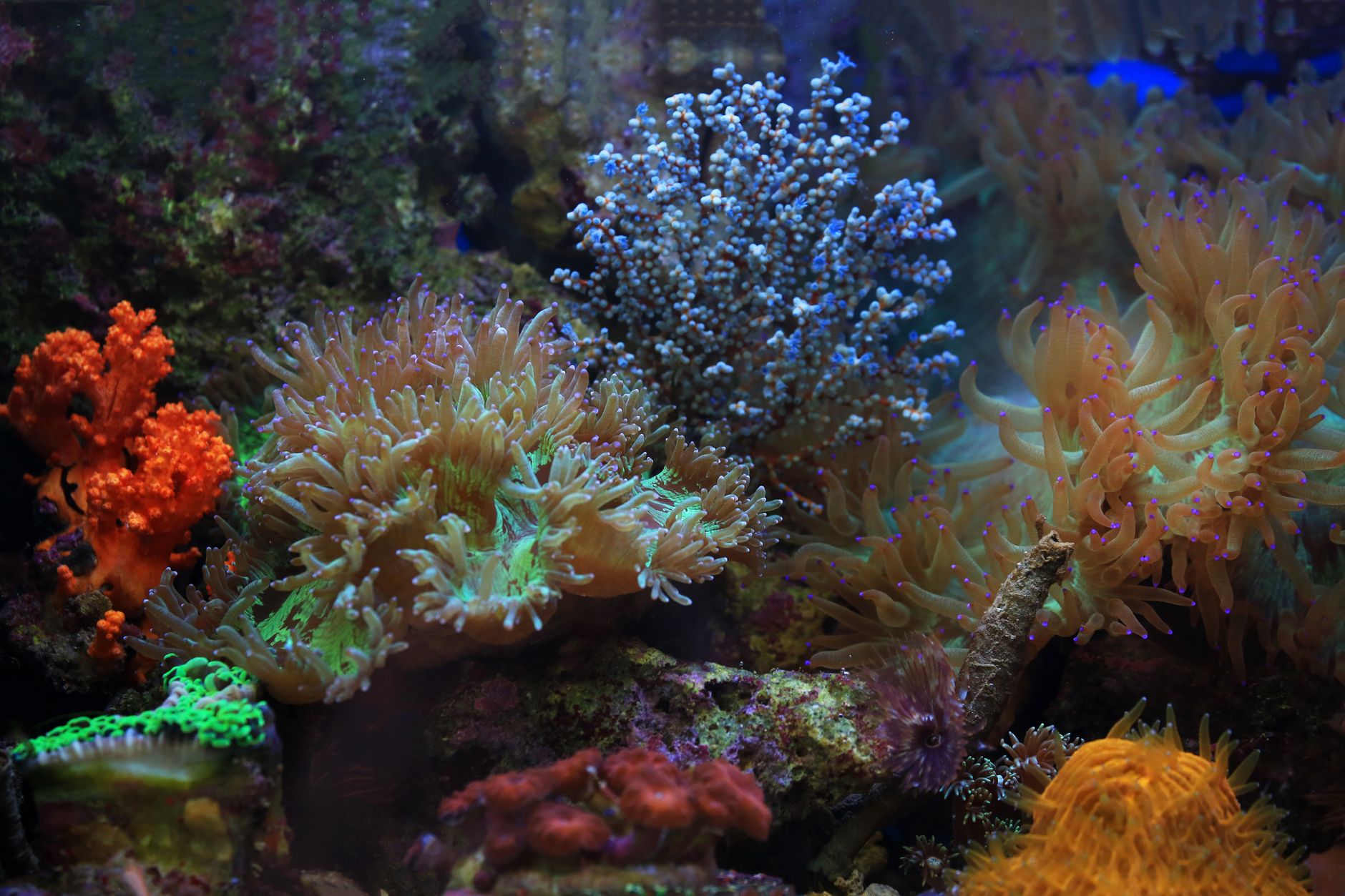
Scientists at Stanford University have demonstrated that a few days of direct contact with healthy coral fragments can bring bleached corals back to full color in as little as seven weeks. The finding, published in Science Advances, emerged from an accidental observation in a laboratory tank in 2025 and may point to a new method for aiding coral reefs that are increasingly threatened by rising sea temperatures.
Accidental Discovery and Experimental Setup
Steve Palumbi, a professor of oceans and marine biology at Stanford’s Doerr School of Sustainability, noticed that two coral pieces that had fallen against each other – one healthy, one bleached – began to change where they touched. The bleached fragment started regaining its pigment at the point of contact. Lead author Danny Collins, a PhD student at Stanford, designed a controlled experiment based on this observation.
Ten pairs of coral fragments were prepared, each pair taken from the same colony so that one piece was healthy and the other was bleached. Five pairs were placed in direct physical contact, while the remaining five were positioned a few millimetres apart to prevent tissue fusion. Over the next seven weeks, all five bleached fragments that were touching healthy clones recovered their coloration, whereas the fragments kept apart died.
How the Transfer Works
Microscopic analysis revealed that the touching corals fused, forming microscopic channels that allowed the exchange of algae and nutrients. Within three days of contact, beneficial symbiotic algae migrated from the healthy fragments into the bleached ones. After roughly a week, enough algae had entered the damaged tissue for the coral to begin autonomous recovery.
Once inside the bleached coral, the algae proliferated at unprecedented rates. Palumbi noted that the algae “flood in and start dividing at the fastest rates seen in corals.” During the second week, the algal population doubled roughly every four days – about ten times faster than growth observed in wild corals – enabling continued recovery even after the fragments were separated.
Fiorenza Micheli, a Stanford professor and one of Collins’s faculty advisors, highlighted that bleached corals are often deemed a lost cause because natural recovery after heat stress can be extremely slow or absent. This laboratory breakthrough shows that, under the right conditions, recovery can be dramatically accelerated.
Implications, Limitations and the Wider Context
While the results are promising, the researchers caution that the technique cannot yet be applied on a reef scale. Successful tissue fusion requires the corals to be genetically identical, meaning each damaged fragment would need a healthy twin – a scenario impractical for whole‑reef restoration. The team is exploring ways to deliver the beneficial algae without direct contact or genetic matching.
The discovery arrives at a critical moment for coral ecosystems. The Global Coral Reef Monitoring Network reports that reefs have lost nearly 10 % of their living coral over the past four decades, with an almost 9 % decline recorded between 2023 and 2024 – the largest single‑year loss ever observed. Global bleaching events now occur roughly every five to six years, shortening the recovery window between heatwaves.
Palumbi emphasizes that this method addresses the aftermath of bleaching rather than preventing heat stress itself. “This is a recovery story. It doesn’t blunt heatwaves; it just helps the aftermath,” he said, underscoring the continued need to curb emissions and mitigate other threats such as overfishing, pollution, and coastal development.
If future research can decouple the need for genetic identity, the approach could complement broader reef‑restoration initiatives, potentially improving the survival of coral gardens that face increasingly frequent and severe temperature spikes.

Helene Elliott is the Lead Science & Space Reporter at News Raise. She reports on aerospace missions, astrophysics discoveries, quantum research, and environmental technology.