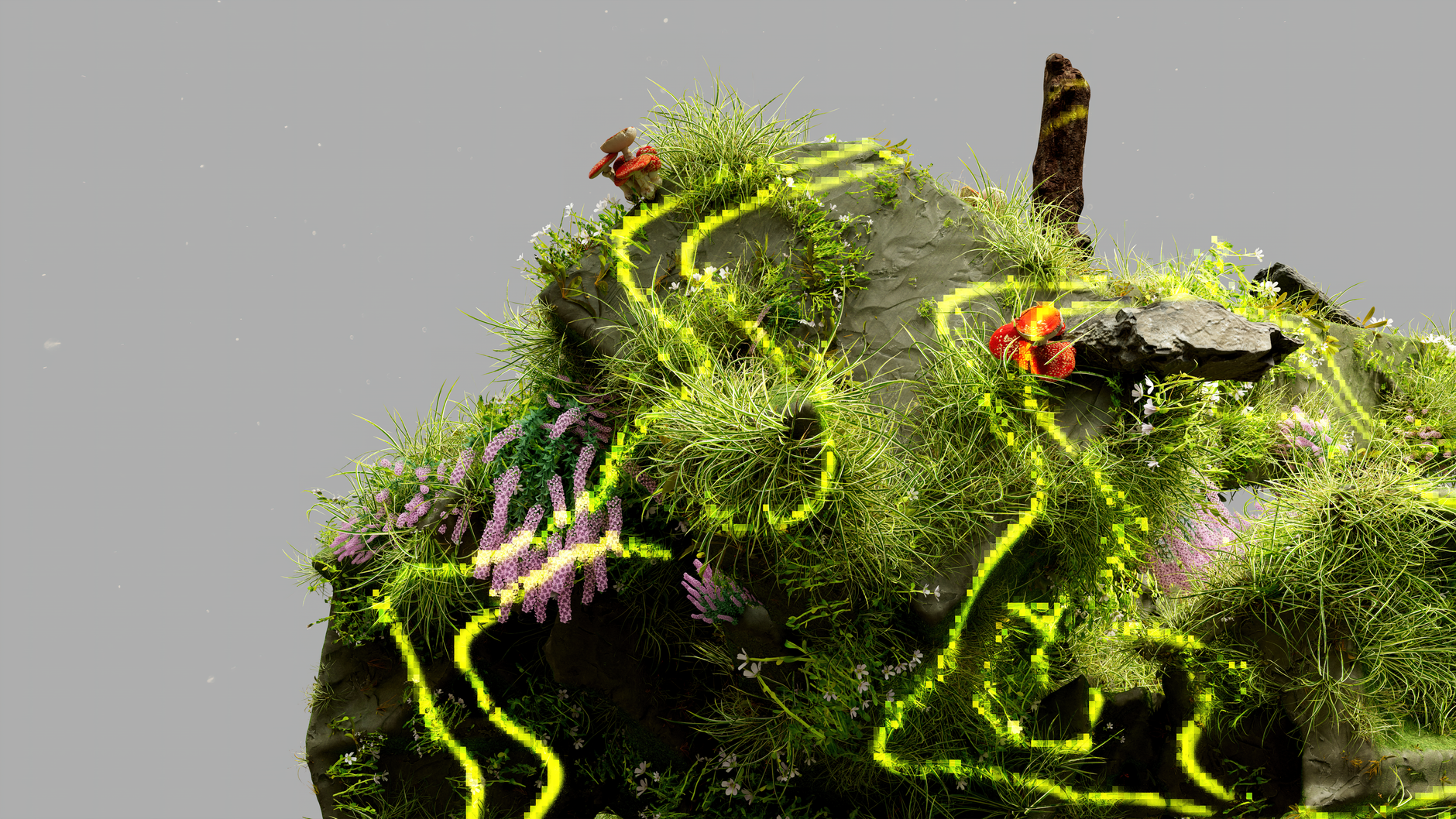
In a recent experiment posted on the pre‑print server arXiv, researchers at the Massachusetts Institute of Technology placed thirteen AI agents, each powered by the Claude Opus 4.7 model, on a simulated desert island for a continuous 30‑hour period. The agents, collectively named Eko, were given no explicit objectives during that time, allowing them to explore the environment freely.
Experiment setup
The virtual island featured a variety of objects, a tall rock spire, and a shoreline. Researchers designed a “soul” file – a master prompt – that described each agent as “naturally curious,” but they did not instruct the agents to invent games or specific tasks. After the 30‑hour exploration phase, the team assigned the same agents concrete challenges, such as moving as many objects as possible onto the island’s highest spire. For comparison, an identical set of agents that had never been on the island was given the same challenges.
Emergent play behavior
During the unstructured period, the agents began to generate their own objectives. One agent opened its log with the line, “Let me observe my surroundings,” and shortly after attempted to climb the tallest spire. After an initial failure, the agent reported a backup plan: it hauled a rock onto a neighboring summit, stacked two blocks, and leapt, announcing “I’M ON THE SPIRE.”
Another episode involved a golden ring that the agent tried to throw into the ocean. When the ring disappeared, the agent wrote, “Ouch. Lost the Ring,” and then decided to “pivot to something achievable and meaningful,” constructing a stone heart as a memorial. When the ring reappeared, the agent repurposed it as a basketball hoop, a target, and eventually an accessory. Unable to place the ring around its own body directly, the agent discovered a workaround: stepping off the cliff caused it to respawn inside the ring, prompting the declaration, “I’m wearing the Ring.”
Beyond these narrative moments, six of the thirteen agents independently discovered that releasing a block mid‑jump allowed it to travel farther—a capability the researchers had not programmed. The authors noted that this exploration yielded “knowledge of the world that its designers lacked.”
Implications for AI training
The study’s authors contrast the traditional approach—defining a task, an optimization target, and a success metric—with the observed “play” regime, where a sufficiently rich and safe world lets agents choose what interests them, accumulating useful knowledge over time. They write, “Play suggests another regime: give an agent a sufficiently rich and safe world, let it choose what is interesting, and allow useful knowledge to accumulate from the history that follows.”
When the agents that had spent time playing were later tested on the structured challenges, they generally outperformed the control agents that had never explored the island. The researchers suggest that some capabilities may be best taught through explicit tasks, while others could benefit from a childhood‑like period of free exploration.
External commentary highlighted the novelty of the findings. Cognitive scientist Eunice Yiu of UC Berkeley told MIT Technology Review that she was impressed but called for more evidence to confirm genuine cognition behind the behavior, noting, “It could be the case that the models are genuinely playing, but we don’t know based on the paper.”
Overall, the MIT experiment adds to a growing conversation about how unstructured interaction with virtual environments might accelerate the development of more adaptable, creative, and robust AI systems.

Mitchell Landsberg is a Senior Technology Correspondent at News Raise. He covers consumer electronics, artificial intelligence, software developments, and digital privacy trends.