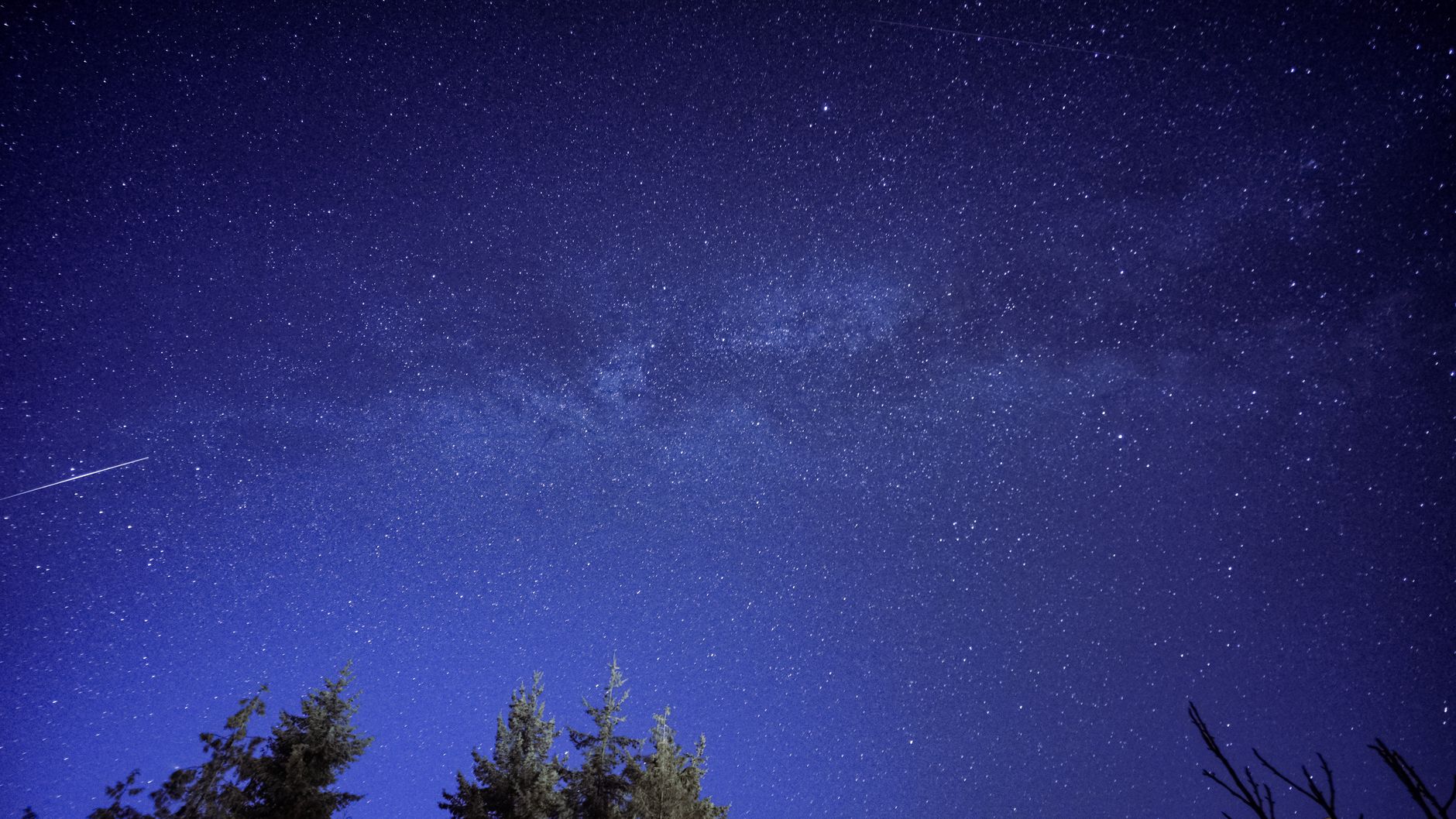
On the early morning of October 21, astrophotographer Tim McCollum recorded a striking composite of three Orionid meteors blazing across the sky above Toccoa, Georgia. The meteors, originating near the red supergiant Betelgeuse in Orion, were captured between 3 a.m. and 4 a.m. local time as the annual Orionid shower approached its peak.
Capturing the Orionids
McCollum employed a Canon EOS Ra camera paired with an RF 28‑70 mm f/2.0 lens. He mounted the equipment on a star tracker that kept the camera fixed on the shower’s radiant point, allowing multiple 30‑second exposures to be taken without star trailing. After the night’s session, the individual frames were merged into a single image using the PixInsight astrophotography software, a process that demands both technical skill and a degree of luck.
The photograph not only displays the three bright meteors but also reveals a swath of the Milky Way’s galactic plane, running diagonally across the frame. The familiar stars of Orion’s Belt appear to the right of the meteors, while the glowing Orion Nebula—a nearby massive star‑forming region—adds a soft luminescence near the belt.
Deep‑Sky Details in the Frame
Beyond the meteors and the Orion Nebula, the image includes several notable deep‑sky objects. The Rosette Nebula (Caldwell 49) is visible embedded within dense star fields and dust lanes of the Milky Way. Numerous star clusters punctuate the background, providing context for the meteors’ trajectory against a richly populated night sky.
The source notes that the Orionid shower is linked to particles shed by comet 1P/Halley, which, at the time of the observation, was more than 3 billion miles (approximately 4.8 kilometers) from Earth. Although the comet itself was far from view, its debris continues to generate spectacular fireballs as Earth traverses the stream each year.
Viewing Tips and Context
The Orionid meteor shower remains active through November 7, offering additional opportunities for observers to witness similar displays. Enthusiasts are also encouraged to keep an eye out for a potential “Halloween Fireball” from the Taurid meteor shower, which originates from comet 2P/Encke and can produce exceptionally bright meteors around late October.
For photographers interested in replicating such shots, the article references a guide to shooting meteors and highlights current lens and camera recommendations for 2026, including models like the Canon EOS R8 that feature interval shooting capabilities useful for capturing fleeting meteors without excessive cost.
Space.com’s editor invites readers to submit their own astrophotography for possible publication, directing contributions to the provided email address.

Steve Lopez is a Senior Editorial Columnist and Health & Public Policy reporter for News Raise. Steve focuses on healthcare advancements, medical technologies, and public health policies.