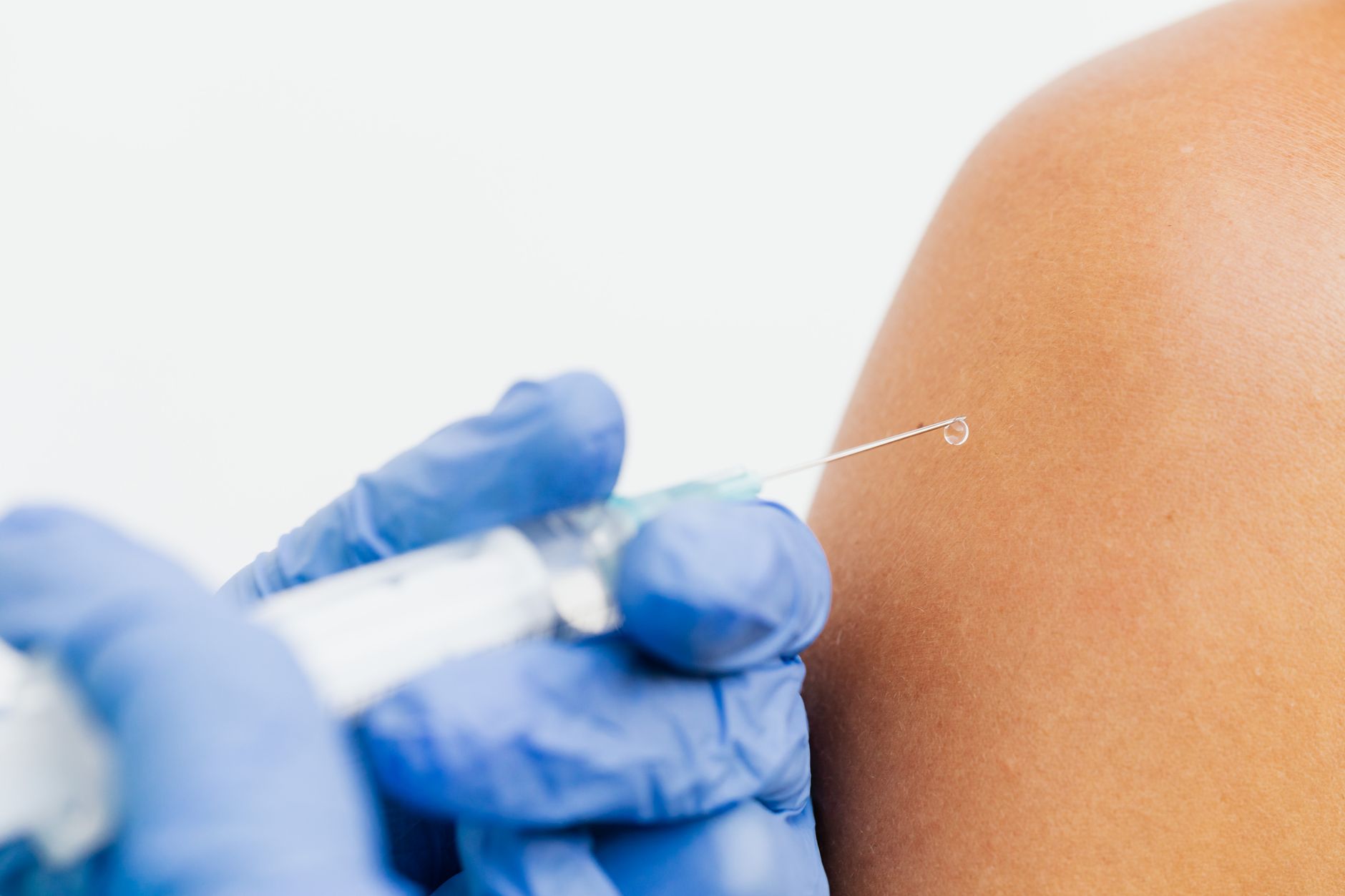
U.S. health officials are urging Americans to receive a flu shot as the Centers for Disease Control and Prevention (CDC) documented a sharp uptick in seasonal influenza activity. For the week ending Oct. 17, the agency recorded 4,811 laboratory‑confirmed flu hospital admissions nationwide, the highest weekly rate at this point in the season since 2010‑11.
Early Indicators of Flu Activity
The CDC described the current level of influenza as “higher than typically observed at this time of year.” The agency’s surveillance network also noted that hospitalizations, positive test results and emergency‑department visits have risen in recent weeks, prompting heightened monitoring.
Walgreens, which tracks flu testing, prescriptions and retail sales, reported that flu activity appears to be roughly four weeks ahead of recent seasons. In a statement, the pharmacy chain said the data suggest an early start to the season.
Dr. Amesh A. Adalja, a senior scholar at Johns Hopkins Center for Health Security, told Newsweek that the primary value of the vaccine is preventing severe disease, including hospitalization. “It’s an early start to the season…people should get vaccinated ASAP,” he said, adding that the trajectory of the season remains uncertain.
Dominant Strain Identified
Laboratory analysis shows that nearly all flu viruses detected so far are H1N1. CDC surveillance found 239 of 241 influenza A samples collected through Oct. 17 were H1N1, indicating the strain’s overwhelming dominance. The virus has evolved genetically over time but remains a descendant of the H1N1 strain that caused the 2009 swine‑flu pandemic. Officials are not detecting the H3N2 subclade K, also known as the “super flu,” which surfaced last year.
Researchers continue to study the genetic changes in the circulating H1N1 viruses to assess any potential impact on severity later in the season. At this stage, health officials say it is too early to determine whether the season will prove more severe than recent years.
Geographic Spread and Recommendations
The CDC’s interactive map, which tracks influenza‑like illness (ILI) rather than confirmed cases, shows varying activity levels across states for the week ending Oct. 17. Louisiana and Hawaii reported “moderate” ILI levels, while Florida, South Carolina, West Virginia, Oregon and Washington reached a “low” level. All other states remained at the “minimal” level.
Despite the uneven spread, the CDC continues to recommend annual influenza vaccination for everyone six months of age and older. September and October remain the preferred months for vaccination, allowing immunity to develop before activity peaks in the winter.
Officials note that it is still too early to know whether the observed genetic changes in H1N1 will affect vaccine effectiveness. Ongoing surveillance will determine which viruses predominate as the season progresses.
Flu activity typically climbs through late fall and peaks during the winter months. The coming weeks will clarify whether the current rise signals an unusually early season or a temporary increase. Health authorities will watch hospitalization trends, regional spread and the continued dominance of H1N1 as more data become available.
Patients experiencing fever, cough, sore throat, runny nose, headaches, muscle aches or fatigue are advised to seek medical care promptly.

Helene Elliott is the Lead Science & Space Reporter at News Raise. She reports on aerospace missions, astrophysics discoveries, quantum research, and environmental technology.