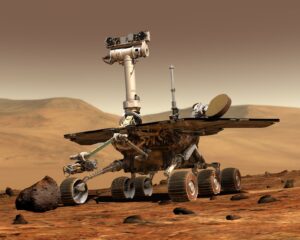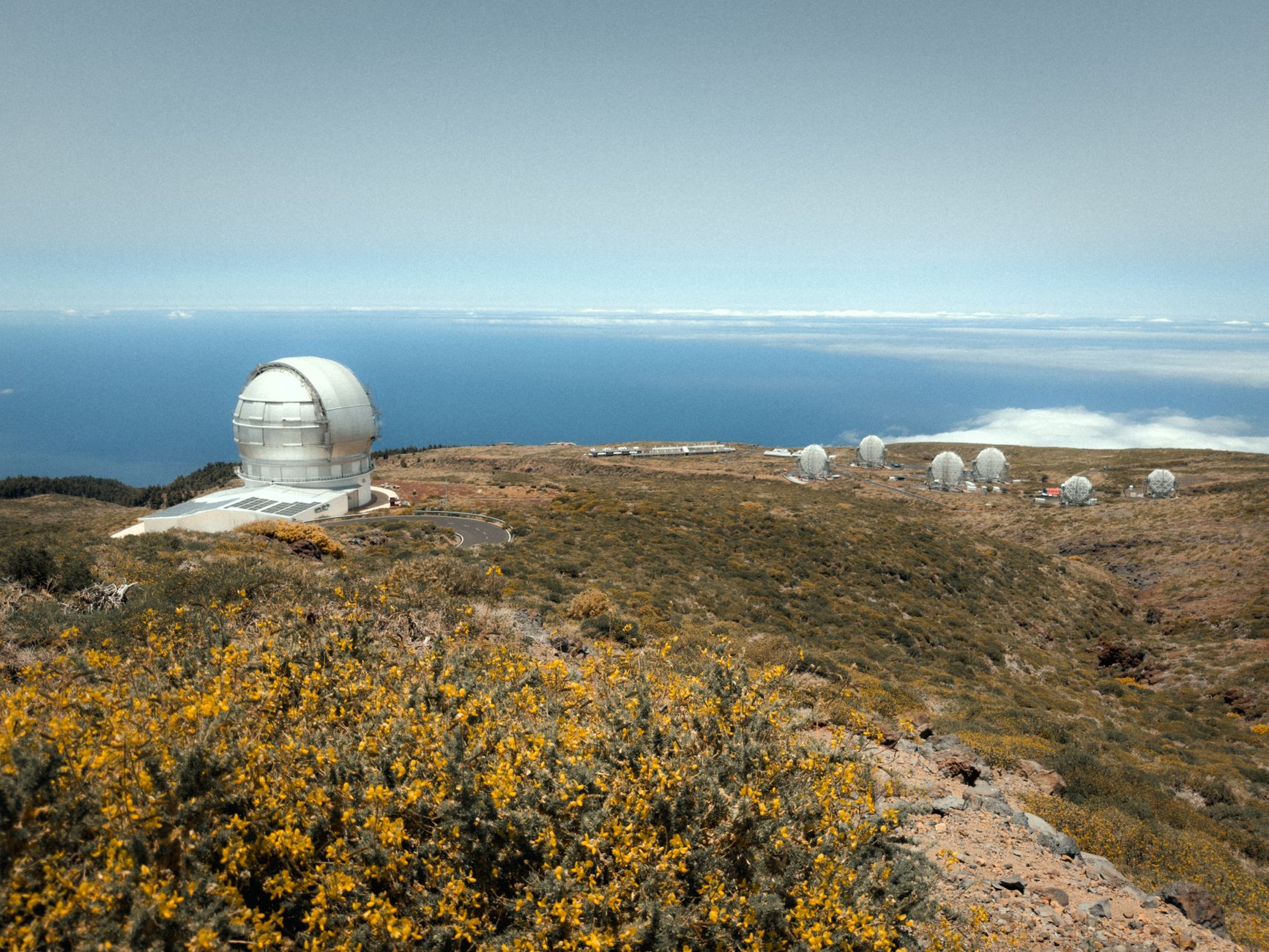
NASA’s Swift Observatory, a 1½‑ton space telescope launched on Nov. 20, 2004, is on a trajectory that will bring it back to Earth within days, according to the U.S. Space Force. The agency predicts the re‑entry will occur on or around Friday, and most of the satellite is expected to vaporize in the atmosphere. A few components made of dense tungsten and some mirror fragments could survive the burn‑up, potentially landing in the ocean, though the re‑entry corridor also stretches over parts of Africa, Australia, India, Southeast Asia and Central and South America.
Failed Rescue Attempt
Intense solar activity over recent years accelerated Swift’s orbital decay, prompting NASA to contract Katalyst Space for a rapid rescue operation. In July, the company launched a three‑armed robotic vehicle named Link, which approached the telescope to within 7–9 miles (12–15 km). The robot was unable to secure a grapple and fell back to Earth in September, ending the rescue effort.
After the mission was called off, Swift briefly resumed scientific observations, detecting additional gamma‑ray bursts and other ultra‑high‑energy phenomena. By late October, however, the satellite had descended too low to maintain stable pointing, and its systems were shut down permanently.
Scientific Legacy
During its 22‑year tenure, Swift recorded more than 2,000 gamma‑ray bursts and about 1,400 supernovae, alongside a variety of comets, asteroids and tidal‑disruption events involving black holes. Its distinctive capability to swivel quickly toward transient celestial events earned it the nickname “Swift” and made it a first‑responder for larger observatories such as Hubble and the James Webb Space Telescope.
Brad Cenko, NASA’s chief scientist for the mission, noted that while the bulk of the spacecraft will disintegrate, the denser tungsten parts and select mirrors could survive re‑entry. John Nousek, an astronomer at Pennsylvania State University who led Swift’s control team, reflected that the end of the mission was anticipated from launch, saying, “In low‑Earth orbit, what goes up must come down. And that end is catastrophic.”
Scientists are now assessing how to fill the observational gap left by Swift. Nousek expressed optimism that lessons learned from Swift’s successes will inform the design of future rapid‑response space missions, accelerating discoveries about the universe.
The impending re‑entry underscores the challenges of maintaining aging space assets in low‑Earth orbit, especially as solar activity and atmospheric drag increase orbital decay rates. While the majority of Swift will be consumed by the heat of re‑entry, any surviving debris will be monitored closely to mitigate risk to people and property on the ground.

Norman Pearlstine is the Executive Editor and Co-Founder at News Raise. With over two decades of experience across financial journalism, corporate governance, and market analysis, Norman leads the editorial direction and ensures strict adherence to journalistic accuracy and ethics.