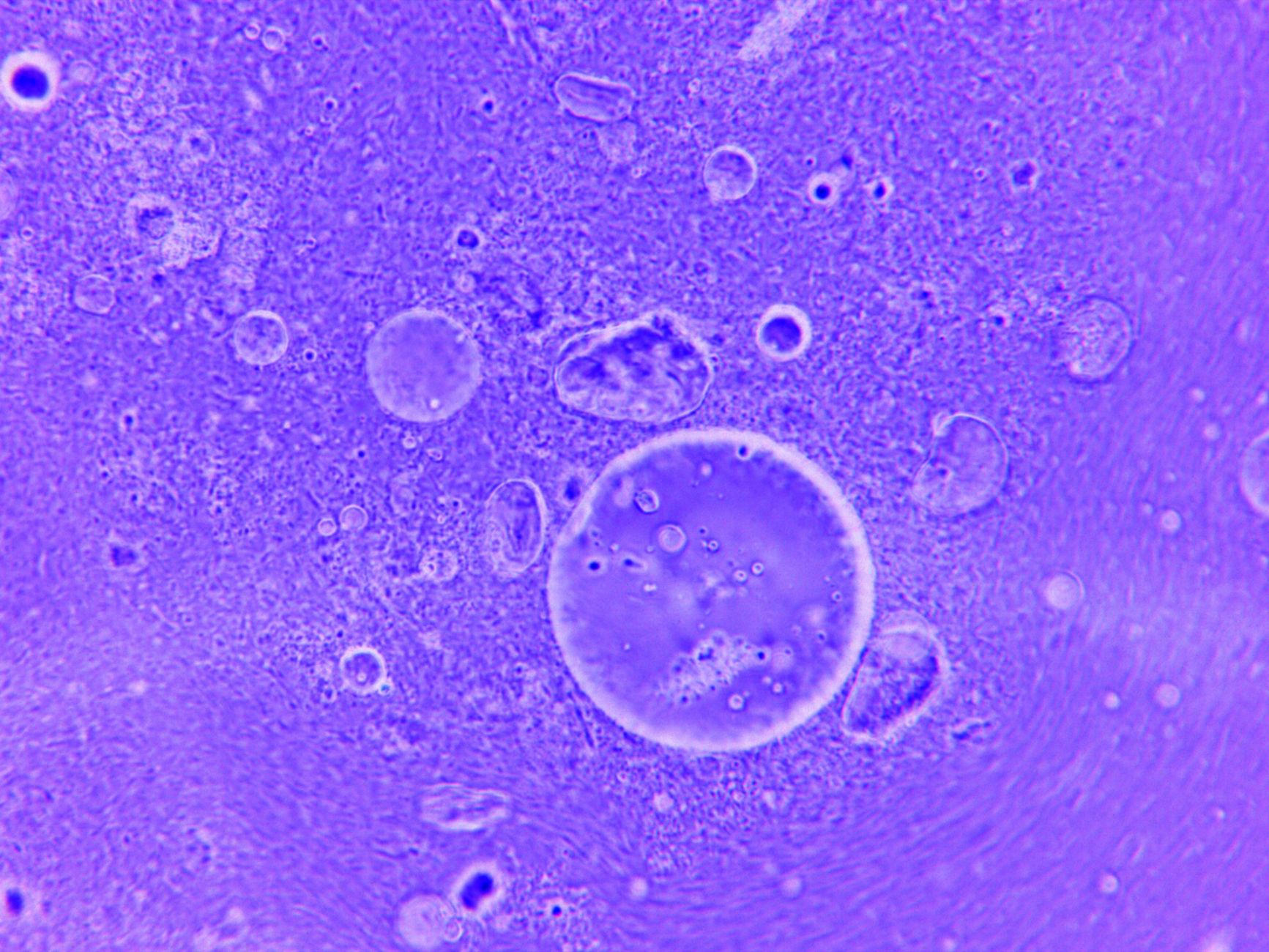
Scientists have identified a previously unknown function for tiny protein fibers found in semen: they can bind RNA molecules, enter sperm cells and transport that cargo into early embryos. The discovery, reported in the journal Molecular Cell, expands the known roles of amyloid structures beyond their association with neurodegenerative disease.
Amyloid Fibers in Semen
The fibers are composed of a fragment of prostatic acid phosphatase (PAP), an enzyme produced by the prostate gland. Unlike the amyloid proteins that accumulate in the brains of Alzheimer’s patients, these PAP‑derived fragments form reversible fibers in the seminal fluid of healthy men. In laboratory experiments, the positively charged PAP fragments remained soluble on their own, but when mixed with negatively charged RNA they rapidly assembled into droplets that matured into amyloid fibers containing the RNA.
“The cargo is helping build the vehicle that carries it,” structural biologist Anthony Fitzpatrick told ScienceAlert, highlighting the unexpected role of RNA in accelerating fiber formation.
Entry into Sperm and Embryo Transfer
To determine whether the fibers could penetrate sperm, the team attached gold nanoparticles to laboratory‑made fibers and visualized their location using cryo‑electron tomography on bull sperm, which are large enough for detailed imaging. The three‑dimensional reconstructions showed labeled fibers inside the cells, extending from the tail through the midpiece to the head. Additional electron microscopy and live‑cell imaging confirmed that both human and mouse sperm were capable of internalizing the fibers.
In fertilization assays, mouse sperm were exposed to human PAP‑derived fibers loaded with RNA before being combined with mouse eggs. The fibers, and the RNA they carried, were detected in resulting two‑cell embryos. By incorporating heavier isotopes of carbon and nitrogen into the RNA, researchers could trace its movement and found that embryos derived from fiber‑treated sperm contained significantly more labeled RNA than controls.
Functionality of the delivered RNA was tested using a construct that encodes a green‑fluorescent protein. Embryos derived from sperm that received the RNA‑fiber complex expressed at least ten times more fluorescent protein than embryos that received the same RNA without fibers, indicating that the RNA remained biologically active after delivery.
Implications for Epigenetic Inheritance
The findings suggest a direct route by which paternal RNA present in seminal fluid can reach the embryo, potentially influencing early development. Physiologist William Mallen noted that metabolic disorders such as insulin resistance have been shown to be transmitted through the paternal line in mice, with RNA suspected as the carrier of that information.
Understanding how amyloid fibers mediate RNA transfer could inform new strategies for delivering therapeutic RNA to germ cells or embryos. However, the study was limited to mouse models, synthetic fibers and added RNA; natural fibers and their endogenous RNA cargo have not yet been shown to alter embryonic outcomes. The fate of the fibers after they reach the embryo also remains unknown.
Future research will need to address whether the naturally occurring fibers in human semen affect embryonic development and how proteins such as clusterin, which was found to accelerate RNA release from the fibers, function within the embryo.

Steve Lopez is a Senior Editorial Columnist and Health & Public Policy reporter for News Raise. Steve focuses on healthcare advancements, medical technologies, and public health policies.