Nvidia (NVDA) experienced a sharp intraday decline on Thursday after chief executive Jensen Huang stepped down amid reports of two affairs. CFO Colette Kress was announced as interim CEO, leaving the company without a permanent chief executive ahead of its scheduled earnings release on Tuesday.
CEO resignation triggers sharp sell‑off
At the market open, Nvidia shares dropped as much as 14%, reaching their lowest level since June 2025. The stock later recovered roughly three‑quarters of that loss, closing down about 4% for the session. The decline came as the company prepared to report earnings without a permanent CEO in place.
Retail buying hits record levels
Despite the tumble, retail investors surged into the stock. Data from Vanda Research showed that small investors purchased a net $111 million of Nvidia shares within the first 30 minutes of trading. Vanda described the activity as the stock’s biggest opening on record, more than 40 times the size of a typical start. Across the week, Nvidia accounted for 61% of all retail buying in U.S. stocks and ETFs.
Leveraged funds that bet on Nvidia’s upside also attracted inflows, while funds positioned to profit from a decline saw no new money. Vanda summed up the flow as “very much a one‑way story for retail.” Mike Zaccardi, a CFA and CMT, called the episode “one of the more epic ‘buy the news’ events in history” on the social platform X.
Analyst perspectives and historical context
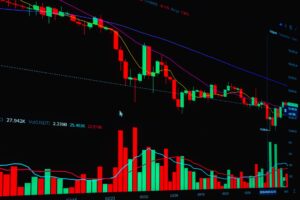
Technical indicators suggest the stock is deeply oversold on the daily momentum gauge and nearly so on the weekly chart, putting the month on track for its worst performance since September 2022. The price briefly slipped below $153, a level that had acted as resistance from late 2024 until last June, before rebounding on the day’s heaviest trading in more than a year. Brian Shannon, founder of Alphatrends, warned that the stock is “getting close to capitulation” and advised waiting for a close above the five‑day moving average, around $175, before trusting a rebound.
Historically, Nvidia’s declines of similar depth have been followed by rapid recoveries. At its low, the shares were down 38% from the October record, a drop comparable to the COVID‑related and tariff‑related crashes, both of which rebounded to new highs within three months. Earlier slides in 2018 and 2022 were deeper and took seven to fourteen months to recover.
Thursday marked the seventh session since 2010 in which Nvidia fell at least 10% and recouped at least half of the loss by the close. In five of the first six such instances, the stock was higher a year later; the exception was the January 2022 sell‑off that preceded a longer downturn.
Wall Street analysts have not altered their bullish stance. Rosenblatt’s Kevin Cassidy maintained a Buy rating, stating, “we expect employees, suppliers and customers to rally around the company.” Goldman Sachs’ James Schneider also kept a Buy recommendation, describing Huang’s exit as a “meaningful, but measured negative for the stock.”

Norman Pearlstine is the Executive Editor and Co-Founder at News Raise. With over two decades of experience across financial journalism, corporate governance, and market analysis, Norman leads the editorial direction and ensures strict adherence to journalistic accuracy and ethics.