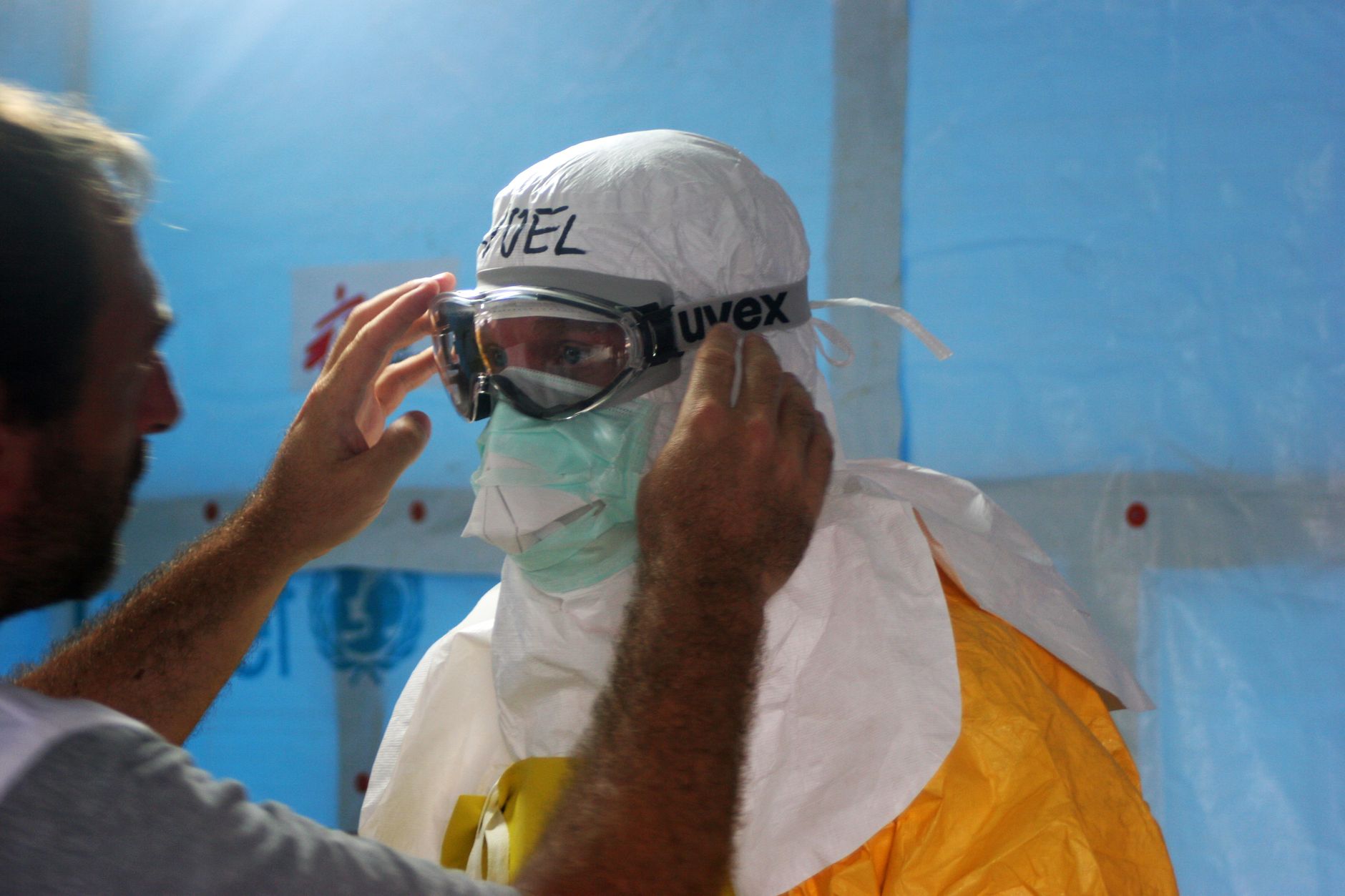
Medical humanitarian group Médecins Sans Frontières (MSF) has issued a stark warning that a large portion of the money earmarked for combating Ebola in the Democratic Republic of Congo is not reaching the people who need it. The charity says that, despite the outbreak being described as “out of control,” frontline workers are often left without pay, adequate training, or essential supplies, and even ambulances have run out of fuel in some locations.
Funding gaps and staff hardships
Since the epidemic was declared in May, more than 5,400 people have died and roughly 11,000 have been infected, making it the second‑most lethal Ebola outbreak on record. MSF says that hundreds of millions of dollars intended to support the response have failed to reach their destination. The organization called on the Congolese government and United Nations agencies to improve oversight and accountability, emphasizing that funds already disbursed must be used efficiently to train, pay, equip and support response personnel, and to direct resources to the areas of greatest need.
The BBC has sought comment from the Congolese authorities, but no response was included in the report. Earlier, the Africa Centres for Disease Control and Prevention (Africa CDC) highlighted that $700 million of the $962 million already allocated to Ebola response organisations could not be accounted for. Africa CDC chief Jean Kaseya cautioned against labeling the shortfall as embezzlement, describing it instead as a serious failure of financial transparency and reporting.
The Congolese health minister echoed these concerns, noting that aid agencies were required to submit detailed activity reports for ministry oversight, yet only 22 % had complied. He also pointed out that many surveillance teams exist only on paper and are absent on the ground.
MSF president Javid Abdelmoneim said, “Our teams are often left speechless by the dysfunctions they witness in many areas. Six months into the response, this situation is simply unacceptable.”
Surveillance and response challenges
Effective contact tracing—identifying and isolating individuals who have been exposed to the virus—is a cornerstone of Ebola control. MSF says that, despite official allocations for this activity, surveillance remains severely deficient. The charity notes that two‑thirds of Ebola deaths are occurring in communities rather than in treatment centres.
British epidemiologist Neil Ferguson, cited by Reuters, warned that more than half of the cases are likely going undetected, suggesting that the outbreak could persist for another year. MSF also criticized an “excessive concentration” of efforts in certain locales, leaving other high‑need areas under‑served. The response in North Kivu province was described as “too slow,” while the neighbouring Haut‑Uélé region was said to be “dramatically overlooked.”
In both provinces, MSF observed that response teams lack basic resources such as clean water, chlorine for decontamination, and functional triage systems. The organization warned that some health facilities have inadvertently become new points of transmission rather than safe centres of care.
Broader context and regional spread
The epicentre of the crisis lies in eastern DR Congo, a region plagued by long‑standing conflict and, in some areas, rebel control. Poor road infrastructure further hampers movement of supplies and personnel. On Thursday, United Nations officials and the Congolese government warned that the same areas hardest hit by Ebola are also experiencing a severe food crisis, with almost ten million people in the broader region facing acute need.
The outbreak is caused by the Bundibugyo strain of the virus, which is relatively rare and currently lacks an approved vaccine or treatment, although clinical trials are ongoing. Cases have already been reported beyond Congo’s borders, including in Kenya, Uganda and Nigeria.
Additional reporting was provided by Emery Makumeno in Kinshasa.

Helene Elliott is the Lead Science & Space Reporter at News Raise. She reports on aerospace missions, astrophysics discoveries, quantum research, and environmental technology.