The Pennsylvania Department of Health confirmed Wednesday that an unvaccinated resident of Clinton County has died after contracting measles. The death marks the eighth measles‑related fatality in the Commonwealth this year.
Nationwide Context and Case Numbers
The fatality arrives just days after the United States lost its measles elimination status, a designation it had maintained for nearly 26 years. The Pan American Health Organization (PAHO), a World Health Organization regional office, revised the United States’ status on Tuesday following a review of transmission data.
According to the Centers for Disease Control and Prevention (CDC), the country is experiencing its worst measles outbreak in more than three decades. As of November 12, CDC officials have recorded 5,412 confirmed measles cases nationwide since the start of the year.
Pennsylvania alone has reported 1,589 cases across 46 of its 67 counties. State health officials have pledged to maintain an aggressive response as the outbreak continues to spread.
State Response and Vaccination Efforts
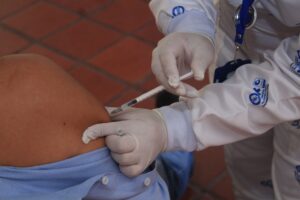
In a news release, the Pennsylvania Department of Health (DOH) said roughly 300 staff members are actively working with residents, community groups, and health‑care providers to combat the outbreak. Their efforts focus on delivering fact‑based information and expanding access to the measles, mumps and rubella (MMR) vaccine.
Since the outbreak began in late April, the agency reports that more than 11,500 MMR vaccine doses have been administered in 2026, including over 7,200 shots delivered through pop‑up clinics set up across the state.
Public‑health experts attribute the surge in cases, in part, to growing vaccine hesitancy over recent decades. Measles is highly contagious; the virus can linger in the air for up to two hours, and about 90 % of people who are not immune are expected to become infected after exposure.
Political Commentary and Public Messaging
Critics have pointed to leadership under U.S. President Donald Trump as a factor in the resurgence. Health Secretary Robert F. Kennedy Jr., a Trump cabinet official, has publicly questioned the safety and efficacy of the MMR vaccine, alleging it contains “aborted foetus debris and DNA particles.” Those claims remain unsubstantiated.
Despite his earlier skepticism, Kennedy posted on social media on Tuesday, following PAHO’s decision, urging vaccination: “We will stop measles outbreaks, protect American families, and work to regain U.S. measles elimination status. I continue to recommend MMR vaccination as the most effective way to prevent measles.”
The CDC reiterated its commitment to ending the outbreak and restoring the elimination status. CDC Director Erica Schwartz emphasized that the designation itself does not protect the public; vaccination does.
Before assuming office in early 2025, Kennedy had asserted that no vaccine was “safe and effective” and promoted the discredited theory linking vaccines to autism. His shift toward encouraging the MMR shot reflects the heightened urgency as the nation confronts a historic public‑health challenge.
Health officials continue to monitor the situation closely, urging unvaccinated individuals to receive the MMR vaccine promptly. The recent death underscores the lethal potential of measles, especially for those lacking immunity, and reinforces the call for widespread immunization as the primary tool to halt the outbreak.

Helene Elliott is the Lead Science & Space Reporter at News Raise. She reports on aerospace missions, astrophysics discoveries, quantum research, and environmental technology.