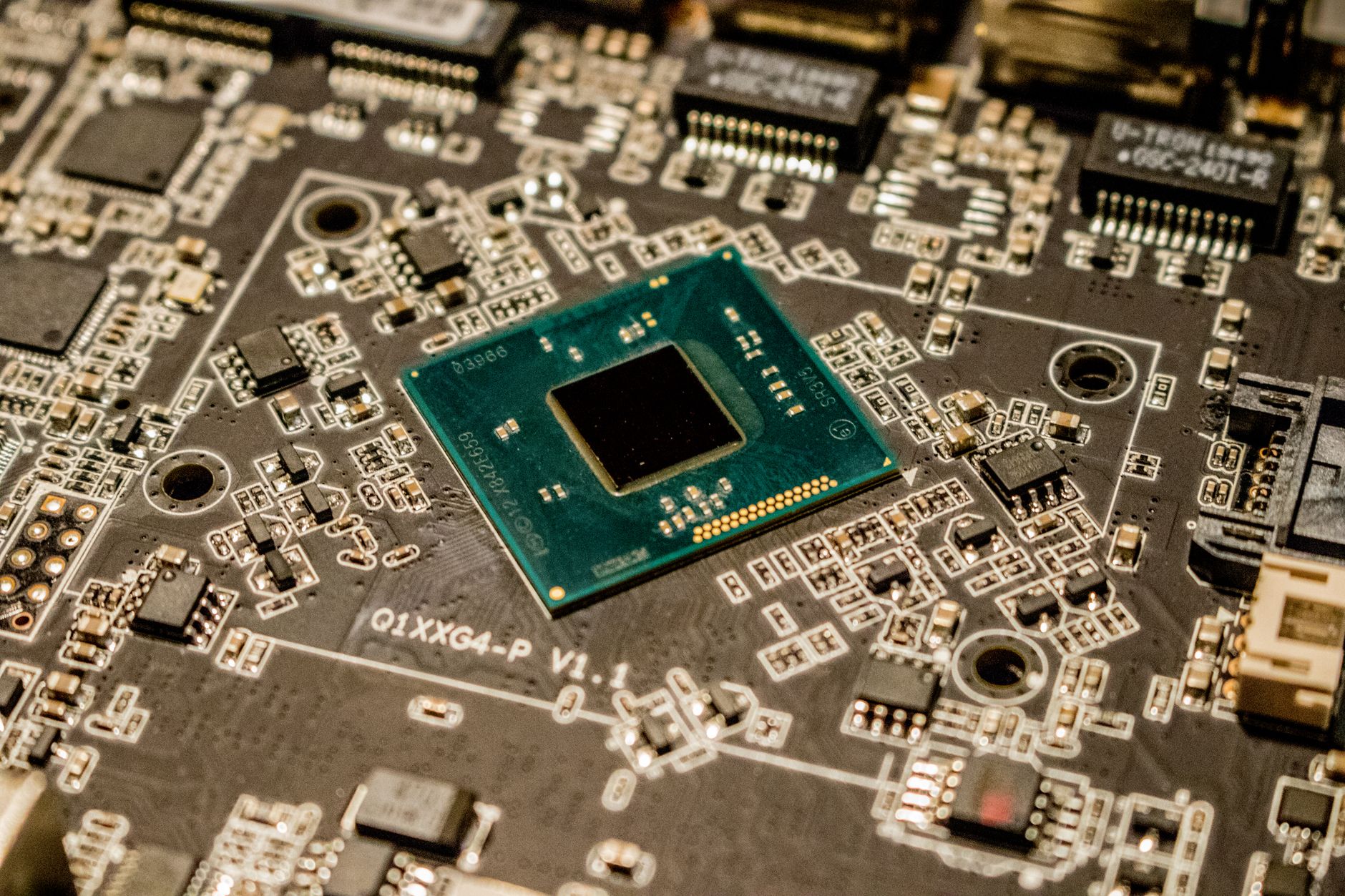
On August 25, 2026, Apple unveiled two new silicon offerings: the entry‑level M6 and the high‑performance M5 Ultra. The announcement, posted on the company’s newsroom site and echoed by technology outlet 36Kr, also introduced updated Mac mini and Mac Studio configurations slated to hit stores on September 22, 2026. While the hardware specifications are noteworthy, the larger story lies in what Apple deliberately left out of its product line‑up.
What the August launch delivered
The headline of the release was the M5 Ultra, a chip that integrates a next‑generation graphics processor with up to 80 cores, each paired with a Neural Accelerator. Apple claims the GPU delivers roughly 4.5 times the peak AI compute of the prior‑generation M3 Ultra and more than sixfold the AI performance of the original M1 Ultra. In addition to the AI boost, the GPU supports third‑generation ray tracing and, according to Apple’s own benchmarks, runs about 40 % faster in graphics‑focused workloads than the M3 Ultra.
The M6, positioned as the base tier, carries a different architectural novelty. 36Kr reported that it is the first Apple silicon to ship with two independent 16‑core Neural Engine blocks that can be engaged simultaneously, effectively doubling the peak AI compute compared with the previous generation. The refreshed Mac Studio will be offered in four desktop configurations—M6, M5 Pro, M5 Max and M5 Ultra—with the two higher‑end variants, M5 Max and M5 Ultra, priced at 19,999 yuan and 46,999 yuan respectively in the Chinese market.
The missing Pro, Max and Ultra variants of the M6
Since the debut of the M1 family in 2020, Apple has followed a predictable cadence: a baseline chip, then Pro and Max variants for more demanding devices, and finally an Ultra version that fuses two Max dies for its most powerful machines. This pattern appears to have been broken this year. Multiple reports, including a Bloomberg story relayed by Gadgets Now, MacDailyNews and other outlets, indicate that Apple will ship only the base‑level M6 this cycle, omitting the expected M6 Pro, M6 Max and M6 Ultra altogether.
Analysts interpret the omission as a strategic pivot. Rather than extending the incremental CPU‑GPU enhancements that defined the Pro/Max/Ultra ladder, Apple is reportedly fast‑tracking an entirely new M7 family built from the ground up for artificial‑intelligence workloads. Gizchina’s roadmap analysis describes the M6 as a transitional stopgap, while the forthcoming M7 series will carry the real architectural weight for AI tasks.
Inside the AI‑first M7 family
According to reporting cited by iPhone in Canada, the M7 lineup will be rolled out in multiple phases. A base‑level M7 chip is expected in the first half of 2027, followed by M7 Pro and M7 Max variants by the end of that year, and an M7 Ultra arriving in 2028. This stretched schedule—about an 18‑month rollout—contrasts with Apple’s typical yearly refresh cadence, underlining the magnitude of the redesign effort.
Early figures suggest the base M7 will target roughly 240 GB/s of memory bandwidth, a noticeable step up from the M6. The most ambitious specification belongs to the M7 Ultra, which is projected to support up to 1.5 TB of unified memory, roughly double the capacity of the current M5 Ultra‑based machines. Such a memory pool is clearly aimed at handling very large AI models locally, rather than the traditional graphics‑oriented workloads of video editors or 3D artists.
Baltra: Apple’s dedicated AI server silicon
Running parallel to the consumer‑focused M‑series is a separate project codenamed Baltra. A TechSpot article quoting analyst Ming‑Chi Kuo says Apple intends to move Baltra into mass production in the latter half of 2026, with Apple‑operated data centers equipped with the chip coming online in 2027. Baltra is described as a server‑only AI processor, not a repurposed Mac chip, designed from the ground up to handle Apple Intelligence workloads within the company’s own infrastructure.
Bloomberg‑sourced reporting suggests Baltra could contain between two and eight times the CPU and GPU core counts of the current M3 Ultra, which tops out at 32 CPU cores and 80 GPU cores. Until Baltra and the eventual M7 Ultra server variant are ready, Apple appears to be bridging the gap by deploying an enhanced AI server platform based on the newly announced M5 Ultra chip. In other words, the hardware that powers the upcoming Mac Studio could already be running behind the scenes in Apple’s own server racks.
The rationale for a server‑only chip is rooted in the economics of AI at scale. Relying on third‑party GPU farms incurs external margins on each inference request and introduces supply‑chain dependencies. By owning both the silicon and the data center, Apple can control costs and latency, echoing the strategic benefits it gained when it moved Macs away from Intel processors in 2020.
Positioning against the broader AI compute market
Tech Times framed the M7 Ultra server plan as a direct response to Nvidia’s Blackwell‑generation GPUs, indicating that Apple is using Nvidia’s high‑end data‑center GPUs as a reference point. While Apple is unlikely to surpass Nvidia’s raw parallel throughput in the near term, its emphasis on massive unified memory and power efficiency could offer a different value proposition, especially for inference workloads where holding an entire model in memory reduces the need for sharding across multiple accelerators.
The shift comes amid a crowded AI PC market. A July 2026 industry analysis reported by Korean outlet Nate News described the second half of the year as a de‑facto processor war, with Intel, AMD and Qualcomm vying for mainstream Windows AI PCs, while Nvidia pursues a “niche raid” strategy focused on high‑end systems. Apple’s AI‑centric Macs add a fifth major competitor to a battlefield already thick with rivalry.
For consumers and enterprises, the emerging landscape means AI‑enabled PCs will be segmented not just by price but also by the underlying software ecosystem and the way AI models are run—whether on a local Mac equipped with a future M7 Ultra, on a Windows machine with a Qualcomm Snapdragon X2, or on a cloud service powered by Nvidia GPUs.
Apple’s decision to forgo the expected M6 Pro, Max and Ultra chips in favor of an AI‑first roadmap signals a bold reallocation of engineering resources. By accelerating the M7 series and introducing the Baltra server processor, the company appears intent on shaping a vertically integrated AI stack that spans both consumer devices and its own data‑center infrastructure. Whether this approach will translate into a measurable advantage over entrenched competitors like Nvidia remains to be seen, but the move undeniably reshapes the expectations for Apple’s silicon strategy in the years ahead.






Be First to Comment