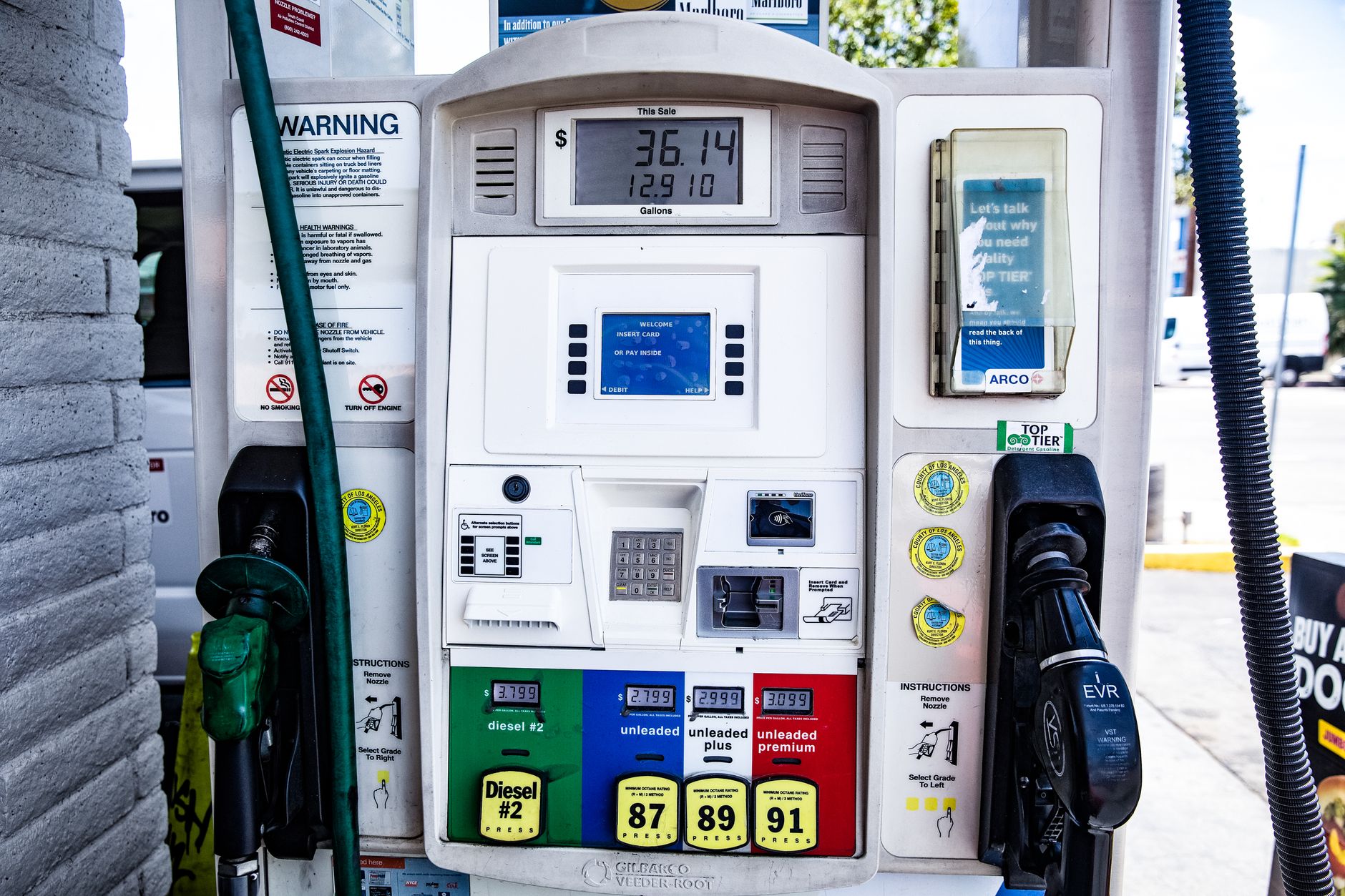
The Supreme Court of India on Monday declined to entertain a petition that sought a mandatory disclosure of ethanol content in petrol sold at fuel stations. The petition, filed by advocate N.K. Goswami, asked that the percentage of ethanol blended in petrol be displayed on every dispensing nozzle and printed on fuel bills and receipts. The bench, composed of Justice M.M. Sundresh and Justice Prasanna B. Varale, granted the petitioner liberty to pursue the matter before the appropriate High Court.
Petitioner’s Arguments and Government Response
During the hearing, Goswami contended that consumers have a fundamental right to know the composition of the fuel they purchase. He highlighted the absence of any ethanol‑content information on standard petrol receipts, stating, “See the receipt, there is no mention of ethanol. I have the right to know.” He further cited an earlier remark by the Attorney General, who had described the ethanol‑blending programme as an “experiment.” The petitioner argued that the government later issued a clarification denying that such a statement had been made, and he sought a definitive assurance from the Centre on the issue.
The Attorney General for India objected to the manner in which the petition was framed, remarking, “He wants the Govt of India to be answerable to him!” He characterized the filing as a “proxy petition” and reminded the Court that a similar plea had been dismissed in the previous year. Goswami responded that the demand was not for personal benefit but for the rights of all Indian citizens, emphasizing, “Not to me, to the citizens of India. We have right to know what we are purchasing.”
Specific Relief Sought in the Petition
The petition outlined several concrete prayers. Primary among them was a direction to the authorities to ensure prominent and uniform disclosure of the exact ethanol percentage on every petrol dispensing nozzle. It also called for every fuel invoice, receipt, or bill to clearly state the ethanol proportion in the petrol sold.
Beyond labeling, the petitioner sought the creation of a publicly accessible, vehicle‑wise compatibility database. This database would be searchable by manufacturer, model, engine type, and year of manufacture, indicating which ethanol blends were suitable for individual vehicles. The petition further requested a transparent transition framework for older or non‑compatible vehicles, including the possibility of supplying lower‑ethanol petrol where technically, economically, and logistically feasible.
To examine the broader implications of the ethanol‑blending programme, the petitioner proposed constituting an independent expert committee. The suggested committee would comprise representatives from the Petroleum Ministry, the Ministry of Road Transport and Highways, the Bureau of Indian Standards, the Automotive Research Association of India/International Centre for Automotive Technology, consumer organisations, automobile engineers, fuel technologists, environmental and public‑health experts, and water‑resource specialists.
The committee’s mandate, as described in the petition, would cover several key areas: the real‑world compatibility of E20 fuel with India’s existing vehicle fleet; impacts on fuel efficiency, engine life, and maintenance costs; warranty and insurance implications; overall environmental impact, including tail‑pipe emissions and water consumption linked to ethanol production; and concerns related to food security and feed‑diversion arising from ethanol cultivation.
Additionally, the petitioner asked the Court to require the government to place before it all policy files, technical studies, compatibility reports, safety standards, consumer advisories, and records of public consultation that underlie the compulsory rollout of E20 petrol. A final prayer sought the formulation of a national Consumer Disclosure Protocol for ethanol‑blended petrol, to be prepared in consultation with the Central Consumer Protection Authority and the Bureau of Indian Standards.
Court’s Decision and Next Steps
After hearing the arguments, the two‑judge bench declined to entertain the petition on the merits. While the Court did not issue any order directing the labeling of ethanol content, it left the door open for the petitioner to approach the relevant High Court for appropriate relief. The decision reflects the Court’s view that the matter may be more suitably addressed at the state level or through other administrative mechanisms.
The case, formally titled NARENDRA KUMAR GOSWAMI Vs UNION OF INDIA | W.P.(C) No. 887/2026, highlights ongoing tensions between consumer transparency demands and the government’s rollout of the E20 ethanol‑blending programme. The petitioner’s emphasis on consumer right to information aligns with broader global trends where fuel composition disclosures are becoming more common. However, the Court’s refusal to intervene at the apex level indicates that, for now, any mandatory labeling or disclosure framework will have to emerge from policy decisions or lower‑court rulings.
Stakeholders in the automotive and fuel sectors, as well as consumer advocacy groups, are likely to monitor subsequent developments in the High Courts. The outcome could shape how ethanol‑blended fuels are marketed and regulated across India, influencing everything from vehicle compatibility assessments to environmental impact reporting.






Be First to Comment