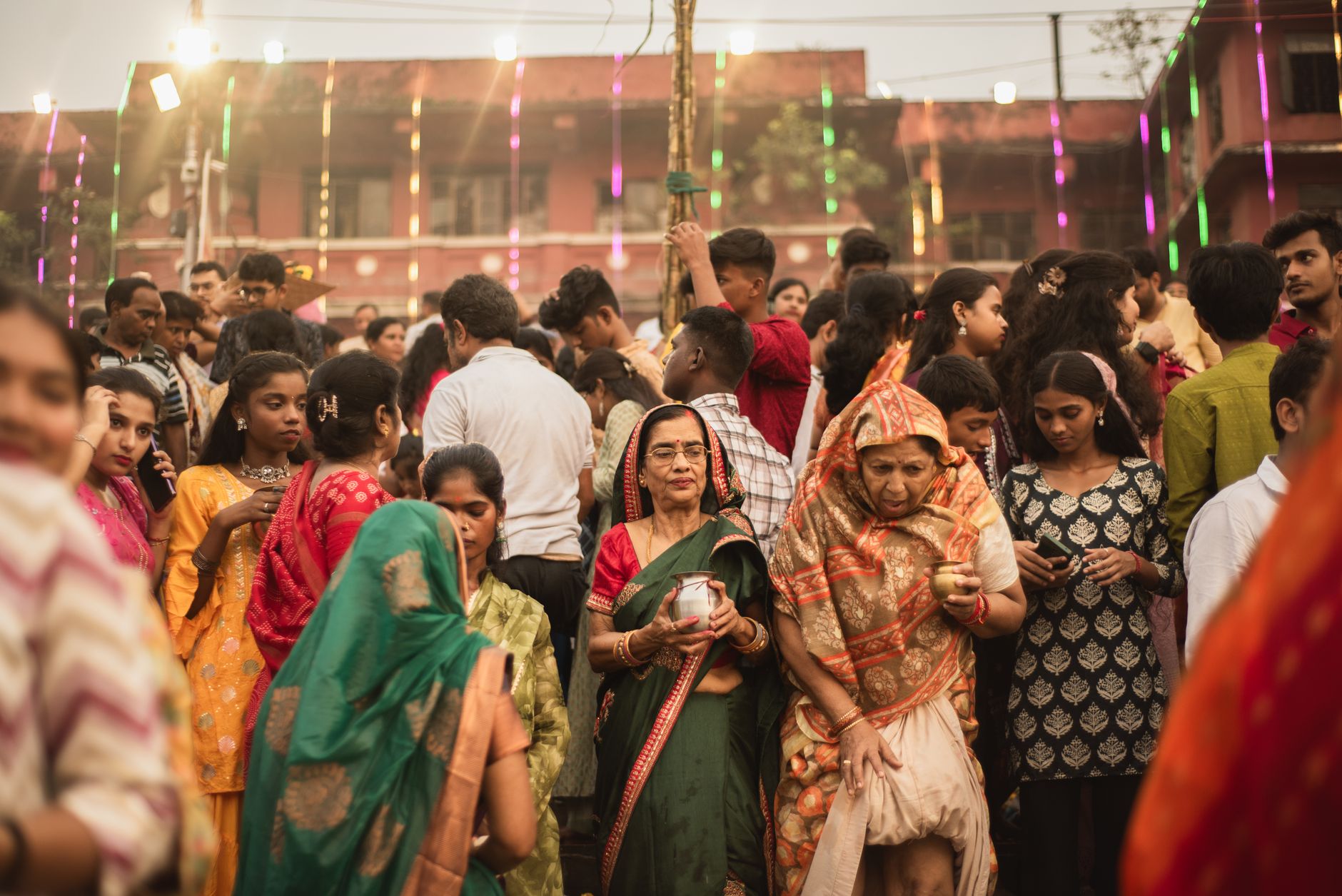
The Vishva Hindu Parishad (VHP) has released a set of guidelines that would prevent members of the Muslim community from taking part in garba and dandiya events during the upcoming Navratri festival in Maharashtra. The organization, represented by spokesperson and joint secretary Shriraj Nair, says the measures are intended to preserve the religious character of the celebrations, which it describes as worship of the Hindu goddess.
VHP’s proposed restrictions
According to Nair, the VHP’s proposal includes verifying the identity of participants through Aadhaar cards and applying a tilak on the foreheads of those who attend. The guidelines also advise organisers to ensure that only individuals who subscribe to the traditional form of worship associated with Navratri are present. “We have taken a decision not to allow participation of Muslims in garba‑dandiya dance during the Navratri festival,” Nair said, adding that the festival is about worship rather than merely music and dance.
The VHP framed the restrictions as “precautionary measures” aimed at protecting what it calls the cultural legacy of Hindus. While acknowledging that the rules target a specific religious community, Nair insisted they are not intended to single out any group, stating, “We are not against anybody. We also believe in social harmony and peace.” He further suggested that Muslims who wish to celebrate could do so in mosques or at their residences, accompanied by family members.
Political and community reactions
The announcement has drawn swift criticism from several political figures. Shiv Sena (UBT) MP Sanjay Raut questioned the VHP’s stance in light of recent remarks by RSS chief Mohan Bhagwat, who emphasized universal dignity and oneness of all humans during a speech in New York. Raut asked whether the VHP disagrees with Bhagwat’s call for inclusivity.
Congress MLA Amin Patel labelled the VHP’s move unconstitutional, arguing that festivals traditionally promote communal harmony. “Festivals encourage communal harmony. We are often invited for dandiya and Navratri events out of goodwill,” Patel said, noting that his party also extends invitations to members of other communities for Eid and Ramzan celebrations.
Nationalist Congress Party (Secular) spokesperson Clyde Crasto warned that the guidelines could disturb peace in the state. He asked the BJP‑led Maharashtra government whether it would remain silent while the VHP attempts to dictate matters of law and order, urging authorities to demonstrate that “nobody is above the law of the land.”
Representing the Maharashtra State Minority Commission, Chairman Pyare Khan objected to a blanket exclusion of Muslims from public festivities. Khan emphasized that everyone has the right to celebrate festivals according to their faith and pointed out that many organisations regularly invite Muslims to such events. “Festivals connect people, not divide them,” he said, adding that participation should be based on invitation rather than communal restriction.
Legal and constitutional concerns
Opposition parties have raised questions about the constitutional validity of the VHP’s guidelines, suggesting that they may contravene provisions guaranteeing freedom of religion and equality before the law. Critics also asked whether the VHP’s stance enjoys backing from the RSS, the parent organization of the broader Sangh Parivar, given Bhagwat’s inclusive remarks.
The VHP has not commented on Bhagwat’s speech, maintaining that its own policy is driven by religious considerations rather than political alignment. Nair reiterated that the organization’s core agenda includes opposition to religious conversion and anti‑cow‑slaughter measures, and that it views festivals as integral to Hindu cultural heritage.
Navratri, a nine‑night Hindu festival, is scheduled to begin on October 11 in Maharashtra. The VHP’s guidelines, if adopted by event organisers, could affect thousands of participants, as garba and dandiya are among the most popular public celebrations during the period. The debate highlights a broader tension in India between majoritarian cultural assertions and the constitutional promise of secularism and inclusive public spaces.
As the festival approaches, state authorities have not yet issued an official response to the VHP’s recommendations. Observers note that the controversy may set a precedent for how religious festivals are managed in a pluralistic society, especially when civil identification tools such as Aadhaar are proposed as gate‑keeping mechanisms.





Be First to Comment