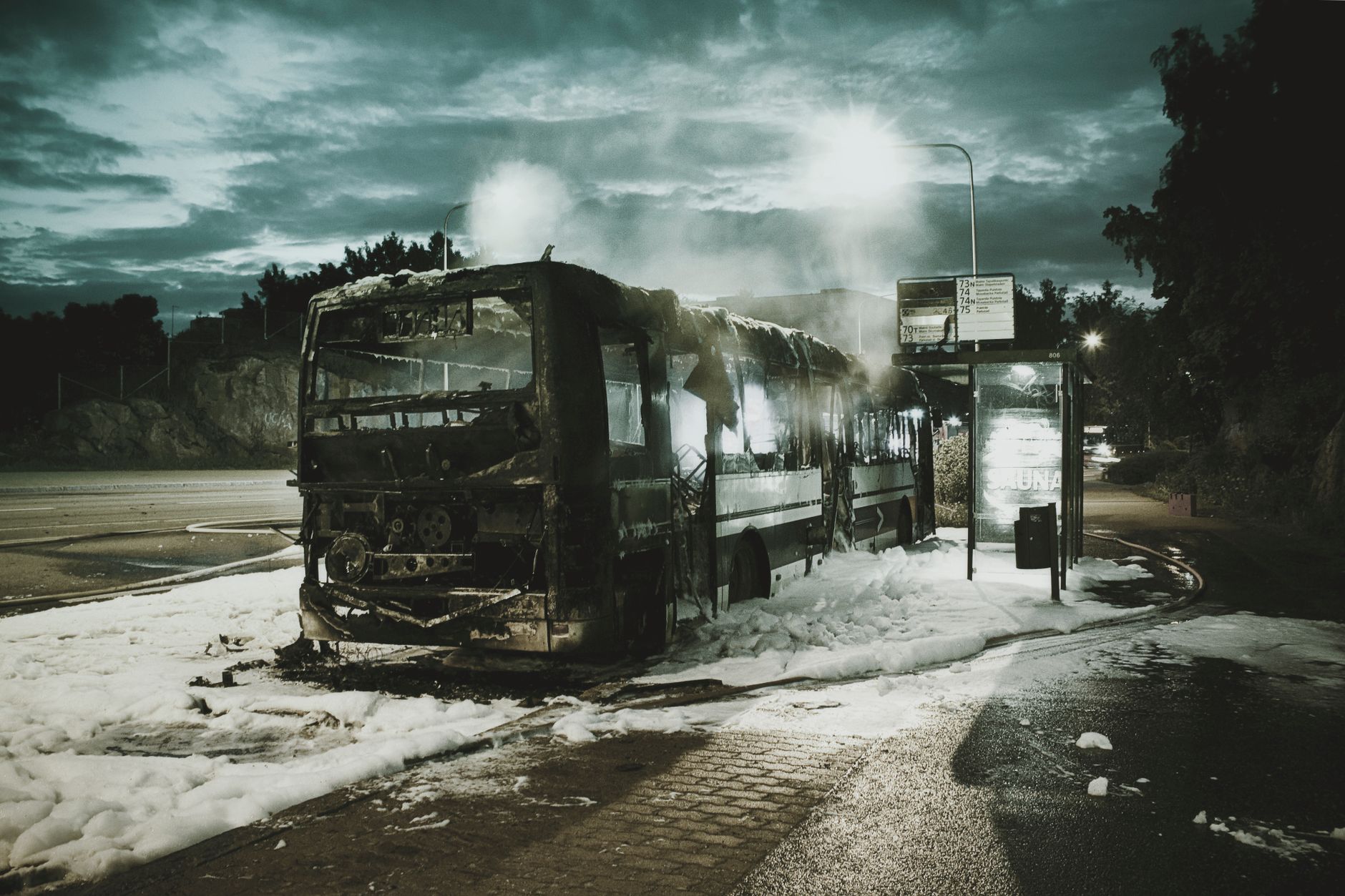
At least nine passengers, including a woman, lost their lives after a sleeper bus carrying roughly 35 to 40 people caught fire on the Yamuna Expressway near the 33‑km marker late on Wednesday night, September 23, 2026. The vehicle was en route from Delhi to Mahua in Uttar Pradesh’s Jhansi district when the blaze erupted around 11 p.m. in the Jewar area of Gautam Buddh Nagar district, triggering a large‑scale rescue operation.
Incident Overview
The fire broke out abruptly, filling the bus interior with thick, suffocating smoke within minutes. According to police, a short circuit in the air‑conditioning system is the most likely cause, though the investigation remains ongoing. Passengers who survived reported being awakened by a sudden bang on the door followed by a chaotic scene of smoke and panic. One survivor, Rinki Rajput, said she was asleep when someone knocked on the door, woke her, and then rushed out without shoes or belongings, clutching only her phone. She described the interior as “so smoky that nothing was visible” and recounted that passengers were forced to push and shove to escape, with many left behind.
Another passenger, who asked to remain unnamed, recalled being woken up after the fire had already spread, noting that “there was smoke everywhere” and that the bus was “packed with passengers.” Both accounts emphasize the difficulty of evacuating a vehicle that turned into a “smoke‑filled chamber” within moments of the fire’s ignition.
Rescue Operations and Casualties
Following a distress call, emergency services dispatched eight to ten fire tenders to the scene. Firefighters worked through the night to contain the flames and rescue any passengers who could still be reached. Jewar Inspector Ajay Kumar Singh confirmed that several occupants managed to escape and later returned home, but the fire claimed the lives of nine individuals whose bodies were transferred to Kailash Hospital for post‑mortem examination.
The rapid response of fire crews prevented the fire from spreading further along the expressway, but the loss of life underscores the vulnerability of densely packed sleeper buses on high‑speed corridors. The incident prompted immediate traffic management measures on the expressway, with authorities clearing the area to allow unhindered access for rescue vehicles.
Investigation and Legal Action
Police have arrested the bus driver and conductor, registering a case against them under provisions related to culpable homicide. The arrest follows preliminary findings that a short circuit in the air‑conditioning unit may have ignited the fire. Investigators are examining the condition of the bus, the maintenance records of its electrical systems, and any possible safety or operational lapses that could have contributed to the tragedy.
Authorities have not disclosed the identities of the deceased, nor have they released a detailed timeline of the fire’s spread beyond the statements from survivors and the police. The investigation remains active, with officials pledging to determine whether negligence, faulty equipment, or other factors played a role in the incident.
As the inquiry continues, transport regulators are expected to review safety protocols for sleeper buses operating on major highways, particularly concerning the maintenance of electrical components and emergency evacuation procedures. The incident adds to a growing discourse on road safety in India, where high‑capacity buses are a common mode of long‑distance travel.
Families of the victims have been urged to contact the police for further information, and counseling services have been offered to survivors and witnesses coping with the traumatic experience. The Yamuna Expressway, a key artery linking Delhi with the industrial heartland of Uttar Pradesh, will remain under heightened surveillance as authorities seek to prevent similar tragedies in the future.






Be First to Comment