
Xiaomi has officially joined Samsung in offering a built‑in privacy screen on a flagship Android device. The Chinese maker unveiled its 18 Pro series, which incorporates a pixel‑level privacy technology dubbed “SuperPixel 2.0.” The feature mirrors Samsung’s Galaxy S26 Ultra, released six months earlier, but Xiaomi claims its implementation avoids the dimmer, grainier visual experience reported by some reviewers of the Samsung model.
SuperPixel 2.0 privacy technology
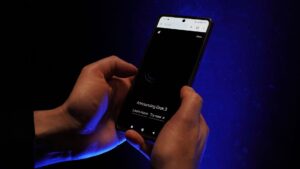
According to Xiaomi, the SuperPixel 2.0 panel combines standard wide‑angle pixels with narrow‑angle privacy pixels. In the default, or standard, mode both pixel types illuminate the full display, delivering the bright, color‑accurate performance expected of a flagship OLED screen. When a user activates privacy mode, the device disables the standard wide‑angle pixels, leaving only the narrow‑angle pixels active. The result is a display that remains fully visible within a 60‑degree viewing cone but becomes effectively black to anyone looking from a wider angle.
Because the privacy effect is achieved at the hardware level, users do not need third‑party screen protectors or additional software to protect on‑screen content. Xiaomi emphasizes that the technology does not compromise brightness or color fidelity at normal viewing distances, a point it positions as a key advantage over Samsung’s approach, which some reviewers described as darker and more grainy when privacy mode is enabled.
The company also notes that the 18 Pro’s panel uses a new M11 luminescent material capable of reaching up to 4,000 nits of peak brightness and supporting the BT.2020 color gamut. Xiaomi says the high brightness ceiling helps maintain readability even when the privacy pixels are active.
Activation of the privacy screen can be performed through several convenient methods. Users may toggle the feature from the Quick Settings shade, remap a physical AI key, or issue a voice command to Xiao AI. The system also allows per‑app or per‑page configuration, and it can automatically engage when the front‑facing camera detects a person looking at the screen from behind, adding an element of context‑aware protection.
Hardware and performance specs
The 18 Pro series arrives with a 6.4‑inch main OLED display that sits atop Qualcomm’s newly announced Snapdragon 8 Elite Gen 6 processor. The combination places the device among the first smartphones to ship with the Gen 6 chipset, promising top‑tier performance for gaming, AI, and multimedia tasks.
Memory configurations top out at 16 GB of RAM paired with up to 1 TB of internal storage, offering ample headroom for power users and content creators. The phone also features a rear‑mounted 2.86‑inch OLED display that runs at a 120 Hz refresh rate. Xiaomi markets this secondary screen as a functional tool for taking selfies with the main camera system and for interacting with the device when it is placed face‑down.
Photography is a central focus of the 18 Pro. The device houses a Leica‑branded triple‑camera array. The primary sensor is a 200‑megapixel wide‑angle lens equipped with a Light Fusion 960L sensor. A second 200‑megapixel telephoto lens provides 3.2× optical zoom, while a 50‑megapixel Leica ultrawide sensor covers the broader field of view. For self‑portraits, a 50‑megapixel front‑facing sensor is included, and users can also leverage the main lenses via the rear auxiliary screen for creative shooting angles.
Power delivery is handled by a sizable 7,000 mAh battery. Xiaomi advertises 100 W wired charging and 50 W wireless charging capabilities, promising rapid top‑up times despite the large capacity. The company has announced pricing for the Chinese market ranging from $900 to $1,500, though it has not disclosed detailed pricing tiers for each configuration.
Market positioning and availability
The launch of the 18 Pro series comes shortly after Apple introduced its iPhone 18 Pro models, prompting observers to note visual similarities at a distance. However, Xiaomi differentiates its flagship by integrating the rear auxiliary screen—a feature absent from Apple’s lineup.
While the company has confirmed that the 18 Pro will be sold globally, it has so far released pricing information only for China. Xiaomi indicates that international shipments are slated for the end of the calendar year, positioning the device as a direct competitor to other high‑end Android flagships that are expected to launch in the same window.
In addition to the 18 Pro, Xiaomi recently showcased its 18 Fold series at IFA 2026, where BGR obtained an exclusive hands‑on experience at the company’s booth. The foldable line was unveiled only weeks before the 18 Pro announcement, suggesting an aggressive product cadence aimed at capturing premium market share across multiple form factors.
Overall, Xiaomi’s introduction of SuperPixel 2.0 marks a notable step forward in hardware‑level privacy solutions for smartphones. By embedding the technology directly into the display panel and coupling it with a suite of high‑end specifications—including the Snapdragon 8 Elite Gen 6 processor, Leica camera system, and a massive 7,000 mAh battery—Xiaomi positions the 18 Pro as a compelling alternative for consumers seeking both performance and on‑device privacy without reliance on external accessories.





Be First to Comment