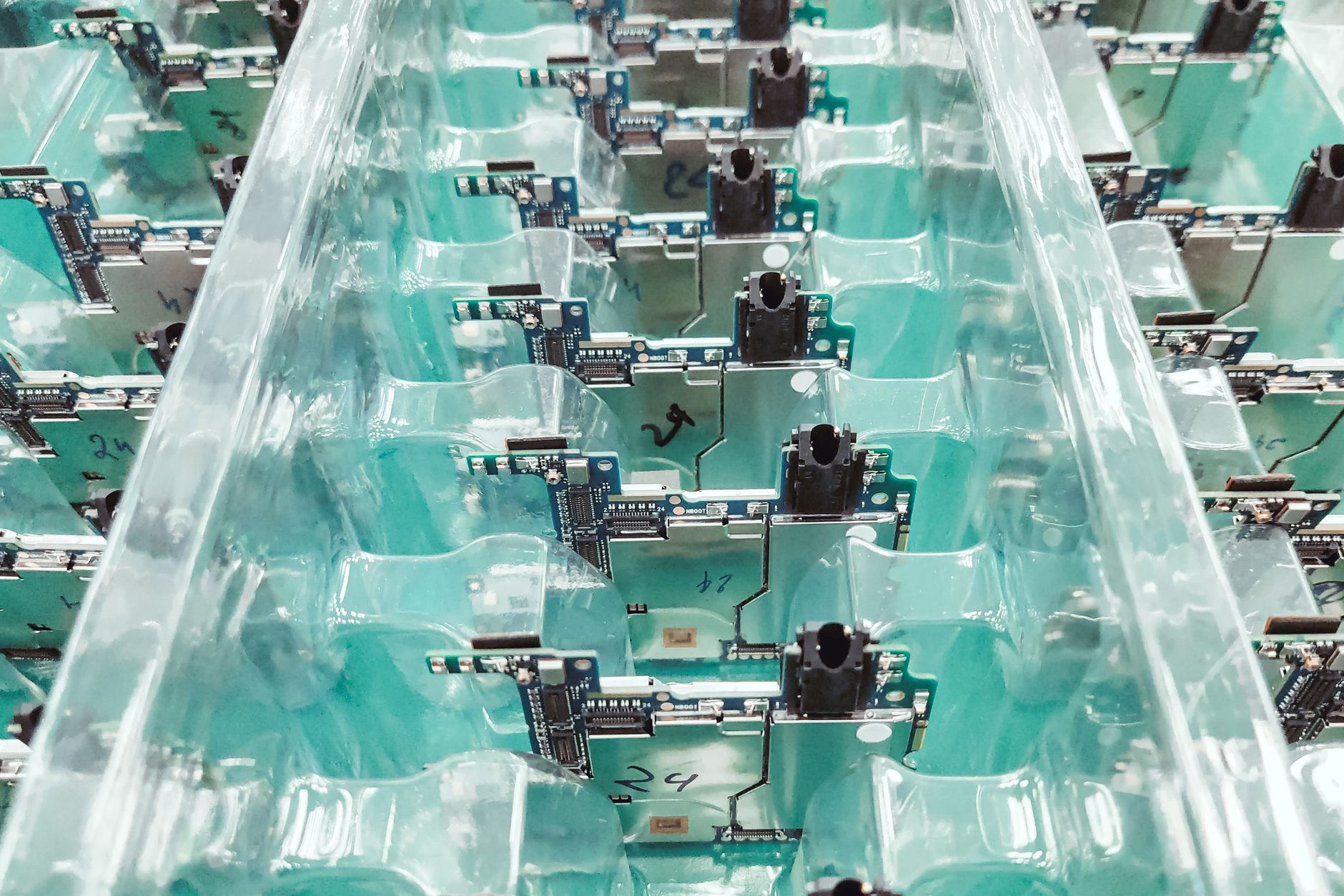
Ahmedabad‑based teenager Rehan Mansuri has entered Gujarat’s rapidly expanding semiconductor ecosystem with a new venture, Micronex, dedicated to manufacturing lead frames for chip packaging. The startup, which secured an initial investment of Rs 80 crore, will operate from the Sanand Industrial Estate and aims to produce 50 crore lead‑frame units per year once the first phase is complete.
Investment, Capacity and Timeline
Micronex’s capital outlay of Rs 80 crore positions the company among the early private players in a sector that the Gujarat government values at roughly Rs 1.4 lakh crore. Construction of the manufacturing facility began shortly after the announcement, and the plant is slated to start production by May 2027. When operational, the factory is projected to employ about 250 young workers directly, reflecting the state’s emphasis on creating skilled jobs for its youth.
The lead frames will be fabricated from a copper alloy with thicknesses ranging from 0.1 mm to 0.25 mm—dimensions comparable to the thickness of a standard A4 sheet. These ultra‑thin metal structures serve as the backbone of semiconductor chips, providing mechanical support, heat dissipation, and a platform for the fine gold or copper wires that connect the chip to external circuitry.
Partnerships and Market Focus
During the SEMICON India 2026 exhibition in New Delhi (September 17‑19), Micronex signed a memorandum of understanding with Kaynes Semicon, a prominent semiconductor firm. The MoU establishes a business partnership that will enable Micronex to supply lead frames to semiconductor manufacturers operating in the Sanand cluster.
Initially, Micronex will concentrate on the power‑electronics and automotive segments, sectors that demand robust and reliable packaging solutions. The company plans to broaden its customer base to include consumer‑electronics and telecommunications firms as its production capacity expands.
When questioned about competing with low‑cost Chinese suppliers and established global players, Mansuri emphasized a focus on building technical expertise and quality standards rather than immediate price competition. He highlighted the advantage of local supply chains, noting that Micronex can collaborate directly with chip makers on tooling, sampling, and design modifications, thereby reducing lead times and dependence on imports.
State Support and Industry Context
Gujarat’s semiconductor drive, championed by Chief Minister Bhupendra Patel, has attracted roughly Rs 0.4 lakh crore in investments, with six of the twelve government‑approved semiconductor projects located in the state. The ecosystem encompasses manufacturing, assembly, testing, packaging, design, and research activities.
Beyond capital inflows, the Gujarat government is nurturing a skilled workforce through collaborations with academic institutions. An ATMP training centre is being set up by PDEU in partnership with Micron Technology, while GTU is establishing a ChipIN extension centre and a Centre of Excellence for VLSI design. Additionally, India’s first ultra‑high‑pressure welding training programme for the semiconductor sector has launched at Dholera ITI, and IIT Gandhinagar, together with MeitY and DST Gujarat, has created the SAMARTH Centre for advanced semiconductor manufacturing research.
Micronex also intends to submit a proposal under the India Semiconductor Mission 2.0, a national initiative aimed at bolstering domestic semiconductor capabilities. The company’s focus on lead frames addresses a noted gap in the supply chain, according to Mansuri, who observed that the absence of local providers forces manufacturers to rely on imports, extending lead times and inflating costs.
Rehan Mansuri comes from a family involved in plastic‑waste recycling, operating seven recycling units across India. This entrepreneurial background, combined with his decision to pursue a niche within the semiconductor sector rather than more popular AI or digital‑technology pathways, underscores a strategic choice to fill a critical supply‑chain void.
“Under Prime Minister Narendra Modi’s leadership, India is investing heavily in semiconductors. The industry is still evolving, and I identified clear gaps in lead‑frame availability,” Mansuri said. “Gujarat’s fast‑growing ecosystem, proximity to semiconductor firms in Sanand, and the prospect of faster logistics and engineering support motivated our decision.”
As Micronex moves toward its 2027 production target, the venture exemplifies how young entrepreneurs are capitalising on Gujarat’s policy‑driven push to become a semiconductor manufacturing hub. If successful, the company could not only supply critical components to domestic chip makers but also demonstrate the viability of high‑precision, locally sourced semiconductor parts in a market historically dominated by imports.






Be First to Comment