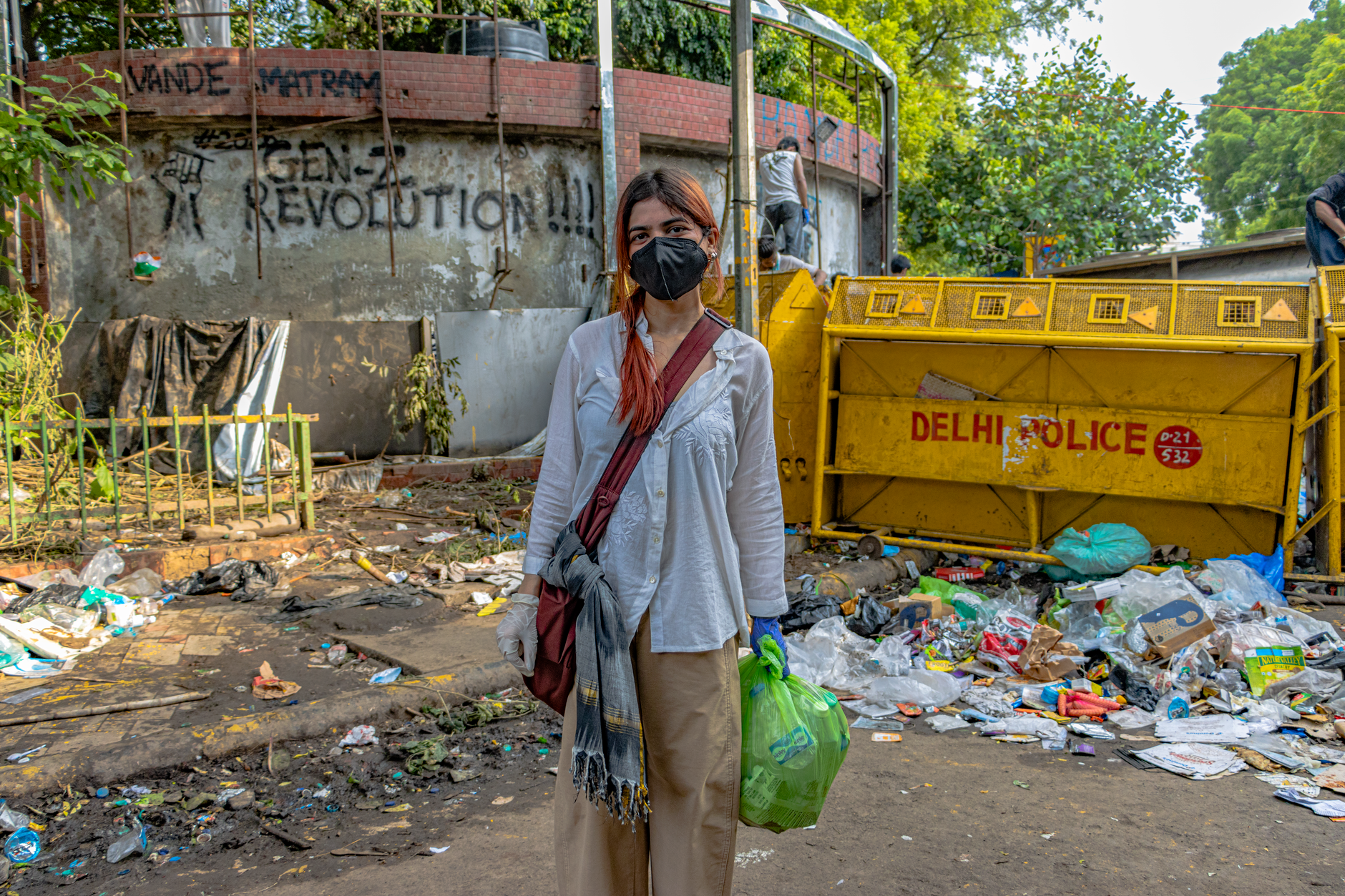
On the morning of Saturday, a network of police‑installed roadblocks across central Delhi prevented numerous daily‑wage laborers from reaching their construction sites, leaving them without the day’s wages. The restrictions were part of heightened security measures taken as the capital prepared for a large‑scale demonstration calling for the resignation of Chief Election Commissioner Gyanesh Kumar.
Security buildup ahead of the protest
In the days leading up to the scheduled rally, authorities erected multiple layers of barricades on routes that normally feed into the central business district. Access was limited primarily to individuals presenting official government identification, effectively turning parts of the city into a fortified zone.
The police rationale, as conveyed to the workers, was the lack of a permit allowing movement through the checkpoints. This policy applied uniformly to both private citizens and laborers who normally travel to sites such as the India Gate area and the vicinity of Nizamuddin.
Workers turned away at India Gate and Nizamuddin
At approximately 9:30 a.m., a group of construction laborers heading toward a site near India Gate encountered a police checkpoint. Among them was 36‑year‑old Ram Kishan Mandal, originally from Katihar in Bihar. He explained that his family is currently living in a temporary shelter after their home was destroyed by recent floods. “Without today’s earnings I cannot rebuild our roof or feed my children for the next two days,” he said, emphasizing the urgent need for income.
Police informed the workers that they did not possess the necessary clearance to proceed, and attempts to contact their employer yielded no relief. The employer reportedly advised the men to walk to the site, but the police maintained the blockade.
Further north, near the Nizamuddin flyover, another contingent of laborers faced a similar denial. One worker, whose name was not disclosed, pointed to a construction area roughly 50 metres beyond the flyover and said the police would not let him pass.
Among those stopped was 47‑year‑old electrician Mukesh Chauhan, who was riding his motorbike toward his job. He noted that his monthly earnings total about ₹9,000, and losing a day’s work would also mean forfeiting the ₹100 he spends on petrol each day. “People in our situation should be allowed to work,” he argued.
Devender Chauhan, 41, traveled with his wife on a scooter. His spouse works at a café in central Delhi, and the uniform she wore clearly displayed her employer’s name. Despite this, the checkpoint prevented them from proceeding. Devender recounted that his own employer, an advertising firm in Khan Market, had asked him to open the shop that morning and that he held the main key. The police, however, instructed him to stay home.
After persistent pleading, Devender’s wife eventually received permission from a police officer to walk the roughly two‑kilometre distance to her workplace. He recalled a similar incident during the June‑July protest that followed the resignation of Dharmendra Pradhan, when barricades around Khan Market halted movement for about two hours.
Union response and broader impact
P.V. Aniyan, secretary of the Delhi branch of the Centre of Indian Trade Unions (CITU), condemned the restrictions, stating that daily‑wage and gig workers in the central region suffered the most. He warned that the loss of a single day’s pay could have severe repercussions for families already living on the edge.
The union called on the government to weigh the economic fallout of such blockades before implementing them, highlighting that the workers’ earnings were completely wiped out for the day.
While the protest itself aims to pressure the Chief Election Commissioner, the immediate consequence for the labor force has been a sudden loss of income, heightened uncertainty, and added hardship for families already coping with displacement and low wages.
Authorities have not released a detailed statement explaining the decision to restrict movement for workers without official permits, nor have they indicated whether alternative arrangements—such as special passes for laborers—will be made available.
The situation underscores the tension between security measures for large‑scale political demonstrations and the everyday economic needs of a city’s most vulnerable workers.





Be First to Comment