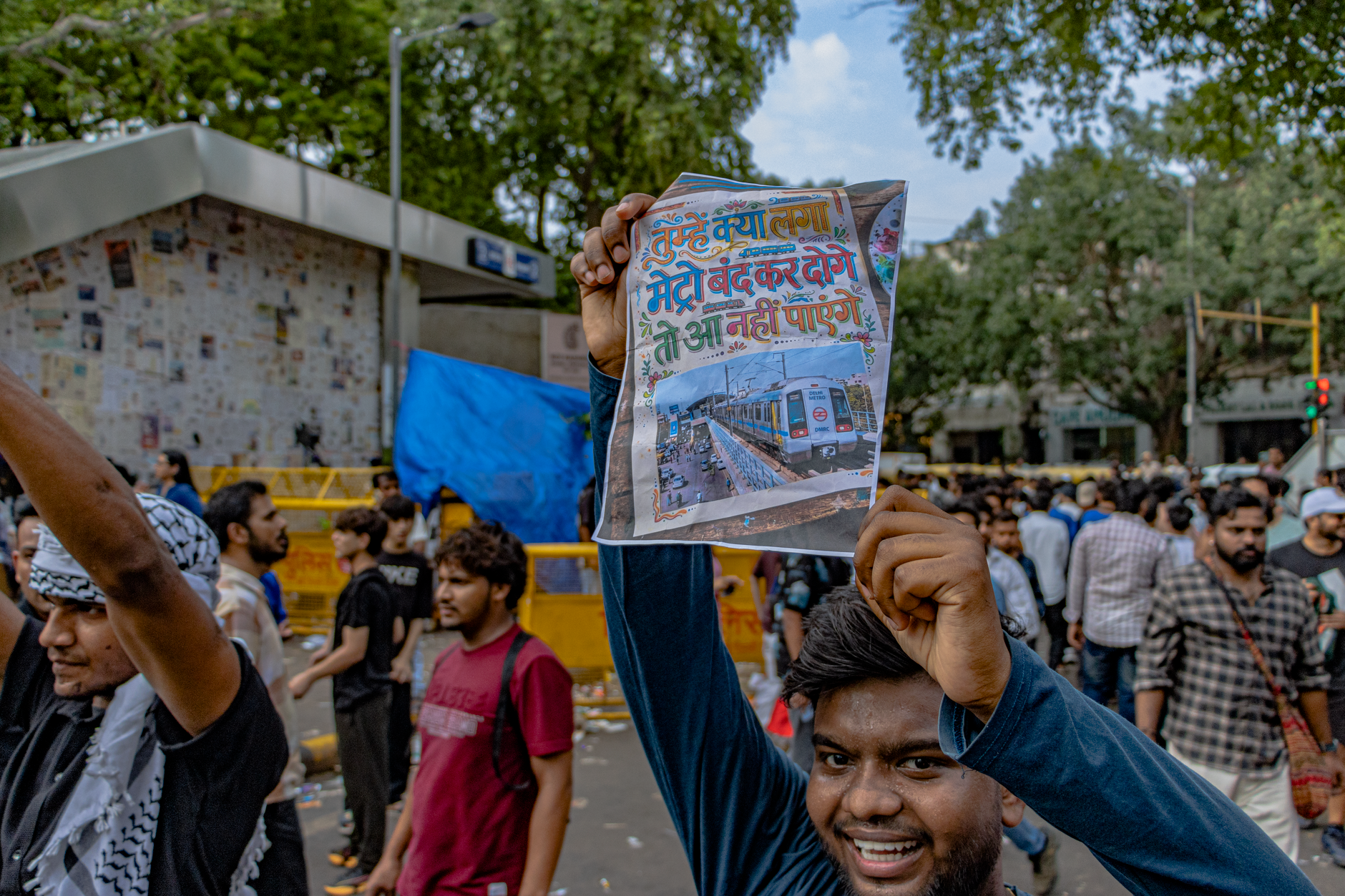
On Monday, October 12, the Delhi Police announced that Jantar Mantar would no longer be listed as an official venue for public protests. The agency simultaneously identified three alternative locations – Ramlila Ground, Burari Ground and the CBD Ground in East Delhi – where demonstrations may be organised in the capital.
Supreme Court’s 2018 stance on protest bans
The move revives a legal backdrop set eight years earlier, when the Supreme Court, hearing Mazdoor Kisan Shakti Sanghatan vs Union of India, ruled that a blanket prohibition on protests in central Delhi could not stand. The bench, comprising Justices A.K. Sikri and Ashok Bhushan, acknowledged the challenges faced by residents near popular protest sites but rejected the notion that a total ban was an acceptable solution.
At the time, the petitioners were contesting the repeated imposition of Section 144 of the Criminal Procedure Code, which effectively declared Jantar Mantar a prohibited area for any public meeting, dharna or peaceful protest. The Court also examined appeals against a National Green Tribunal (NGT) order that had directed authorities to halt all forms of assembly, speeches and use of loudspeakers on Jantar Mantar Road, and to shift demonstrators to Ramlila Maidan at Ajmeri Gate.
Balancing rights with residential concerns
The NGT’s intervention was prompted by complaints from local residents who claimed that protests caused significant hardship. While the Supreme Court affirmed the NGT’s assessment of those hardships, it stressed that the remedy could not be an outright ban. The justices wrote that a “balanced approach” was required, suggesting that authorities could adopt specific measures to protect both the right to protest and the peace of nearby neighbourhoods.
In its judgment, the Court noted that the effectiveness of a protest does not necessarily depend on physical proximity to centres of power, especially in an era dominated by electronic and social media. It observed that platforms such as WhatsApp, Twitter and Instagram enable a group’s voice to reach decision‑makers quickly, reducing the need for demonstrators to occupy a particular location.
Nevertheless, the Court recognised that certain areas could be earmarked for demonstrations, provided that the rights of other sections of society were not unduly compromised. It specifically mentioned that Ramlila Maidan, situated in a congested part of Old Delhi, might not be adequate to accommodate large gatherings, and therefore “some other area is required.”
Guidelines for limited use of Jantar Mantar
While acknowledging Jantar Mantar’s long‑standing use as a protest venue, the Supreme Court directed the Police Commissioner, in consultation with relevant agencies, to devise a mechanism that would permit limited, peaceful gatherings in a portion of the site. The guidelines were to ensure that any demonstration would not disturb residents of Jantar Mantar Road or the offices located nearby. The Court also suggested that a prior‑permission system be instituted, requiring groups to seek approval from the Police Commissioner or a delegated authority before holding a protest.
In the weeks that followed, the matter remained under consideration. Last week, the Supreme Court asked the Centre to explore the possibility of designating an alternative location equipped with adequate amenities for protesters, a request that came after Solicitor General Tushar Mehta, while hearing matters related to anti‑CEC/SIR protests, informed the bench that the competent authority would look into identifying a site other than Jantar Mantar for peaceful assemblies.
New venues and the way forward
Following the Court’s guidance, the Delhi Police’s latest notification replaces Jantar Mantar with three newly identified grounds. Ramlila Ground, already mentioned in the 2018 judgment, is now one of the approved sites. Burari Ground and the CBD Ground in East Delhi complete the list, offering authorities additional options to disperse crowds and reduce pressure on any single location.
The de‑notification marks a concrete step toward implementing the Supreme Court’s call for a “balanced” framework that safeguards both the constitutional right to protest and the legitimate interests of local residents. It also reflects the judiciary’s recognition that modern communication tools can amplify protest messages without the need for physical proximity to power corridors.
As the city adjusts to the new arrangement, stakeholders—including activist groups, municipal officials and neighbourhood associations—are expected to monitor how the guidelines are applied. The effectiveness of the three alternative venues in accommodating peaceful demonstrations without causing undue inconvenience will likely shape future discourse on the management of public dissent in India’s capital.






Be First to Comment