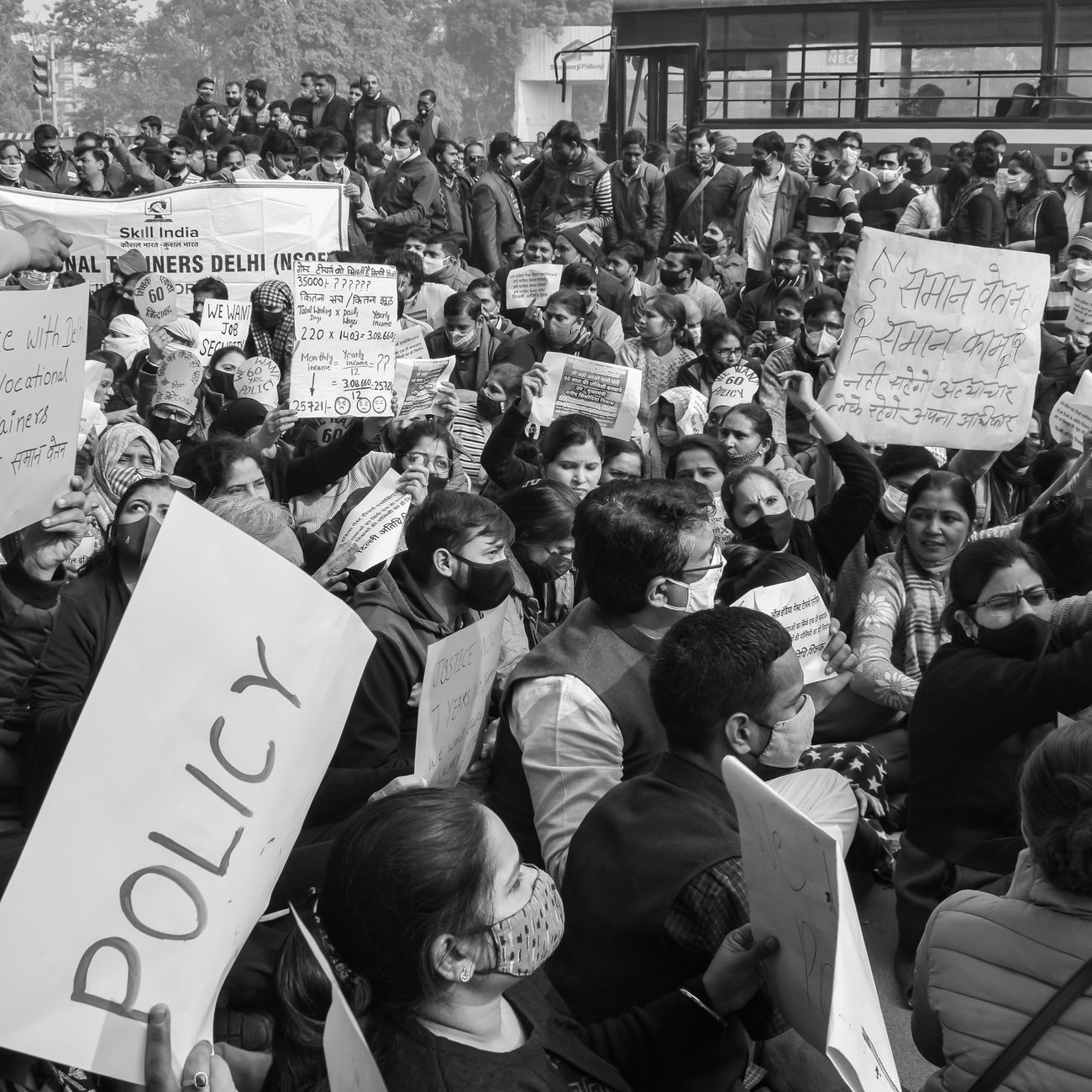
Delhi authorities placed two senior figures of the Cockroach Janta Party (CJP) in judicial custody on Wednesday, ordering five days of confinement at Tihar Jail. The men, identified as Saurav Das and Ashutosh Ranka, were remanded after a court found them in violation of previously signed peace bonds and for trespassing into Jantar Mantar, a site that had recently lost its status as a designated protest area.
Detention, charges and court proceedings
Police officials reported that the three activists – Das, Ranka and their associate Ajinkya Shinde – were produced before the Special Executive Magistrate (SEM) on the same day. While Das and Ranka were ordered to remain in custody for five days, Shinde secured his release after agreeing to sign a fresh peace bond. The court’s decision cited repeated breaches of law and a perceived risk that the two detained leaders might again disturb public order or encourage further unrest.
According to the Delhi Police, a formal case was lodged against the trio on multiple counts, including trespassing, contravening prohibitory orders, breaching an existing peace bond and obstructing a public servant from performing official duties. The police statement also indicated that a total of 14 individuals were detained in connection with the incident, and that First Information Reports (FIRs) were filed at the Parliament Street police station.
Party’s legal team alleges unlawful detention
The CJP’s legal representative, Ratna Singh, challenged the manner in which the activists were handled. Singh claimed that the three were taken to the police station in a private vehicle at approximately 3 a.m., and that they were denied access to counsel until late in the evening. She further asserted that the 24‑hour window for legal representation was nearing its end when the activists were presented before the SEM, suggesting that the authorities had acted beyond legal parameters.
Singh’s statements on the social platform X emphasized that, despite what she described as “illegal actions,” the detained individuals remained resilient. She also highlighted that the activists had previously signed bonds committing to a year of peace following an earlier detention during a protest on a Saturday.
CJP’s response and political context
Abhijeet Dipke, the founder of the Cockroach Janta Party, used his X account to denounce the government’s handling of the case, characterising it as an attempt to suppress dissent. He specifically linked the custodial orders to the activists’ act of unfurling the national flag at Jantar Mantar, framing the incident as a symbolic protest rather than a criminal act. Dipke further called on Prime Minister Narendra Modi to demonstrate resolve by formally declaring an emergency, rather than resorting to what he described as “cowardly tactics.”
In a separate post, Dipke shared a photograph taken inside the Parliament Street police station that featured Shinde, Ranka and Das, asserting that their morale remained high despite the detention.
Background: Jantar Mantar’s denotification and electoral roll controversy
The arrests occurred against a backdrop of heightened security measures in the capital following a series of demonstrations by the CJP and other groups. Central to the protests were allegations of irregularities in the Special Intensive Revision (SIR) of electoral rolls, a process the party claims has compromised the integrity of voter lists.
Compounding the tension, the Delhi Police Commissioner, Anurag Kumar, issued an order on October 11 that re‑designated the permissible venues for public demonstrations. The directive named Ramlila Maidan, Burari Ground and CBD Ground as the new authorized sites, effectively removing Jantar Mantar from the roster of recognized protest locations. The CJP has criticised this move, arguing that relocating demonstrations away from the political heart of the city diminishes the visibility of public dissent.
Implications and next steps for the CJP
Following the court’s decision, the Cockroach Janta Party announced plans to convene a meeting to chart its future course of action. The party’s leadership appears poised to assess both the legal ramifications of the custodial orders and the broader strategic impact of the government’s re‑allocation of protest spaces.
While Das and Ranka face a brief period of incarceration, the episode underscores the delicate balance between state authority and the right to protest in India’s capital. The legal challenges raised by the party’s counsel, combined with the founder’s public criticism, suggest that the dispute may continue to evolve in both judicial and political arenas.






Be First to Comment