
India’s tour of the West Indies in the T20I format produced several noteworthy performances, but none stood out more than the emergence of all‑rounder Naman Dhir. The 22‑year‑old, who was called into the side at the last minute, delivered a six‑ball hitting burst in Bengaluru and posted disciplined figures with the ball across the series, prompting praise from teammates, the West Indies coach and India’s captain.
Batting impact in Bengaluru
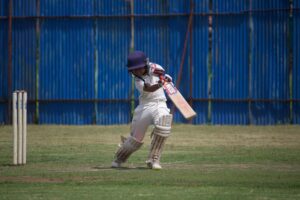
When India were 88 for 4 with 17 balls remaining in the Bengaluru match, Dhir was promoted ahead of the more experienced Shivam Dube. Despite limited batting opportunities on the tour, he showed no signs of rust. Facing Keemo Paul’s off‑pace delivery that drifted toward leg, Dhir used his height and a high bat grip to loft the ball over long‑off for a boundary – ten runs from two balls. A subsequent delivery clocked at 140 kph was called wide, but Dhir adjusted his stance and, on the next ball at 137 kph, drove the ball past long‑off again. Within three balls he had added 16 runs, injecting fresh momentum into the innings.
West Indies bowler Shamar Springer, who was described as the best bowler of the night, erred in line and length, offering a fuller ball outside off. Dhir dispatched it for his third six, completing a six‑ball cameo of 24 runs. Mumbai Indians teammate Tilak Varma later noted that Dhir’s ability to produce such quick bursts down the order added genuine value to the side.
Bowling contributions across the series
While the Bengaluru innings highlighted Dhir’s power with the bat, the remainder of the series revealed a growing competence with the ball. In the preceding ODI leg, spinners had an economy of 6.55 runs per over; Dhir’s 16.3 overs were delivered at 6.30, the third‑best economy among all bowlers, trailing only Kuldeep Yadav (5.56) and Matthew Forde (5.90).
In the T20I matches, Dhir bowled on pitches that offered little assistance to spin. He conceded 12 sixes – the second‑most in the series – but responded with wickets on five of those occasions, dismissing a batter on the very next delivery after a boundary. West Indies coach Daren Sammy praised this mindset, saying, “Not bowling too many boundary balls. I think that’s the key here on good wickets… they bowled much more dots.” Dhir’s dot‑ball percentage was 35, second only to Mayank Yadav’s 43.3%.
Statistically, four of Dhir’s five wickets came against right‑handers, and four of those dismissals were achieved with deliveries in the 80–90 kph range. This speed band proved more effective for him than the quicker pace employed by senior spinner Axar Patel, who tended to increase speed when hit for runs. In Lucknow, Dhir entered the attack in the ninth over after West Indies had rebuilt from an early collapse. His first over yielded just six runs, while the bowlers on either side – Kuldeep Yadav and Axar Patel – gave away 15 and 18 runs respectively.
Specific moments illustrate his adaptability. After West Indies opener Shai Hope struck a 94 kph length ball for a six, Dhir reduced his speed by five kph, allowing the ball to turn into the right‑hander and secure a catch in the same area where he had previously hit a six. Against Romario Shepherd, he slowed to 85 kph, generating a drift of 2.93 degrees that forced a miscued shot to long‑off. His final wicket of the night, Springer, came from a change of angle that denied the batter the chance to get underneath the ball for elevation.
In the Indore match, Kamil Pooran struck Dhir for sixes three times. Dhir responded by pulling his length back slightly, cramping the right‑hander and forcing a miscued shot that resulted in a catch at deep square leg. Across the series, his ability to vary pace from the early 80s to the late 90s, and to bowl from around the wicket, set him apart from other Indian spinners.
Future prospects and role in the side
Both teammates and coaches highlighted Dhir’s willingness to bowl in pressure situations. Tilak Varma described his readiness to bowl to West Indies’ big‑hitting right‑handers as a positive for India. Captain Shreyas Iyer called Dhir a “special player,” commending his attitude and his capacity to recognise turn and capitalize on it.
Despite the IPL reducing the need for his off‑spin, Dhir has logged hundreds of overs for the Mumbai Indians in the Reliance Corporate Park tournament, indicating a solid foundation of experience. He acknowledges his ambition to become a genuine all‑rounder, stating, “No, I definitely want to be a genuine all‑rounder, but at the time I prefer that I should score more with the bat.” His six‑ball burst in Bengaluru demonstrated the power he can generate against pace, while his disciplined bowling figures suggest a useful secondary skill for India.
With senior finishers such as Shivam Dube and Axar Patel struggling against pace, and Hardik Pandya’s numbers on a decline, Dhir’s dual capability could provide the balance India needs in the lower middle order. The West Indies series offered concrete evidence of his variations, temperament and wicket‑taking ability even after being attacked, while his batting cameo reminded selectors of his potential to change a game quickly.
Investing in both facets of his game could transform Dhir into a long‑term asset for Indian cricket, offering depth in both batting and spin bowling as the team looks ahead to future bilateral series and major tournaments.




Be First to Comment