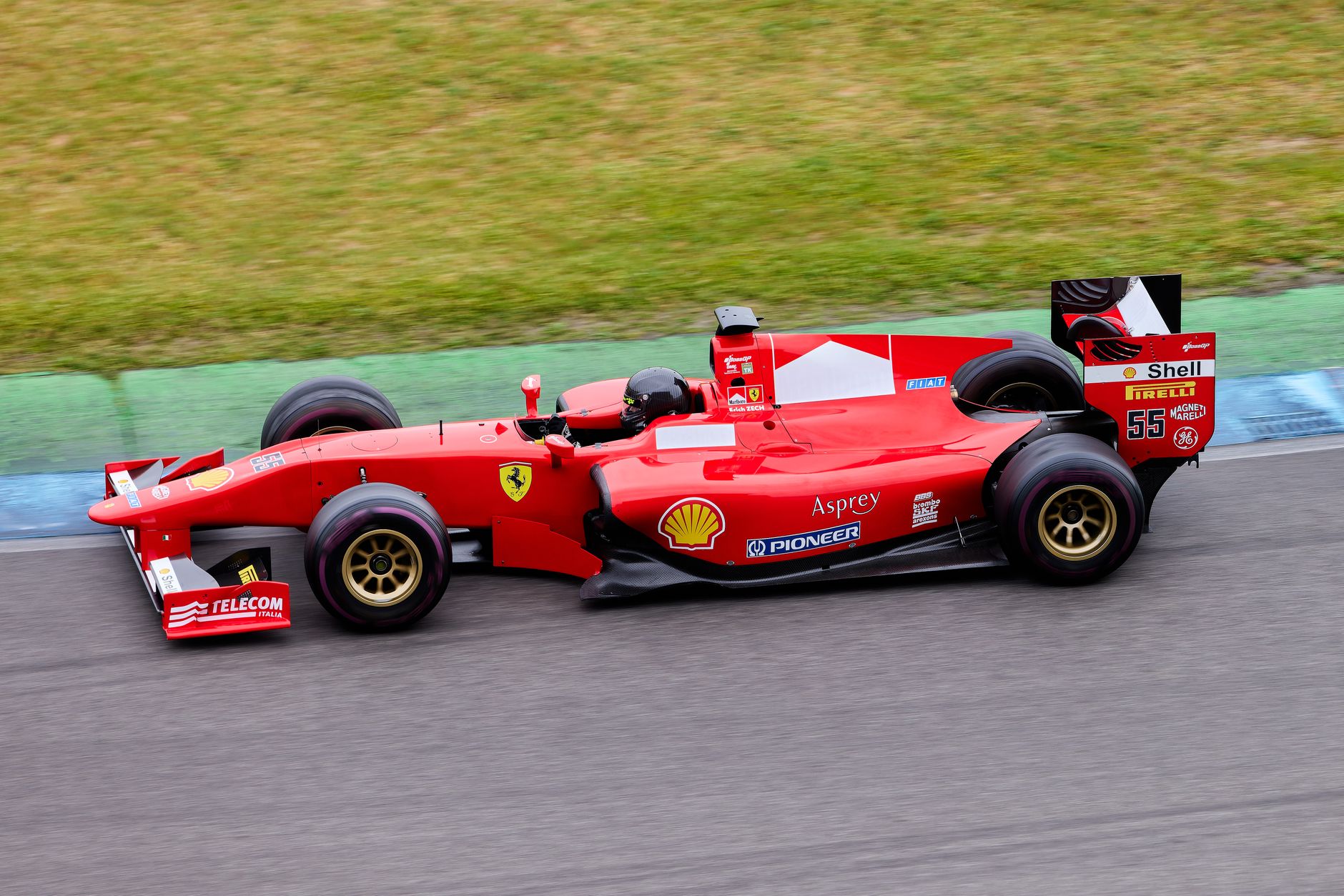
Kimi Antonelli started from pole at the United States Grand Prix in Austin and, by committing to a single pit stop on medium tyres, managed to keep the race lead from the very first lap. His performance placed him just two points away from clinching the 2026 Formula 1 drivers’ championship, a margin that could be settled at the next race in Mexico City.
Qualifying and tyre expectations
Practice sessions in Austin showed significant tyre degradation, prompting teams to contemplate a two‑stop plan if they chose the softer compounds for the full distance. Red Bull entered Max Verstappen and Isack Hadjar into Q3 on a single set of tyres, hoping to preserve soft tyres for the race and protect Verstappen’s slim championship hopes. Ferrari, after topping the time sheets in all three practice sessions, also aimed for an aggressive approach but could not improve its pace in Q3, leaving the top three grid positions to Antonelli’s Mercedes and the two Red Bulls.
Mercedes had been refining its Sepang‑spec updates, which had caused uncertainty over the previous two weekends. By the final qualifying session, Antonelli produced the quickest lap on his first run, outpacing Verstappen, Hadjar and both Ferraris. The pole position placed him ahead of a quartet of cars equipped with soft tyres, while he started on medium compounds, setting the stage for a strategic showdown.
Race start and early lead
At the start, Antonelli’s medium tyre proved advantageous. Verstappen attempted to force Antonelli wide on the inside but could not match the Mercedes driver’s launch. Charles Leclerc surged past the Ferraris, and Lewis Hamilton tried to follow, but Verstappen kept the 2021 title rival at bay. Leclerc’s aggressive move consumed a portion of his battery, allowing Verstappen to retake second place on the run to Turn 12 and then pass Leclerc again at Turn 15.
Meanwhile, Antonelli built a two‑and‑a‑half‑second gap and maintained it through the opening laps, demonstrating that the medium compound could hold its pace against the softs of his rivals.
Strategic pit stops and tyre battles
Verstappen’s plan hinged on a two‑stop strategy, starting with soft‑soft‑medium compounds. He made his first pit stop at the end of lap 13, switching to fresh softs and effectively committing to the two‑stop route. The early stop allowed him to close the gap to the leaders, and he emerged ahead of the McLarens and Liam Lawson, who had already pitted.
Lando Norris opted for a hard tyre at the end of lap 17, turning his race into a one‑stop effort. This forced George Russell, who was serving a five‑second penalty for an early‑lap track‑limit breach, into a defensive position behind Verstappen.
Isack Hadjar, running a one‑stop, was reluctant to yield when Verstappen approached on lap 23, prompting Verstappen to complain that his teammate’s defence cost him time. By the time Verstappen completed his second stop, he had switched to medium tyres, but the softs were already losing performance, and his gap to Leclerc narrowed.
Ferrari employed the full range of Pirelli compounds. Leclerc started on softs, moved to medium, and finally to hard tyres, aiming to extract maximum pace from each. Pre‑race predictions suggested a 0.9‑second per lap advantage for mediums over hards, but the medium tyres degraded faster than expected, allowing the hard compound to become competitive earlier than anticipated.
Final phases and Antonelli’s hold on the lead
When Verstappen pitted for his second time, Leclerc briefly took the lead, but Antonelli’s fresh hard tyre allowed him to reclaim the advantage within half a lap. After his own stop, Antonelli emerged just under four seconds behind Leclerc, but his hard tyre performance kept the gap shrinking.
Leclerc stayed out longer, finally pitting at the end of lap 39 for a hard tyre, while Hamilton had already stopped a lap earlier. The gap between Leclerc and Verstappen, who was on medium tyres, widened to nine seconds with 16 laps remaining, but Verstappen could not close the distance to Antonelli, who was still on a hard compound.
In the closing stages, Verstappen found himself unable to overtake Norris’s McLaren, despite gaining a few seconds per lap. The pace differential required to catch Antonelli—more than a second per lap—proved unattainable, and the Mercedes driver maintained his lead to the finish line.
Implications for the championship
Antonelli’s victory in Austin not only secured the United States Grand Prix win but also placed him within two points of the 2026 drivers’ title. With the next race set for the Autódromo Hermanos Rodríguez in Mexico City, the championship battle remains open, and Antonelli will need to match his performance in Austin to clinch the crown.
The race highlighted the importance of tyre strategy in a circuit where degradation can swing the outcome dramatically. Mercedes’s decision to stick with a one‑stop medium‑to‑hard approach paid off, while Red Bull’s two‑stop plan struggled against the hard tyre’s unexpected durability. Ferrari’s full‑compound gamble produced strong laps but fell short of overtaking the Mercedes leader.
Overall, the United States Grand Prix showcased a strategic masterclass from Antonelli, who turned a pole position into a race‑winning performance by managing tyre wear, maintaining consistent lap times, and defending against a field that included multiple world champions and future title contenders.


Be First to Comment