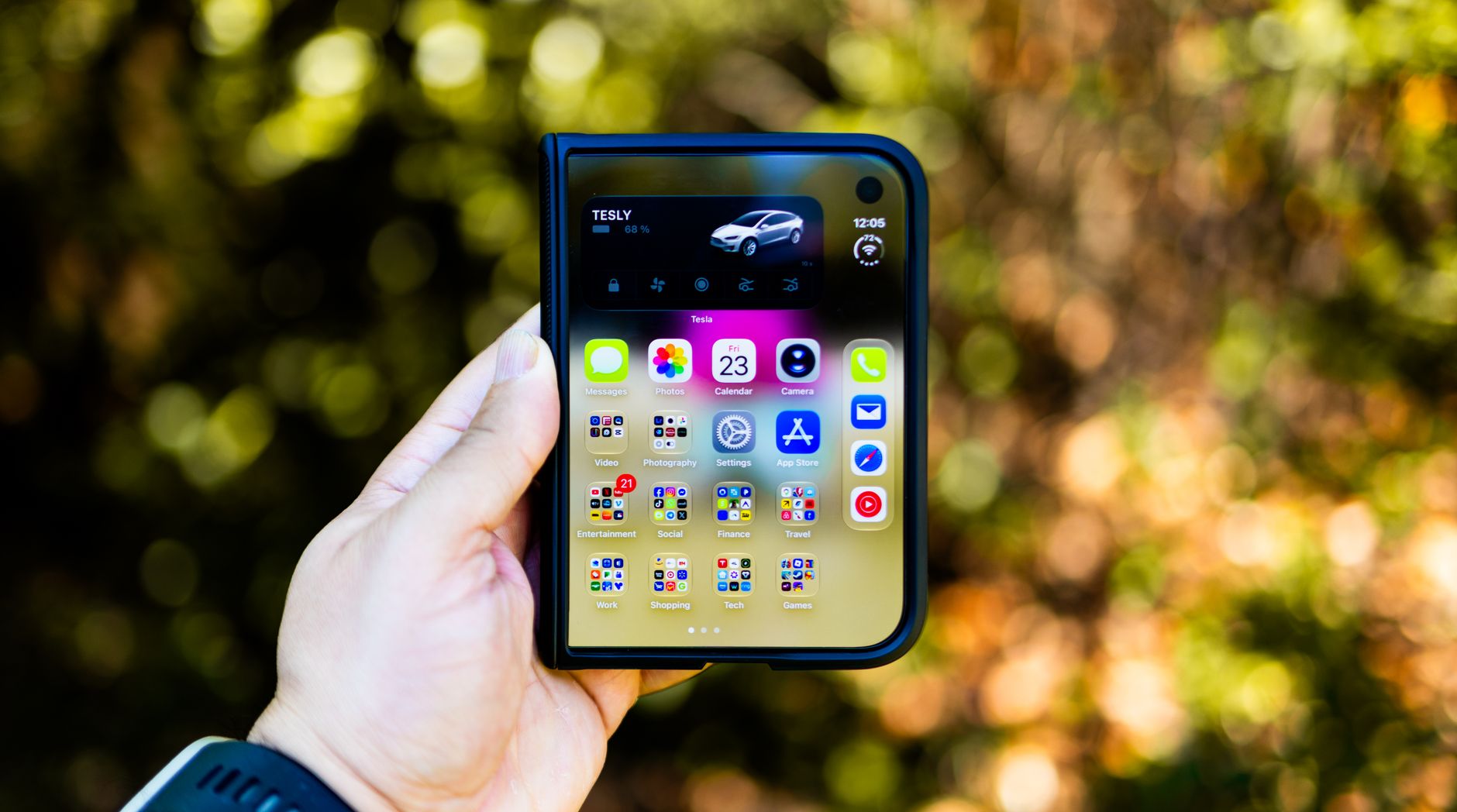
Marques Brownlee, known online as MKBHD, spent more than a week evaluating Apple’s first foldable, the iPhone Duo, before concluding that most consumers – including current iPhone owners – should pass on the $1,999 device. In a video cited by Dexerto, Brownlee described the phone as “very polished around the edges, but kind of rough in the middle,” pointing to a combination of physical bulk, software limitations and camera compromises that he believes outweigh the phone’s premium build quality.
MKBHD’s Assessment of the iPhone Duo
Brownlee highlighted four primary drawbacks. First, the Duo’s weight of 254 grams makes it noticeably heavier than competitors; the Samsung Galaxy Z Fold 8, for example, is about 20 % lighter and thinner, according to Trending Topics. The extra mass, he said, hampers one‑handed use. Second, Apple replaced Face ID with a side‑button Touch ID that introduces a built‑in delay that cannot be disabled, adding friction to everyday unlocking.
Third, the Duo’s camera system lacks features that many video creators consider essential. While it carries two 48 MP rear sensors, it omits a dedicated telephoto lens, ProRes recording and Log profiles, putting it behind the $1,299 iPhone 18 Pro Max on professional video capabilities. The under‑display selfie camera also received a negative rating from Brownlee, who called it “simply bad.”
The fourth and most heavily weighted concern is software. Many apps continue to run in stretched iPhone layouts on the 7.6‑inch inner display, resulting in wasted screen real estate. Brownlee expects major apps to adapt within roughly six months, but until then the experience feels sub‑optimal.
Despite these criticisms, Brownlee praised several aspects that Apple controls end‑to‑end. The titanium frame, the hinge mechanism and the smooth animations between screens earned his approval. He noted that the hinge’s variable resistance allows the phone to hold a half‑open position more steadily than any other foldable he has tested, making the device a viable option for users who specifically want a tablet‑sized screen in their pocket.
Durability Tests: Tim Pan and HTX Studio Findings
Chinese creator Tim Pan, the face behind the MediaStorm channel, conducted an extensive mechanical test that complements Brownlee’s qualitative review. Pan placed a brand‑new iPhone Duo beside a unit that had already been folded about 500 times by hand, noting that even that modest usage made the crease more visible. He then subjected a single Duo to 10,000 automated folds at room temperature, followed by an additional 1,000 folds in a –20 °C freezer.
After the full sequence, Pan reported that the hinge continued to open smoothly and described the overall structure as “very strong.” However, the central crease on the inner display deepened enough to be noticeable to both the eye and fingertip, according to Android Authority. Pan did not publish a quantitative depth measurement; his observation is based on visual comparison of a single device.
Pan also identified practical issues that could affect everyday use. The near‑field communication (NFC) antenna resides on only one half of the device, making contactless payments awkward when the phone is open. The inner display lacks an earpiece, so taking a call while the device is unfolded forces the audio to speakerphone. Under heavy load with the screen open, the phone’s surface temperature rose about 2 °C (3.6 °F), especially on the side housing the processor. Finally, opening or closing the hinge slowly can momentarily confuse orientation sensors, causing brief flips or blank screens.
Independent laboratory data from HTX Studio provides the only measured crease depth for the iPhone Duo. Scanning a fresh unit showed a peak‑to‑valley crease depth of 48 microns. After 3,000 machine folds and a period of being kept closed, the depth increased to 167 microns. Memeburn calculated that this represents roughly a 3.5‑fold increase and equated the 3,000‑fold test to about two months of typical use at a rate of 50 folds per day.
Memeburn further translated fold counts into ownership timelines: at 25 folds per day, the 3,000‑fold test would span roughly four months; at 100 folds per day, it would represent just over three months. By contrast, Tim Pan’s full 11,000‑fold regimen would correspond to a little over seven months at 50 folds daily, suggesting that a first‑owner could encounter a visibly deeper crease within the first year rather than after three years.
Apple’s Response and Consumer Guidance
Apple does not publish an official fold‑cycle rating for the iPhone Duo, unlike Samsung, which rates the Galaxy Z Fold 8 at 500,000 folds according to MacRumors. Instead, Apple offers a hardware remedy for a deepening crease: a removable nano‑texture cover layer. Kate Bergeron, Apple’s vice president of hardware engineering, said owners can replace this layer if the crease becomes more apparent. The replacement costs $49, or $19 when purchased with AppleCare+.
For more extensive damage, a full inner‑display replacement is priced at $999, reduced to $99 with AppleCare+. Notebookcheck notes that the $49 (or $19) layer replacement may only buy time, because it is unclear whether a new layer fully restores the original flatness when the crease has already affected the underlying panel.
Given the durability data and the cost of potential repairs, Memeburn advises buyers to treat AppleCare+ as part of the overall purchase price and to anticipate at least one cover‑layer swap within the first year. The advice aligns with the observation that the hinge itself remains robust even after tens of thousands of folds, while the flexible display panel shows measurable wear.
The iPhone Duo’s preorder window slipped to late January, prompting potential buyers to decide whether to keep their orders or cancel. Memeburn’s guidance suggests retaining the order only for those who prioritize a pocket‑sized tablet experience and are comfortable with the current software ecosystem and the possibility of a visible crease. Others, especially those sensitive to weight, camera features or price, may find better value in competing foldables from Samsung, Google or HONOR.
In summary, MKBHD’s qualitative review and Tim Pan’s mechanical testing converge on a single point: Apple’s execution of the hinge and chassis is strong, but the flexible inner panel exhibits early signs of wear. Consumers weighing a $1,999 investment must balance the novelty of a tablet‑sized iPhone against the practical limitations of weight, camera capabilities, software optimization and the prospect of a deepening crease that Apple addresses only through a paid cover‑layer replacement.






Be First to Comment