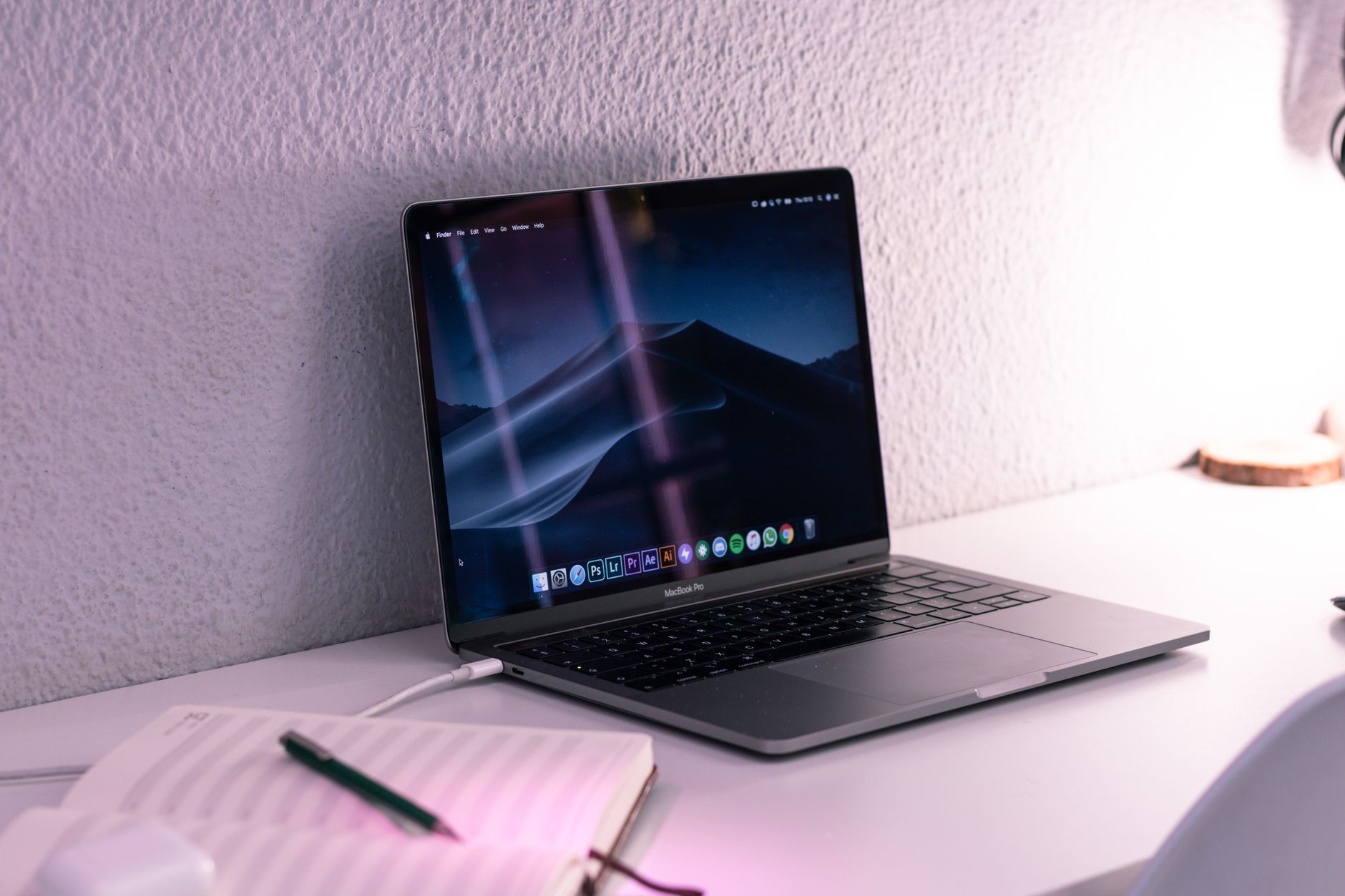
Apple has announced a major redesign of its professional‑grade laptop line, unveiling the first MacBook Pro model equipped with a built‑in touchscreen. The update pairs a new OLED screen, branded as PROLED XDR, with the company’s existing M5 Pro and M5 Max processors, while also shaving weight from both the 14‑inch and larger 16.3‑inch versions.
Touchscreen and OLED Display
The centerpiece of the new MacBook Pro is its OLED panel, which Apple says can reach a peak brightness of up to 2,000 nits for both HDR and SDR content. The display supports a variable refresh rate that can climb to 120 Hz and accommodates the P3 as well as Adobe RGB colour spaces, making it suitable for professional photography and design work. Unlike conventional touch solutions that add a separate sensor layer, the touch capability is integrated directly into the OLED panel, a design choice Apple claims reduces latency to less than a millisecond and creates a more immediate feel when drawing, manipulating 3D objects, or playing virtual instruments.
Apple has also re‑engineered the hinge mechanism to keep the screen stable when pressure is applied, ensuring that the touchscreen remains usable even when users press firmly on the surface. The touch input works in concert with the traditional keyboard and trackpad, offering an additional method of interaction without replacing the existing input devices.
Dynamic Island and User Interface
The redesign eliminates the notch that appeared on earlier MacBook Pro models and replaces it with the Dynamic Island interface, first introduced on the iPhone. On the laptop, Dynamic Island provides quick access to Spotlight search, Siri, and Live Activities, allowing users to monitor real‑time updates, answer phone calls, control music playback, and accept AirDrop transfers without leaving their current workspace.
Apple’s native applications have been optimized for touch, and the operating system translates generic touch gestures into mouse clicks for software that has not yet been specifically adapted. Developers are encouraged to create dedicated touch controls, but existing macOS apps will continue to function through the click‑translation layer.
Performance, Weight and Other Hardware Updates
The touchscreen models retain the same silicon as the non‑touch variants introduced earlier in 2026. The M5 Pro chip is aimed at demanding workloads such as 8K video editing, while the M5 Max targets even more intensive tasks, including complex 3D modelling and artificial‑intelligence model training. By keeping the processor lineup unchanged, Apple positions the new display and chassis as the primary differentiators.
Weight reductions are a notable part of the refresh. The 14‑inch MacBook Pro now weighs roughly 1.36 kg, about 227 g lighter than the prior generation, and the larger model tips the scales at approximately 1.81 kg, shedding around 318 g. Slimmer bezels enable the larger variant to expand its screen size to 16.3 inches without increasing overall dimensions.
Audio hardware also receives an upgrade. The six‑speaker system continues to be standard, but the woofers have been redesigned to deliver bass that Apple describes as 50 % deeper. New audio tuning settings allow the laptop to produce optimal sound when the lid is closed or when an external monitor is attached.
Connectivity options remain comprehensive, featuring three Thunderbolt ports, an HDMI output, an SDXC card slot, MagSafe charging, and a traditional headphone jack.
Pricing, Pre‑order and Availability
Pre‑orders for the touchscreen MacBook Pro are open, with shipments and in‑store sales slated to begin on 6 November. In the United Arab Emirates, the entry‑level configuration starts at AED 11,999. Apple has not disclosed pricing for other regions within the source text.
Overall, the announcement marks Apple’s first foray into integrating touch capability into its high‑end laptop line, combining that with an OLED panel, Dynamic Island UI, lighter chassis and the same high‑performance M5 series processors that power the current generation.






Be First to Comment