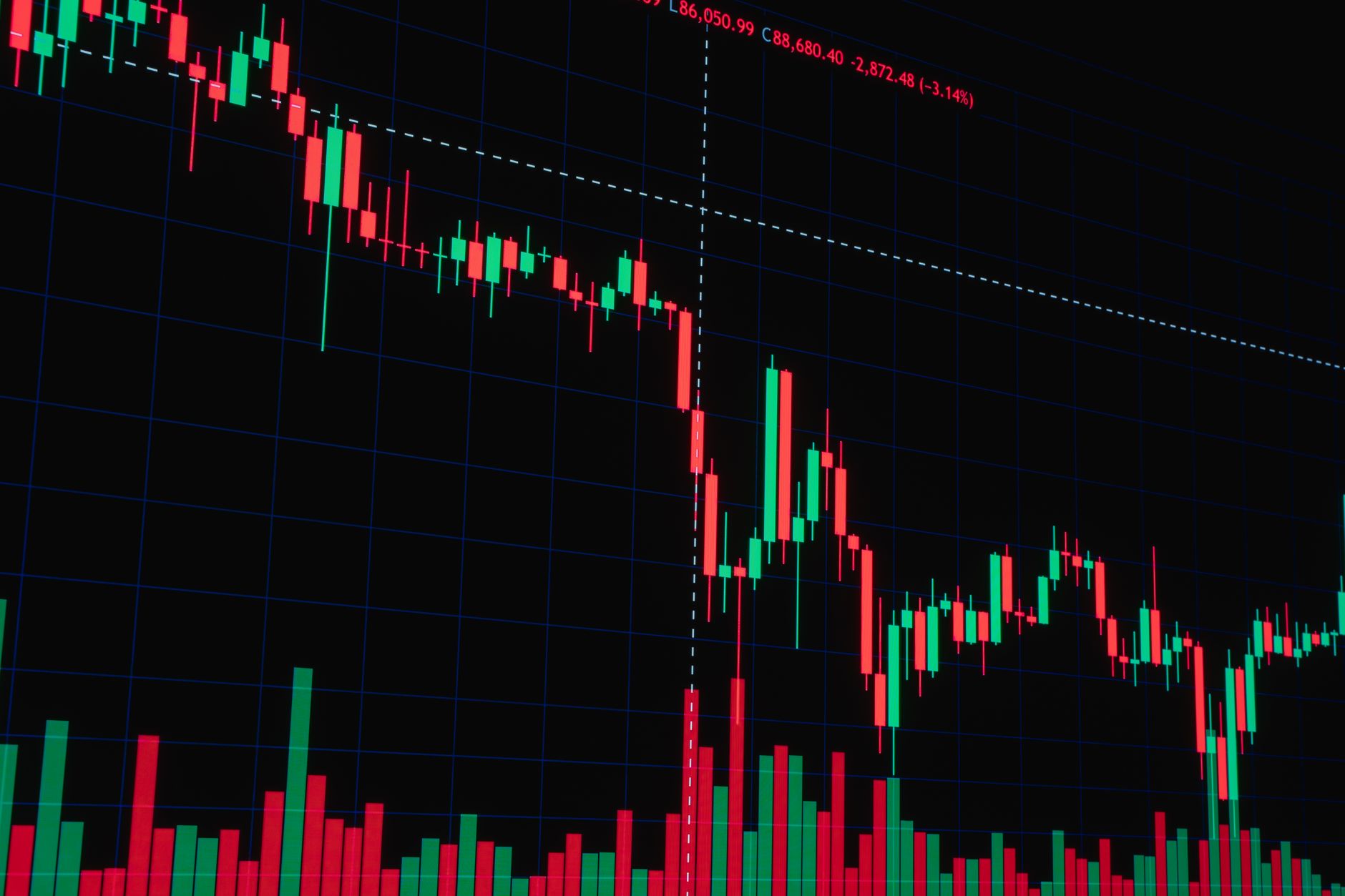
On Thursday, foreign institutional investors (FIIs) acquired close to Rs 15,000 crore of Indian equities, the largest single‑day inflow in more than a year, according to provisional exchange data. The buying spree represents a dramatic turnaround from a prior period of record foreign outflows that had driven overseas ownership of Indian stocks to historically low levels.
Global market turbulence fuels a reallocation
The surge in foreign capital arrived while equity markets across Asia were under pressure. Japan’s Nikkei index fell almost 7%, South Korea’s Kospi dropped more than 9% to slip below the 5,000‑point mark, and Taiwan’s benchmark also saw a sharp decline. In the United States, the Nasdaq Composite plunged 5.5% overnight, erasing roughly $3 trillion from the market value of S&P 500 constituents. The sell‑off was largely driven by concerns that the rapid expansion of artificial‑intelligence (AI) projects could be unsustainable, especially as data‑centre spending appears to be slowing.
Analysts linked the Nasdaq decline, which registered a 5.6% fall, to apprehensions that political opposition to large‑scale data‑centre investment could curb demand for AI‑related hardware. Dr. V K Vijayakumar, chief investment strategist at Geojit Investments Ltd., noted that the “blood bath” in U.S. markets would likely affect most regions, but India seemed positioned to feel the least impact.
Companies most directly tied to the AI boom bore the brunt of the downturn. Samsung Electronics and SK Hynix slid roughly 10% and 12% respectively, while Japan’s Kioxia fell 14% and Taiwan Semiconductor Manufacturing Co. dropped about 8.5%. SoftBank Group, a major AI investor, declined 11%, and Nvidia, the flagship AI chipmaker, slipped 9.3%, becoming the biggest drag on the S&P 500. Nvidia’s year‑to‑date loss of 2.6% follows three consecutive years of double‑digit gains.
Domestic fundamentals provide a cushion
Despite the external headwinds, India’s equity market posted a solid performance. The Sensex rose 2.6% on Thursday and was trading about 0.8% higher on Friday morning, even as neighboring markets fell. The rally was underpinned by strong earnings reports and relatively attractive valuations.
According to Kotak Institutional Equities, net profits of Nifty 50 companies that have reported so far are up 19% year‑on‑year, outpacing the brokerage’s own forecasts by 4 percentage points. The broader set of stocks covered by Kotak saw an 18% increase in net profit, also exceeding expectations. Similar upside was observed in EBITDA and in earnings adjusted for the oil, gas and consumable fuels sector.
Radhika Rao, senior economist at DBS, observed that regional equities less exposed to the AI hype are benefiting from the early stages of capital reallocation. Large‑cap stocks, in particular, have become more appealing after a period of relative underperformance, a sentiment echoed by Vijayakumar, who highlighted that the rally enjoys “fundamental support from better‑than‑expected earnings growth.”
The divergence between large‑cap and small‑cap performance was evident: while the Sensex climbed 2.6%, the Smallcap 100 index advanced only 0.67%, indicating that foreign money is gravitating toward financially stable, well‑established companies.
Analysts see a favorable risk‑reward balance
Global brokerage Nomura suggested that India’s appeal could be further enhanced as corporate earnings continue to improve, valuations stay below post‑pandemic averages, and broader global headwinds ease. Lower crude‑oil prices are expected to ease inflationary pressures, reduce the import bill and improve the current‑account balance, especially after a previous wave of foreign selling that was partly driven by high energy costs.
Nomura also noted that geopolitical dynamics, such as potential shifts in U.S.–Iran negotiations following the U.S. midterm elections, could influence commodity markets and monetary policy. A pause in Federal Reserve rate hikes, prompted by a decline in oil prices or heightened credit concerns, would add further support to emerging‑market equities.
Shahzad Madon, managing director and CEO of TCG AMC, pointed out that several macro‑level pressures on Indian equities—including high energy prices, AI‑related volatility, currency weakness and earlier FII outflows—are now receding. He emphasized that India’s macro fundamentals have remained robust despite a challenging global backdrop, and corporate results have stayed strong over the last three quarters.
Uday Kotak, founder of Kotak Mahindra Bank, warned that the leverage employed by global firms to fund AI initiatives has led to significant overvaluation in many markets. He argued that as the AI investment boom moderates, capital may flow back to markets like India, which offers more reasonable valuations and a growing domestic AI capability. Kotak described India as an “anti‑AI” market in the sense that it is less exposed to the inflated valuations seen elsewhere, positioning it to attract reverse capital flows.
Collectively, the combination of resilient earnings growth, comparatively modest valuations, a stable rupee, softer oil prices and renewed foreign buying creates a favorable environment for Indian equities. As the global AI trade experiences a slowdown, investors appear to be redirecting capital from heavily‑priced technology bets toward markets that promise solid fundamentals and upside potential, especially during the festive Diwali period.
While domestic institutional investors (DIIs) have engaged in profit‑booking, market participants such as Vijayakumar believe that continued FII participation will help sustain market resilience in the evolving global context. The prevailing view among analysts is that the current risk‑reward profile for Indian stocks is increasingly attractive, offering a compelling alternative to the volatility seen in other major indices.






Be First to Comment