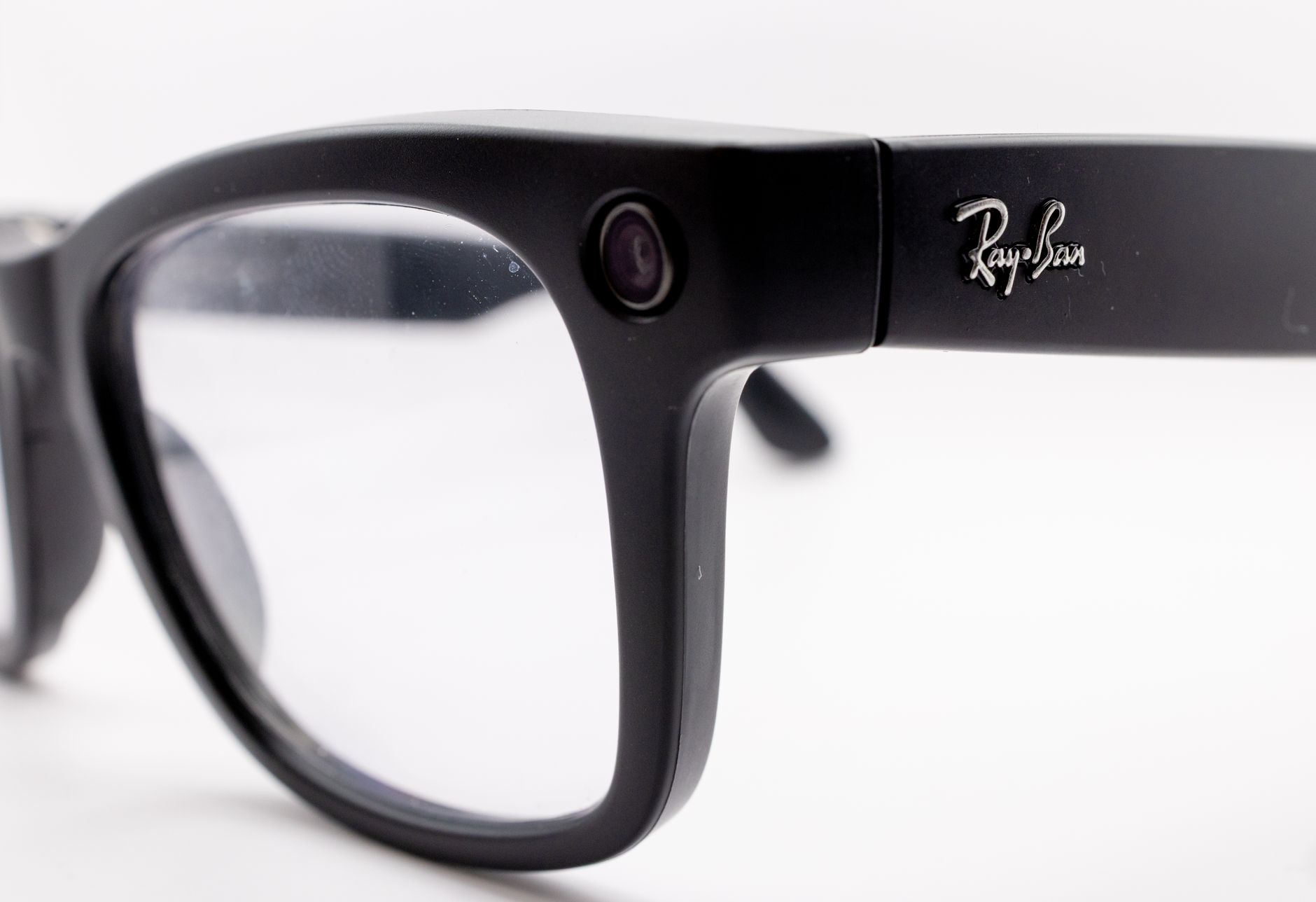
Google announced on November 12 that it is taking preorders for its first pair of artificial‑intelligence‑enabled glasses, which run on the company’s Gemini model. The launch positions the product directly against Meta’s Ray‑Ban smart eyewear, with privacy protections forming a central part of Google’s market narrative.
Preorder details, pricing and design options
Consumers can secure a pair of the new glasses beginning December 10, when sales start in the United States and South Korea. The devices are built in partnership with Samsung and are offered in nine distinct styles supplied by eyewear brands Warby Parker and Gentle Monster. Warby Parker contributes three frames that start at $395, while Gentle Monster provides six designs beginning at $449.
All models share a set of hardware specifications disclosed by Google. Each frame weighs approximately 41 grams and houses a 12‑megapixel camera. Audio is delivered through speakers that leave the wearer’s ears uncovered, and the battery is rated for up to nine hours of use on a single charge. Notably, the glasses do not embed a visual display within the lenses.
Functionality and AI capabilities
The glasses integrate voice activation, allowing users to say “Hey Gemini” to initiate a range of tasks. Through the Gemini AI, wearers can request information about objects in view, receive turn‑by‑turn directions via Maps, play music, or translate spoken language in real time across more than 70 languages. Google notes that the “Guided Vision” and “Aira” support features will be available only on Android devices at launch, although the glasses are compatible with both iPhone and Android smartphones.
Privacy‑focused design
Google’s privacy announcement outlines several safeguards intended to limit the capture and use of bystander imagery. The system automatically redacts faces in camera footage before the images are processed by Gemini, and Google asserts that these redacted visuals are excluded from Gemini History, model training, and advertising targeting. Users retain the ability to revoke camera and microphone permissions for individual apps.
When the camera is active, a visible light illuminates the frame. According to Google, covering this light disables recording. Google Play policies further prohibit livestreaming through the camera and ban live facial identification. The setup process also restricts recording of individuals without consent and disallows capture in locations deemed sensitive.
Market context and competition
Meta currently dominates the AI glasses market. Omdia estimates that Meta accounted for 81.3 % of global AI‑glasses shipments in the first half of 2026. The company recently introduced Ray‑Ban Meta Audio, a version of its glasses that omits cameras, a move linked by TechCrunch to criticism over covert recording. Meta’s own statements emphasized consumer demand for audio‑only devices and a slimmer, lighter design.
Google’s entry seeks to differentiate by retaining a camera while emphasizing trust‑building measures. The company highlights that a wearer can ask Gemini about signage, menus or objects without first describing them, while the face‑redaction feature aims to protect the privacy of people who appear in the field of view. Google also points out that its data rules keep camera visuals out of training datasets and advertising pipelines, though text chats are saved in Gemini History with user‑controlled settings that determine whether they contribute to model improvement.
Analysts note that the recording‑light indicator alone offers limited distinction, as Meta already disables its camera when the light is covered. However, Google’s broader data‑handling policies provide an additional point of comparison. The effectiveness of these safeguards, and whether they reassure both owners and bystanders, remains an open question as the product reaches consumers.
Outlook
Google’s strategy hinges on convincing buyers that the glasses can deliver useful AI assistance without compromising privacy. The company’s approach allows owners to select which applications receive camera access, while bystanders are offered a visual cue—the recording light—to understand when recording is occurring. Whether the face‑redaction process extends to saved photos or other applications has not been clarified in the announcement.
As the preorders open and the first units prepare for December delivery, the market will observe how Google’s privacy promises compare with Meta’s existing dominance and recent adjustments to its own product line. The success of Google’s AI glasses will likely be measured by both consumer adoption and the perceived trustworthiness of its privacy architecture.






Be First to Comment